 Vietnamnet.vn

 Podcast



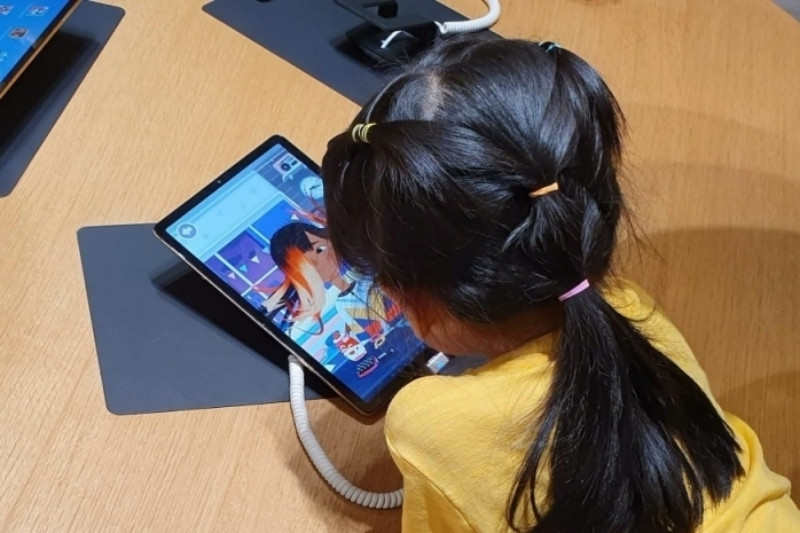
Recently, during a group discussion on socio-economic issues, Nguyen Thi Mai Thoa, a member of the NA’s Committee for Culture and Society, expressed concern about children being exposed to harm online through online abduction, violence, and cyberbullying.
She noted that not all parents have enough time to monitor their children’s use of social media, while children’s awareness is still developing, making them vulnerable to inappropriate content. She proposed studying solutions to restrict or ban children from using certain popular social media platforms, along with specific conditions and measures.
Nguyen Thu Huyen, a parent from Hanoi, supported the idea of applying measures to limit children’s use of social media. Her fifth-grade son has become “absorbed” in watching videos and scrolling online, affecting his studies and rest.
However, she thinks the ban may be impossible. Her child’s learning is closely linked to social media, as teachers assign homework via Facebook and Zalo groups. Students follow online lecture videos, collaborate on assignments through messaging apps, and search for materials online.
“If I don’t give my child access to a computer or phone, it will affect his learning. But as parents, we are busy all day and cannot constantly supervise how he uses devices,” she said.
She hopes for solutions that allow parents to control the content their children access, while schools should develop dedicated platforms for assigning homework instead of relying on social media.
Associate Prof Pham Manh Ha, a psychology expert at the School of Education Science and Technology under the Hanoi University of Science and Technology, said that proposals to ban or restrict children’s use of social media stem from legitimate concerns, but do not address the core issue.
Social media easily traps users in an “interaction addiction loop,” where each “like” or notification acts as a small dopamine boost. Banning is not an effective approach.
“Educational practice shows that anything strictly prohibited without explanation often becomes more attractive, leading children to access it secretly without the skills to protect themselves,” he said.
Ha said that this is an urgent issue, but solutions must be appropriate. Social media is now deeply integrated into the teaching and learning ecosystem.
Rigid bans could increase inequality in access; for example, students with better resources may find alternative devices, while disadvantaged students could be excluded from learning channels.
In addition, such measures would shift the burden of supervision to families without providing adequate support tools, while also missing the opportunity to equip students with digital citizenship.
For what purposes?
According to Ha, the key question is not whether to ban social media, but how it is used, at what times, for what purposes, and under whose supervision.
Instead of “protection by restriction,” the approach should shift to “protection through capability,” meaning equipping children with self-regulation skills.
This approach should be done at three levels. At the family level, parents should move from control to companionship, engaging with their children to understand and discuss the content they consume.
Families can establish “digital rules” with children’s participation, covering time, space, and purpose of use, along with “no-screen” periods such as before bedtime, during meals, and early in the morning.
At the school level, digital skill education needs to be meaningfully integrated. This goes beyond a lesson on the “harm of the internet” to helping students practice identifying misinformation, managing emotions when facing negative comments, and setting time limits for usage.
Schools should also strengthen early detection and psychological intervention for students showing signs of social media addiction or being victims of cyberbullying.
Instead of banning young users, regulations should focus on platform responsibility in creating safer environments, such as requiring youth accounts with limited features, no targeted advertising, and no algorithms which can cause addiction.
Le Thi Thu Ha, Director of the Center for Children and Development (CCD) under the Vietnam Association for the Protection of Children’s Rights, said that building a safe online environment is a shared responsibility, rather than separating children from digital space.
“In aiming to develop digital and global citizens, isolating children from online communication tools is not feasible. Instead, families and schools should work together to establish codes of conduct in cyberspace, based on listening and mutual agreement with children,” she said.
Thanh Hung
.svg)
