 Vietnamnet.vn

 Podcast



Vietnam’s real estate market is entering a period of volatility, presenting significant challenges for the newly appointed Minister of Construction. The pressures extend beyond rising prices, pointing instead to long-standing structural imbalances in supply, capital flows, and investment behavior.
A shortage of affordable housing for the majority
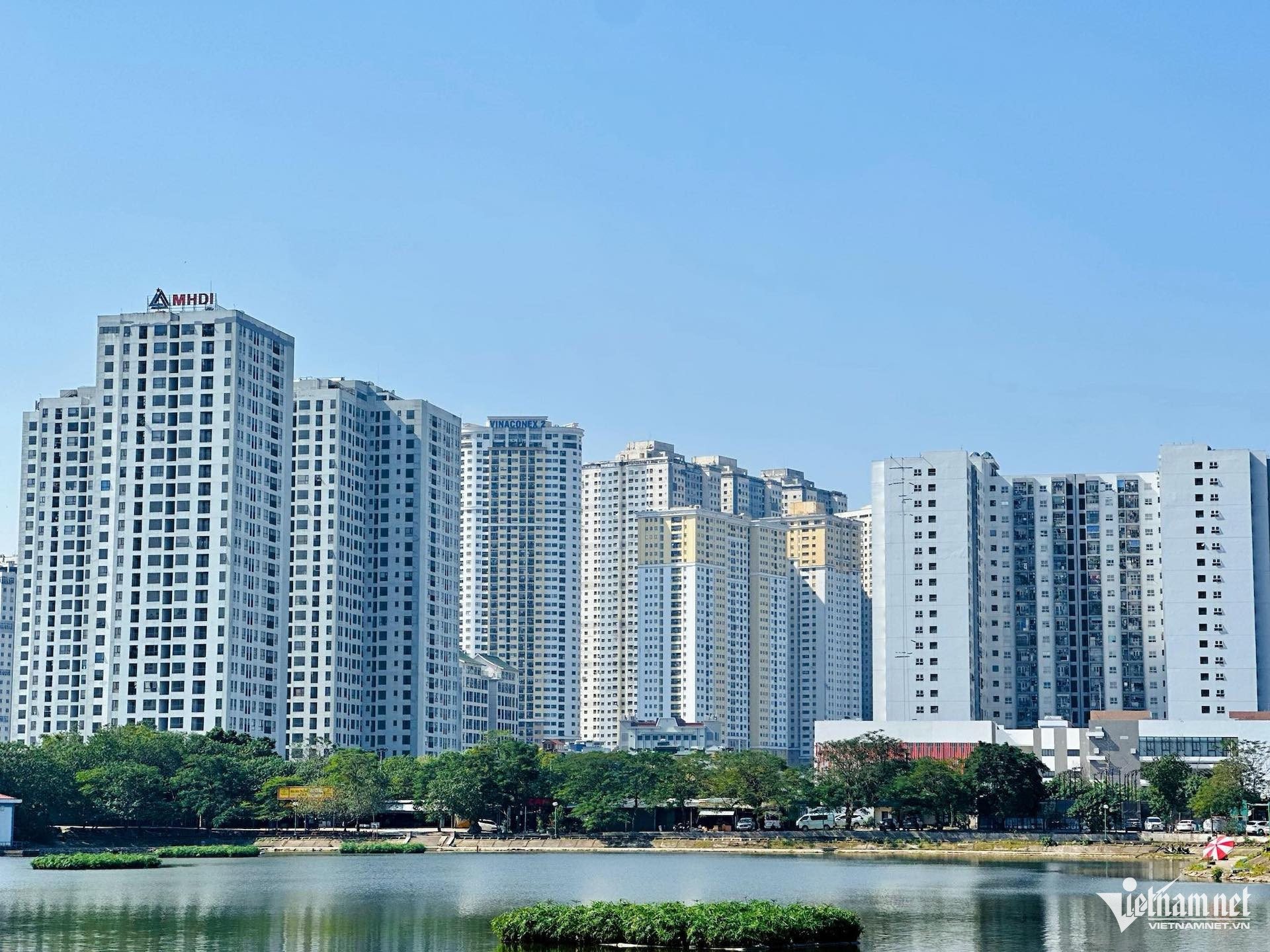
According to Nguyen Vu Cao, Chairman of Khang Land, the current market structure is heavily skewed toward high-end developments. At the same time, persistent bottlenecks in capital and legal procedures remain unresolved, while affordable housing for the majority is in short supply. These issues do not exist in isolation but reinforce one another, pushing the market further away from real demand and driving prices to elevated levels.
Recent data from the Ministry of Construction highlights a trend unlikely to reverse in the short term. In the first quarter of 2026, property prices in Hanoi, Ho Chi Minh City, Da Nang, Khanh Hoa, and Dong Nai continued to edge up by 1-2%. While the increases are no longer as sharp, prices remain anchored at high levels after years of steady growth.
This pattern is particularly evident in the apartment segment. In 2025, primary prices in Hanoi averaged around VND100 million per square meter (US$4,100), marking a 40% increase year-on-year. In Ho Chi Minh City, the average reached VND111 million per square meter (US$4,550), up 23%.
Beyond pricing, supply composition has become a persistent bottleneck. Data from the Vietnam Association of Realtors’ Institute for Real Estate Market Research (VARS IRE) shows that roughly 85% of newly launched apartments in Hanoi and Ho Chi Minh City are priced above VND80 million per square meter (US$3,300), concentrated in mid- to high-end segments.
Notably, the share of apartments priced above VND100 million per square meter has surged. In 2025, about 25% of new supply - equivalent to more than 20,000 units - fell into this category, nearly ten times higher than the previous year.
Even social housing prices have continued to climb, establishing new benchmarks. In Hanoi, the highest level now exceeds VND32 million per square meter (US$1,300).
From a market perspective, Cao argues that rising costs alone cannot explain the surge. “Many developers acquired land decades ago at very low prices, yet still raise prices in line with market trends. There is also a tendency to withhold supply, anchor prices, or even create artificial scarcity to push prices higher,” he said.
When real estate becomes dominated by expectations of price appreciation and asset hoarding, he added, it inevitably drifts away from intrinsic value.
From a legal and structural standpoint, lawyer Truong Anh Tu, Chairman of TAT Law Firm, believes the issue goes beyond pricing metrics. Instead, it reflects a deeper imbalance in how the market develops.
“The market is operating on a ‘build what can be sold’ basis, rather than ‘build what society needs’,” he said. “We are not lacking products, but we are lacking the right products.”
In his view, real estate has evolved beyond a purely economic sector into a broader social issue, directly affecting people’s ability to settle down, build livelihoods, and shape long-term urban development.
Returning the market to real value
Economist Vu Dinh Anh, former Deputy Director of the Institute for Market and Price Research under the Ministry of Finance, argues that the root of the problem lies in how real estate is perceived within the economy.
Real estate, he noted, is not only an investment channel but also a production sector. Over the past decade, it has transformed significantly, with projects expanding into large-scale developments spanning thousands of hectares and requiring investments worth tens of trillions of VND.
“If we fail to recognize this role correctly, policies will only address surface issues without tackling the root causes,” he said.
From this perspective, Vietnam’s real estate market now faces the need for comprehensive restructuring in the new government term. The focus should not simply be on increasing supply, but on rebalancing product segments to better serve genuine housing demand.
One key direction is the development of reasonably priced commercial housing - targeting middle-income buyers who do not qualify for social housing but cannot afford high-end properties. This segment is seen as a critical missing piece in restoring market balance.
However, its development will require strong policy support, including incentives related to land, credit, and streamlined legal procedures. Without such measures, developers may lack motivation to participate due to lower profit margins compared to high-end projects.
Legal reform remains another central pillar. Simplifying approval processes and resolving overlapping regulations could help unlock supply and ease price pressures.
A promising initiative is the development of a national real estate identification system. By assigning each property a unique ID, information on legal status, transactions, and taxation can be made transparent. This would not only reduce fraud but also help the market operate based on real value rather than speculation.
From a business standpoint, Cao believes the market is already forcing developers to adapt. Instead of chasing short-term profits, they must shift toward meeting real housing demand, optimizing costs, and improving product quality.
Data from VARS IRE also reveals a notable trend: while genuine housing demand remains significant, investment demand continues to dominate. In 2025, more than 75% of transactions were driven by buyers purchasing second homes or more, with around 10% using short-term financial leverage.
According to Truong Anh Tu, the central question is how to ensure the market develops in a healthy, sustainable way that serves the broader population. When real estate is overly driven by wealth accumulation, it becomes prone to instability and struggles to achieve long-term balance.
In this context, the regulatory role of the government, particularly the Ministry of Construction, becomes more critical than ever. The challenge is not only to sustain growth, but to guide the market toward stability, sustainability, and accessibility for the majority.
Hong Khanh
.svg)
