 Vietnamnet.vn

 Podcast



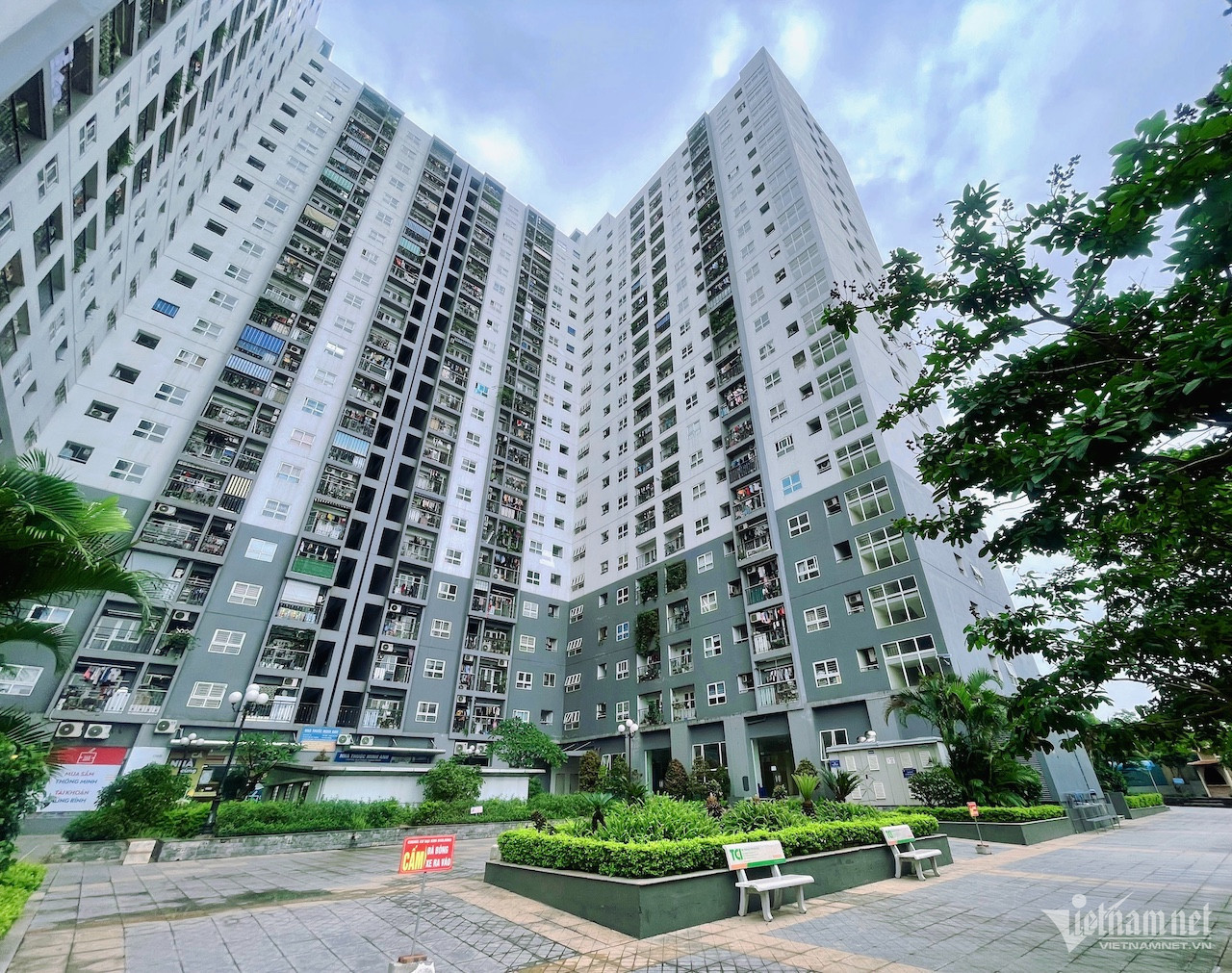
They are not eligible for social housing, yet are not wealthy enough to compete in the fiercely contested commercial housing market.
They are young households - intellectuals, engineers, university graduates, public and private office workers, with a combined income of VND20–30 million per month.
According to the PM’s latest directive, this is a group that deserves special attention. However, the harsh reality is that with the house price-to-income ratio exceeding 20 times, the dream of owning a 60 sqm apartment is becoming more distant than ever. Without intervention, they have to choose to either shoulder massive bank debt or accept precarious rental lives in urban areas.
The root cause lies not only in a supply shortage but in a dangerous shift in the nature of housing. From an essential consumer good for "settling down," housing is being transformed into a financial tool for "accumulation."
When capital, instead of flowing into production, is buried in land with expectations of infinite price appreciation, "speculation" becomes the hidden enemy stealing opportunities from those with genuine housing needs. Without the State’s regulatory hand, this gap will never be filled by private enterprises that naturally chase the highest profit margins.
Lessons from neighboring countries
Singapore is often cited as a public housing legend, but few people know how they manage the middle-class segment through the Executive Condominium (EC) model, a "hybrid" between public and private housing.
In Singapore, the concept of buying and selling for short-term profit is neutralized by Minimum Occupation Period (MOP) regulations. Owners are required to live in the property for five years (and up to 10 years for prime locations) before being allowed to resell. This regulation acts as a filter, immediately eliminating "flippers" and speculators, as no "shark" wants to tie up capital for a decade without liquidity.
Furthermore, to ensure fairness, Singapore applies a Resale Levy. If you have benefited from a subsidized first-time home purchase and wish to buy a second one, you must pay a fixed penalty of up to SGD70,000 to return the previous subsidy.
While Singapore uses administrative regulations, South Korea and Taiwan (China) use tax tools as "heavy artillery" deterrents.
Facing rampant speculation, South Korea applied a "punitive" transfer tax of up to 70 percent of profits if a house is sold within the first year. The message is clear: a house is for living, not a stock for day-trading.
In France, the waste of land resources is considered an economic crime. The tax policy on vacant homes is a heavy blow to the wealthy who like to "hoard land." A dwelling that remains unoccupied (based on electricity and water data) is automatically taxed, with the rate increasing annually, potentially reaching 34 percent of the rental value.
Time for "bitter medicine"
In the draft Political Report to be submitted to the 14th National Party Congress, the Party identified the goal of "establishing a National Housing Fund." This is the most crucial "passport" to boldly legalize the housing segment for this specific group.
Based on valuable international lessons, it is time for Vietnam to courageously prescribe strategic "bitter medicines."
First, it is necessary to legalize a new housing segment positioned between social housing and luxury housing, with a controlled price ceiling (e.g., VND35 million/m2 in major cities), which could be named "Mass Commercial Housing." To achieve this, the mindset regarding land bidding must change radically.
Instead of auctioning land to collect the highest amounts of money for the budget (which inadvertently drives up house prices), the State should conduct tenders to select developers who commit to the lowest selling price. This is a trade-off: short-term budget revenue for long-term social security.
These projects should be placed on a "Green Lane" for procedural approvals and a "White List" for credit to ensure cheap capital flows to the right address.
Second, Vietnam can apply a progressive transfer tax based on holding duration. Bringing both future-formed housing transactions and share transfers of real estate companies (if more than 50 percent of company value is real estate) under real estate transfer income tax, with a 30–40 percent profit tax on “flipping” transactions within the first year, would immediately cool overheated speculation.
Third, a National Housing Savings Fund (similar to Singapore's CPF or Indonesia's Tapera) must be established. With a fixed lending interest rate of around 6 percent per annum for 20-30 years, the monthly repayment burden would be significantly reduced, helping young people realize their dream of homeownership.
Vu Diep
.svg)
