 Vietnamnet.vn

 Podcast



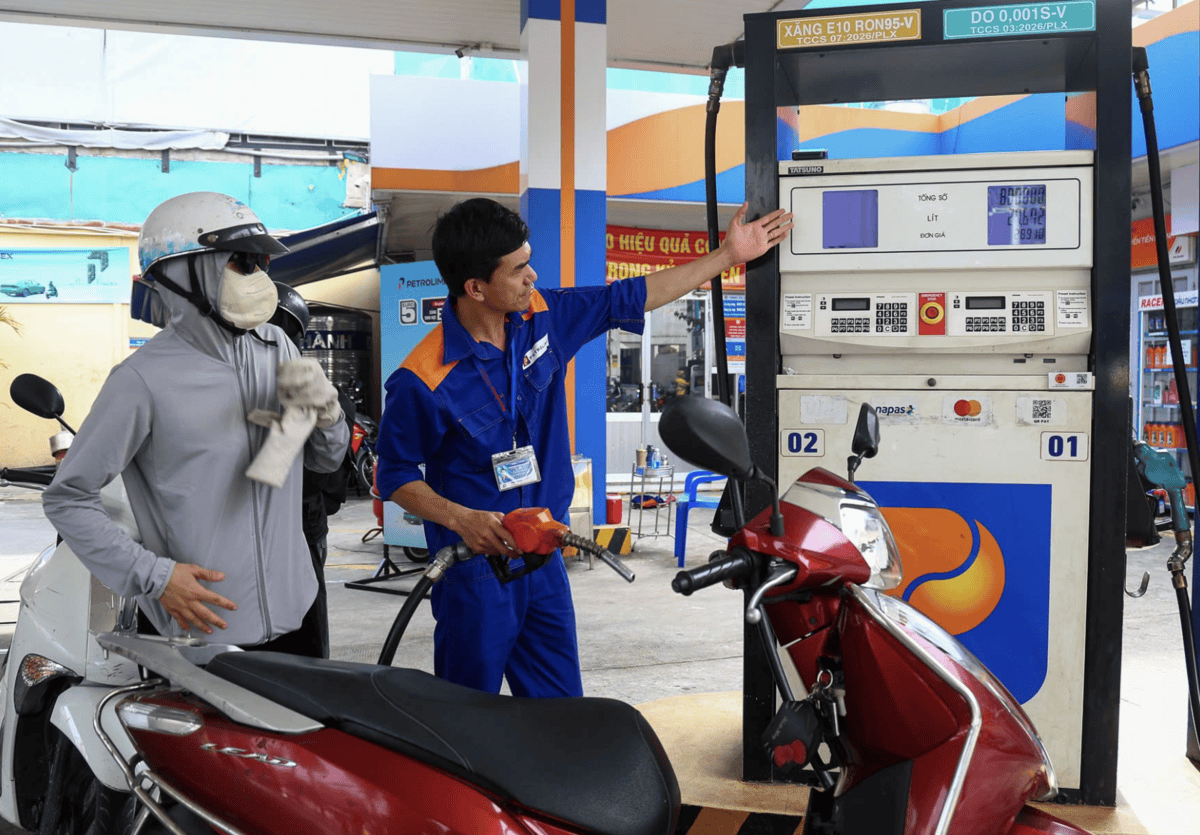
Under such circumstances, the state will intervene using tax tools, fees, and regulatory mechanisms.
The Ministry of Industry and Trade (MOIT) is collecting public feedback on a draft decree governing petroleum business operations. A key highlight of the draft is changing price management principles toward increasing business autonomy while reducing state intervention.
Under the proposal, the state will cease announcing base prices on a weekly basis every Thursday as currently mandated. Instead, major importers and distributors will have the right to determine and announce retail prices across their distribution networks based on a state-regulated price formula.
Following price adjustments, enterprises will be required to declare and submit pricing data to regulatory authorities for monitoring and supervision.
For remote and isolated areas, the retail price of distributors must not exceed the highest price announced by key traders in the same area to ensure social welfare.
Tran Huu Linh, director general of the MOIT’s Domestic Market Management and Development Department, stressed that granting autonomy to enterprises in determining retail prices must go hand in hand with heightened responsibilities and state oversight.
"The state will only announce price-forming elements, specifically normative business costs, for traders to apply, thereby helping prevent unreasonable price hikes," Linh said.
The CEO of a Hanoi-based petroleum distribution enterprise noted that in many countries worldwide, businesses actively set retail petroleum prices. In Vietnam, the state continues to announce base prices while researching options to grant price-setting autonomy to petroleum traders.
According to the executive, empowering traders to determine and declare retail prices will allow domestic prices to adjust more flexibly while tracking global market movements closely.
Furthermore, under a market mechanism, enterprises must strictly manage their entire operational chain, from sourcing and transportation to distribution, to curb costs. This efficiency will allow businesses to offer more competitive prices to attract customers and enhance market competitiveness.
However, the CEO cautioned that without effective control over smuggling, commercial fraud, and substandard fuel blending, legitimate businesses will face severe hurdles in price competition. Smuggled and substandard products typically sell at lower prices than legally compliant merchandise.
Nguyen Tien Thoa, chair of the Vietnam Valuation Association and former director general of the Price Management Department under the Ministry of Finance, said the draft represents notable reform by transitioning to traders determining petroleum prices based on market signals.
Consequently, domestic petroleum prices will align more closely with global market trends, accurately reflecting supply-demand dynamics, curbing localized shortages, promoting competition, and improving product quality.
State intervention
However, Thoa noted that the draft retains barriers that prevent a fully realized market price mechanism aligned with the Law on Prices.
Under the law, petrol is not on the list of goods priced by the State but belongs to the group of goods subject to price stabilization. Therefore, the State does not directly decide the price or the price-forming factors, except when the market fluctuates abnormally and it is necessary to apply price stabilization measures.
Yet, the draft specifies that the state will determine "normative business costs", a price component that businesses add when calculating final retail prices, Thoa explained.
Crucially, this cost component is not adjusted annually based on actual fluctuations in petroleum business expenses; instead, it tracks variations in the Consumer Price Index (CPI).
CPI reflects general price levels across more than 670 goods and services, many of which are unrelated to petroleum trading. MOIT reviews and announces these costs only once every three years for the subsequent period.
Thoa emphasized that this constitutes a barrier and that price-setting rights should be fully returned to enterprises. Only then will petroleum prices accurately reflect market costs and foster genuine competition.
Regarding concerns that petrol prices may fluctuate when enterprises are granted autonomy, Thoa affirmed that sharp fluctuations will rarely occur, especially when prices are adjusted daily.
However, it does not rule out times when petrol prices may surge abnormally, adversely affecting macroeconomic stability, inflation control, and production activities and people's lives.
"This is a case where the State must regulate the market through instruments such as taxes, fees, funds and appropriate social security policies," he said. These contents are also institutionalized in Article 19 of the Law on Prices. In the case of price stabilization, the State can stipulate a specific price, a maximum price, a minimum price or a price frame to control excessively high prices.
Tam An
.svg)
