 Vietnamnet.vn

 Podcast



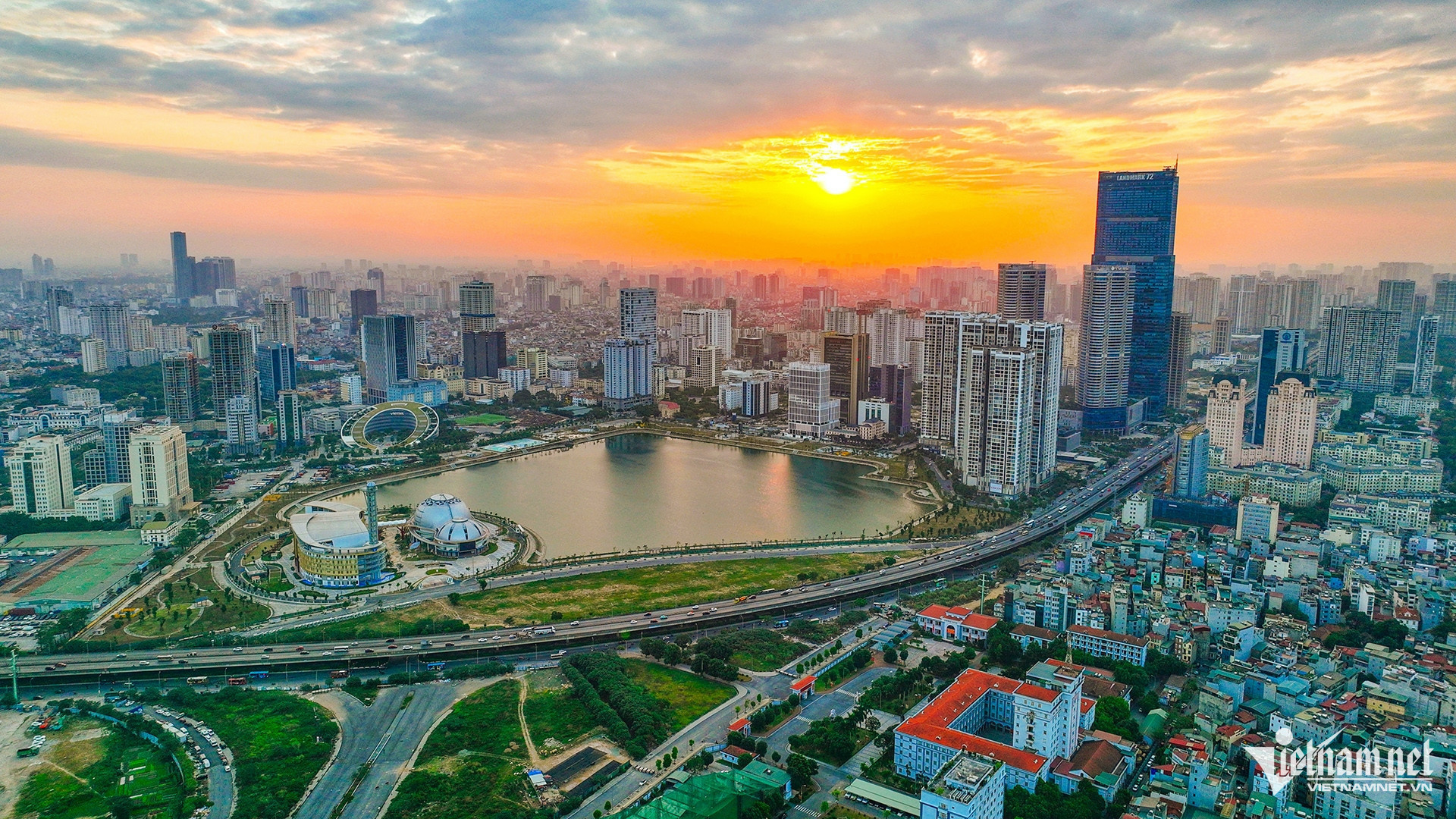
A stable home is not only shelter from the weather but also the foundation that allows individuals to work, study, build families and contribute to society with peace of mind.
For many young people today, especially middle-income workers in major cities, owning a comfortable home in a convenient location for work and daily life has become one of the biggest dreams of their lives. However, that dream is becoming increasingly out of reach as housing prices continue to rise far faster than the incomes of most people.
Affordable apartments in Hanoi and HCMC are now priced at hundreds of millions of VND per sqm. In many areas, land prices have multiplied several times over within just a few years. Meanwhile, workers’ wages have risen very slowly, causing the gap between income and housing prices to widen further.
This is no longer merely a story about the real estate market. It has become a major socio-economic issue that requires serious attention. If most workers cannot access housing, the consequences will extend beyond living difficulties to affect social structure, workforce quality and the country’s sustainable development.
One of the key reasons behind soaring housing prices is the mindset of treating real estate as a safe and profitable asset for wealth accumulation.
Amid volatility in other investment channels, property is often viewed as a form of savings, a symbol of success and a guarantee of long-term financial security. This mentality has driven demand not only for housing to live in but also for investment and speculation.
Many people own multiple homes and plots of land without using them, simply waiting for prices to rise before reselling for profit. This has fueled speculative cycles that push prices far beyond real value and ordinary people’s affordability.
This reality has been highlighted by Party General Secretary and State President To Lam, who emphasized the need to “prevent housing from becoming a speculative asset.” His remarks show that the housing issue today is not merely about an economic matter but also social fairness and the country’s development orientation.
Many economists worldwide have also warned about the risks of the “financialization” of housing, meaning turning homes from essential living needs into tools for investment and speculation.
Economist Joseph Stiglitz argued that when real estate is dominated by speculation, housing prices become detached from real use value, creating social inequality and economic instability. This is particularly true in large cities, where land supply is limited while speculative capital flows in aggressively.
In Vietnam, the phenomenon of "flipping", i.e., buying and reselling within short timeframes for quick profits, has pushed land prices to abnormal levels in many localities.
The worrying thing is that these price hikes are primarily driven by speculative expectations rather than reflecting the genuine utility value of the property. Consequently, the end buyers are usually those with a real need for housing, yet they must accept an exorbitantly high price.
The social fallout of this situation is immense. Many young people, despite having stable jobs and high qualifications, remain unable to afford a home even after years of labor. Not a few young couples are postponing marriage and childbirth due to housing pressures. The dream of "settling down," as a result, becomes increasingly fragile.
Alongside speculation, the supply of social housing and affordably priced housing currently faces a critical deficit. While the demand from workers, laborers, and young civil servants is immense, many commercial housing projects focus instead on the mid-to-high-end segments to maximize profits. This leads to a paradox: the market has plenty of projects, yet people with real needs still find them difficult to access.
Changing perception toward housing
Resolving this issue requires a long-term system of solutions. First and foremost, it is necessary to explicitly define housing as primarily a social welfare need rather than a mere investment commodity.
The State needs to implement policies to control real estate speculation through taxation on owners of multiple properties or short-term transactions, aiming to restrict buying and reselling for profit. Many nations, such as Singapore or South Korea, have applied high taxes on property speculation to ensure the market serves actual housing needs.
In tandem with this, there must be a vigorous development of social housing, as well as housing tailored for middle-income earners and young people. This cannot be viewed solely as the responsibility of businesses, but must be treated as a national development strategy.
Hong Khanh
.svg)
