 Vietnamnet.vn

 Podcast


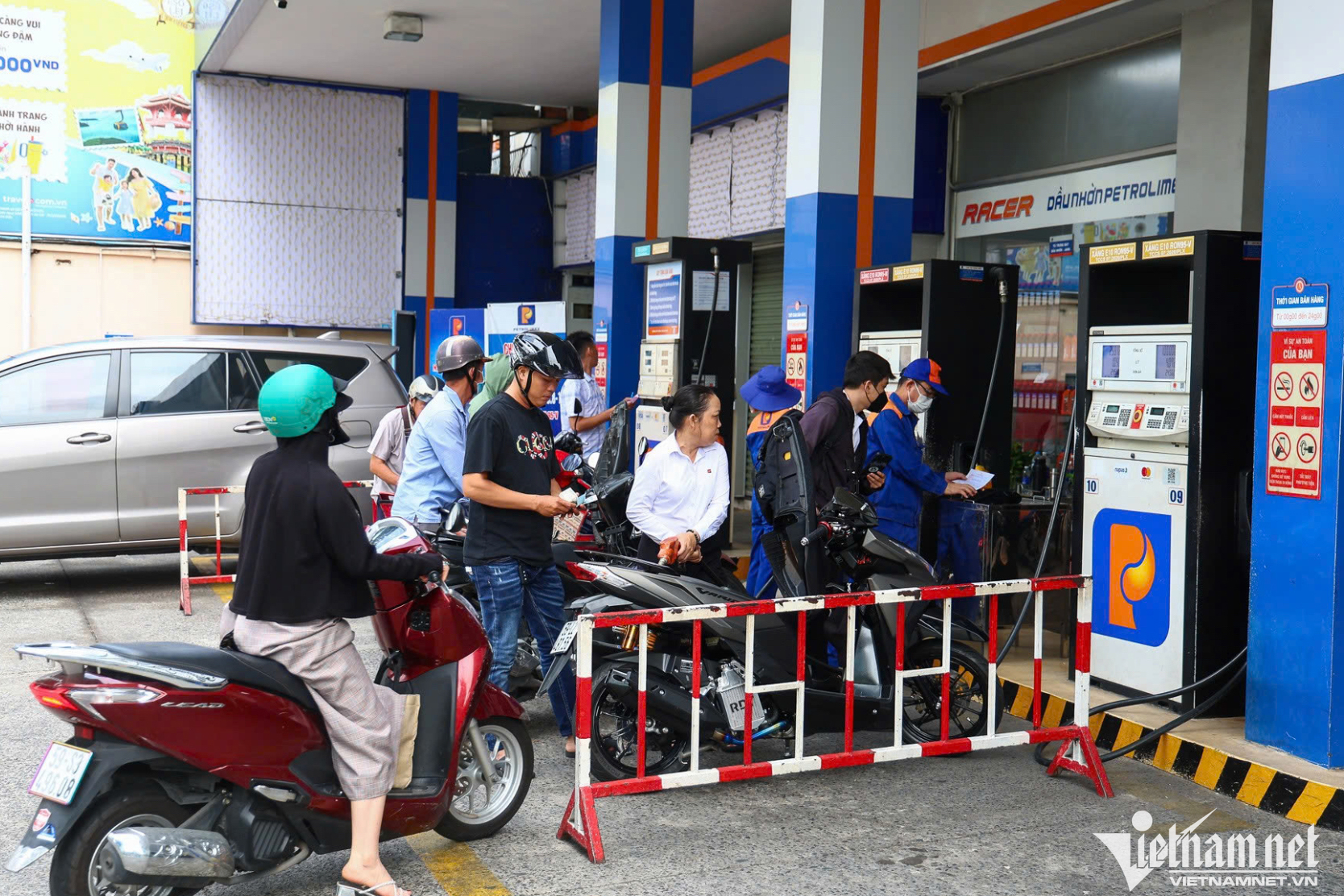
The government has agreed to forgo more than VND7.6 trillion in gasoline tax revenue to help curb fuel prices.
At the government’s regular October meeting, Prime Minister Le Minh Hung said the state budget “must share responsibility with the economy, the people and businesses.”
The government remains committed to its double-digit growth target, but the Prime Minister has made inflation control its top priority for the final two months of the year. He explained that if prices become unstable, the benefits of economic growth will be difficult to translate into improved living standards for the public.
The pressure is already evident. Average consumer prices rose 4.57 percent in the first ten months, exceeding the 4.5 percent target set for the entire year. Fuel prices have surged, while interest rates and exchange rates have also added to businesses’ operating costs.
Retail sales of goods and consumer services grew 13.5 percent, but after adjusting for price increases, growth stood at just 7.7 percent, only slightly above the 7.4 percent recorded in the same period last year. Purchasing power is improving, but the additional momentum remains modest at a time when the economy is counting on year-end consumption.
For businesses, selling more products does not necessarily mean having more cash on hand. The number of newly established businesses and those resuming operations fell nearly 20 percent year-on-year in October, marking the fifth consecutive month of decline.
This figure is particularly noteworthy as businesses typically need to advance capital to stock up on goods, purchase raw materials and prepare to pay year-end wages. Lower input costs at this point could help them reduce their borrowing needs to cover these expenses.
When prices rise, people have to tighten their belts
In 2025, Vietnam’s GDP per capita stood at $5,066, equivalent to around 35 percent of the global average. At the household level, the ability to withstand rising prices depends largely on whether people have a stable income.
According to the Statistics Office, informal workers accounted for 60.6 percent of all employed people in the third quarter. For a motorbike taxi driver earning a living day by day, three days spent sick at home mean three days without income. Yet the landlord still expects rent on time. When gasoline prices rise, the driver has to spend more money before even setting off in the morning. Rent is difficult to cut, and so is fuel spending. When shopping for food, they may end up buying less meat.
Even at an age when they should be enjoying retirement, many older people still have to work or depend on their children and grandchildren.
According to Vietnam Social Security in 2025, 73 percent of older people receive neither a pension nor a monthly social insurance allowance. For families supporting young children and elderly parents on an unstable income, daily food expenses alone account for a large share of their financial calculations.
Food is the people's first necessity. Stable prices allow them to know whether they can continue making ends meet next month with the same amount of money they have today.
How far will the relief go?
From November 1, the luxury tax on gasoline was reduced to zero percent, with the measure remaining in effect through the end of March 2027. The Ministry of Finance estimates that this will reduce state budget revenue by VND7.6725 trillion over the period.
On the same day, the average retail electricity price was cut by 2 percent after the government reviewed EVN's financial situation. The lost tax revenue will be borne by the state budget, while the lower electricity prices will directly affect EVN's electricity sales revenue.
According to estimates released by the Ministry of Finance, the impact on average CPI for the entire year is around 0.08 percentage points. From now until the Lunar New Year, however, food prices and movements in global markets could still alter these calculations.
Media reports indicate that domestic gasoline prices have fallen by between VND1,575 and VND1,804 per liter, and someone buying 20 liters a month would save VND32,000 to VND36,000 if the reduction is maintained.
If price pressures persist, the state budget may need to consider direct assistance for the households struggling the most.
As for electricity, another challenge is ensuring that EVN has sufficient capital to invest in power generation and transmission infrastructure. A workshop may save some money on its monthly electricity bill, but lose much more if it has to halt production because of power shortages.
Lan Anh

