 Vietnamnet.vn

 Podcast



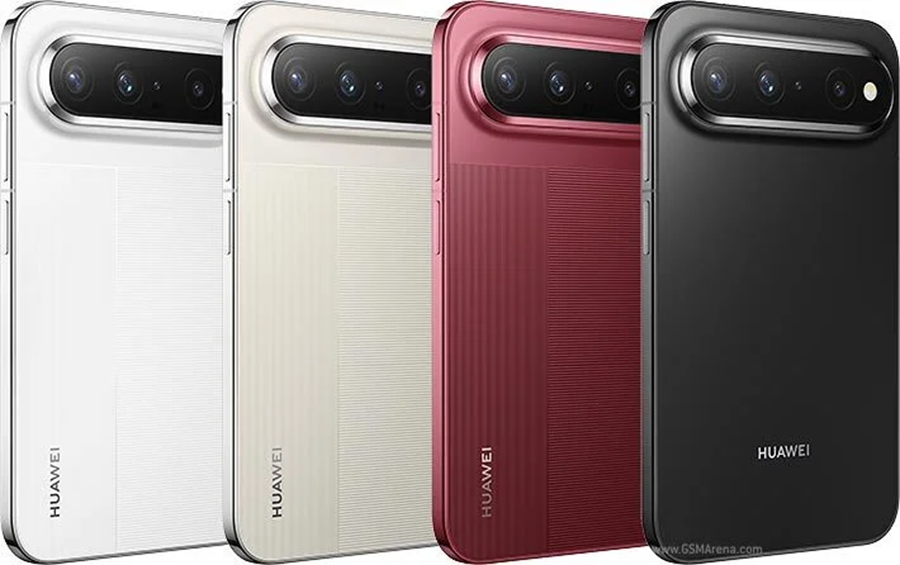
Huawei Pura X View surprises with strong early sales
The Galaxy Z Fold8 and iPhone Duo appear to be pushing smartphones toward a new generation of large, foldable screens.
But another shift may also be taking place: consumers appear to be showing interest in wider displays even when the phone itself does not fold.
Huawei was among the first manufacturers to experiment with the wider smartphone format with the Pura X. While the Galaxy Z Fold8 and iPhone Duo have attracted greater attention, Huawei has continued to pursue the concept with the Pura X View, a wide-screen phone without a folding mechanism, unveiled at the launch of the Enjoy G9 SUV earlier this month.
The strategy appears to be gaining traction. According to data shared by well-known leaker Digital Chat Station, the Huawei Pura X View sold more than 280,000 units in its first five days.
That put the Pura X View at the top of sales volume among wide-screen smartphones from all brands in the 37th week of 2026.
The figure is particularly notable because the wide-screen, non-folding design remains relatively unusual in today's smartphone market.
The Pura X View's shape recalls the early 2010s, when smartphone displays were rapidly increasing in size.
At the time, the term "phablet" was widely used for devices that sat somewhere between smartphones and tablets, typically with screens measuring around 5 to 6.9 inches.
The concept gradually faded as larger displays became standard across the smartphone market and smaller tablets became less common. The Pura X View, however, is bringing the idea back in a different form.
Importantly, the Pura X View is not simply a modernized phablet. In essence, it could be viewed as a non-folding version of the Pura X Max, as Huawei tests whether consumers are interested in a wider form factor beyond foldable devices.
If sales remain strong, Huawei could have further reason to develop an entirely new smartphone line built around this screen ratio.
Wide display, flagship hardware and an ultra-thin body
The Pura X View features a 6.39-inch display with a 5:3 aspect ratio, making it significantly wider than the tall, narrow smartphones that dominate today's market.
The screen supports a 120Hz refresh rate and, according to the published specifications, can reach peak brightness of up to 6,500 nits.
Inside is a 5nm Kirin 9030S chipset running HarmonyOS 7. Huawei offers several memory configurations, with the highest reaching 12GB of RAM and 1TB of storage.
Those specifications suggest Huawei is positioning the Pura X View as a premium device rather than a low-cost experiment.
The camera system is similarly ambitious. Its main camera offers resolution of up to 200 megapixels, an f/1.8 aperture and optical image stabilization.
The phone also features a 50-megapixel periscope telephoto camera with 3.7x optical zoom and an 8-megapixel ultra-wide camera.
More striking is how Huawei has handled the device's dimensions. Despite packing a 7,000mAh battery, the Pura X View is just 6.68mm thick.
The combination of a wide display, large battery and slim body makes it an unusual proposition in the current smartphone market.
Could wide-screen smartphones become the next trend?
The Pura X View's early success may prove short-lived, but it could also signal a broader shift in what consumers want from their smartphones.
For years, phone manufacturers have largely converged on increasingly tall and narrow screens. That format makes devices easier to hold in one hand and suits social media platforms built around vertically oriented content.
A wider display, however, offers different advantages when reading documents, browsing the web or watching multimedia content.
The Pura X View's 5:3 screen ratio is even close to that of the original-generation Kindle, at roughly 1.66:1 compared with around 1.6:1.
It is a proportion once used by Amazon's popular e-reader.
With a wider screen, users could get a reading experience closer to that of a tablet while retaining a device compact enough to function as a smartphone.
For movies, the ratio could also significantly reduce black bars with some cinematic content.
Still, the Pura X View faces questions over everyday usability. Smartphones are frequently operated with one hand, and a wider design could make holding and navigating the device feel different from conventional models.
Even so, sales of more than 280,000 units in five days suggest that at least some consumers are willing to experiment with the format.
Huawei's early success could also encourage other manufacturers to explore wider screen ratios in future products, potentially even combining them with folding designs.
If foldable smartphones are ushering in a new era of pocketable large screens, the Pura X View raises a different question: does the smartphone of the future really need to be tall and narrow?
Hai Phong
.svg)
