 Vietnamnet.vn

 Podcast



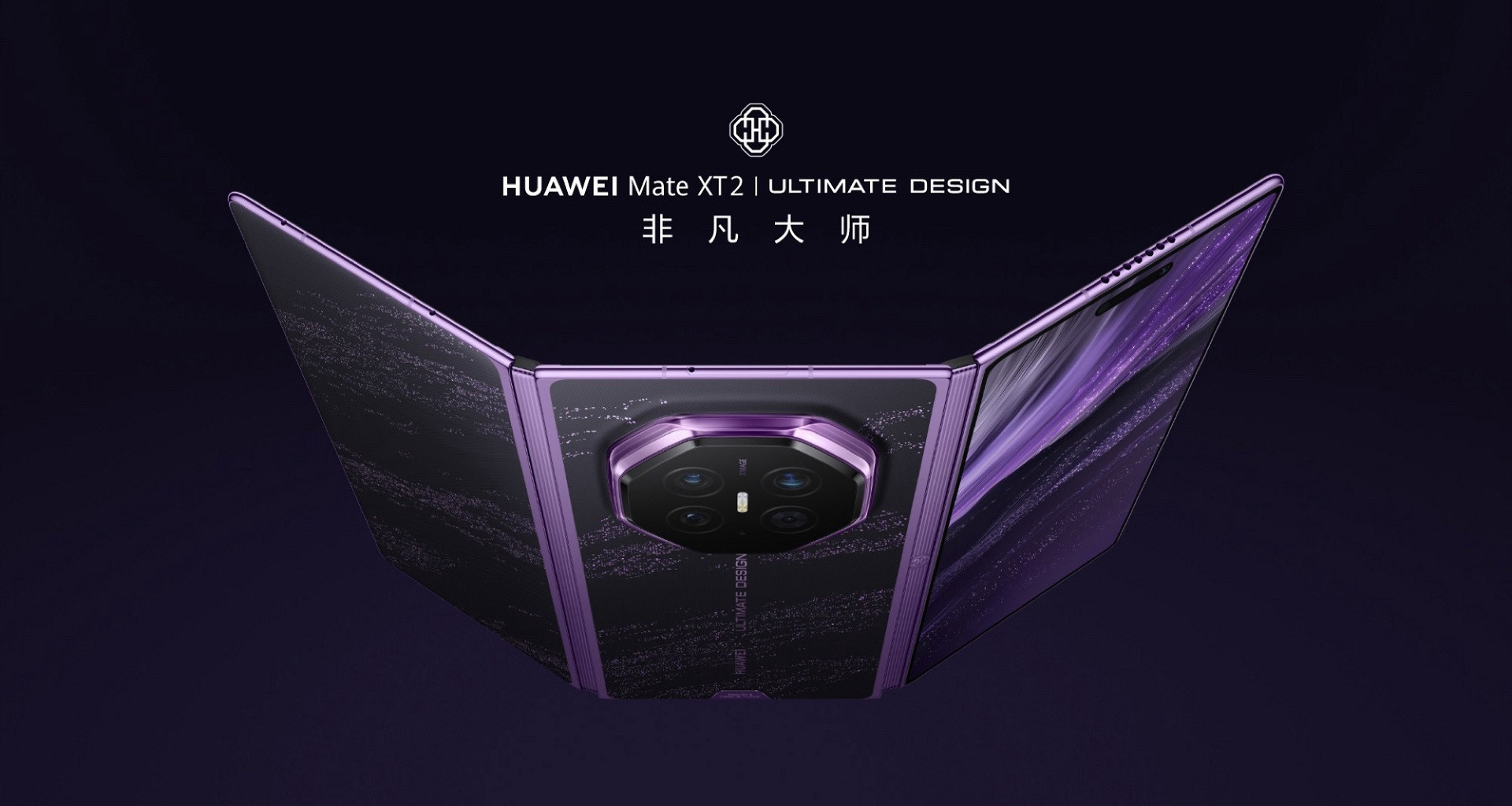
Huawei and Xiaomi launched the Mate XT 2 and 18 Fold, respectively, two premium foldable smartphones featuring large displays, high-resolution cameras, new chips and high-capacity batteries, ahead of Apple’s anticipated foldable iPhone debut.
Huawei Mate XT 2 brings tri-fold design and 10.2-inch display
The Mate XT 2 retains Huawei’s tri-fold design, allowing a device roughly the size of a conventional smartphone when folded to transform into a large 10.2-inch screen.
When folded, the device has a 6.5-inch display, measures 12.3 mm thick and weighs 299 grams. Fully unfolded, its thickness drops to between 3.5 and 4 mm.
The main display uses an LTPO AMOLED panel with a resolution of 3,184 x 2,232 pixels and a standard refresh rate of 90Hz. The secondary display measures 6.5 inches, with a resolution of 2,442 x 1,140 pixels and a 120Hz refresh rate.
The premium version features a Privacy Display that can narrow the viewing angle of the entire screen at the touch of a button, making it harder for people nearby to see what is being displayed.
Huawei has equipped the Mate XT 2 with its Kirin 9050 Pro chip, which the company says is 46% faster than the previous-generation Kirin 9030 Pro.
The phone packs a 5,600mAh battery and supports 66W wired charging and 50W wireless charging.
Its camera system includes a 50MP main camera with a 1/1.28-inch sensor and an f/1.49-f/4.0 variable aperture, a 40MP ultrawide camera and a 50MP periscope telephoto camera with 3.5x zoom.
The Mate XT 2 also offers several features rarely found on foldable smartphones, including electrocardiogram, or ECG, measurements using its metal frame as an electrode, as well as IP59-rated dust and water resistance.
The Mate XT 2 starts at CNY19,999 (about $2,800) in China for the version with 16GB of RAM and 256GB of storage.
The top-end version, featuring 1TB of storage and the Privacy Display, is priced at CNY24,999 (about $3,500).
Xiaomi 18 Fold packs a 200MP camera
On the same day, Xiaomi introduced the 18 Fold, a book-style foldable smartphone measuring just 5.02 mm thick when unfolded and weighing 219 grams.
The device features a 5.38-inch cover screen and a 7.58-inch main display. Both use AMOLED panels with 120Hz refresh rates and peak brightness of 4,000 nits.
Xiaomi has equipped the phone with its ARM-based Xring O3 chip, featuring a 10-core CPU, 16-core GPU and a maximum clock speed of 4.35GHz.
The company claims the chip delivers 52% higher performance than the Xring O1 and can outperform Apple’s A19 Pro in some benchmark tests.
Despite its slim body, the 18 Fold houses a 6,000mAh battery and supports 67W wired and 50W wireless charging.
Its main camera has a resolution of up to 200MP, a 1/1.56-inch sensor and Leica optics. It is accompanied by a 50MP ultrawide camera and a 50MP periscope telephoto camera with 3.5x optical zoom.
The main camera supports 8K video recording at 24 frames per second and Full HD slow-motion recording at 960 frames per second.
The Xiaomi 18 Fold starts at CNY10,999 (about $1,540) in China for the version with 12GB of RAM and 256GB of storage.
The highest-end configuration, with 16GB of RAM and 1TB of storage, costs CNY14,999 (about $2,100).
Huawei and Xiaomi launching new premium smartphones at the same time underscores how aggressively Chinese manufacturers are pushing the hardware race, particularly in areas where Apple has yet to focus heavily, including foldable devices, large displays and fast charging.
The Mate XT 2 stands out with its dual-hinge, tri-fold design and expansive 10.2-inch screen, while the Xiaomi 18 Fold aims to strike a balance between a large display and a lightweight body.
Both command premium prices in China, although the Xiaomi 18 Fold remains considerably cheaper than the top-end Mate XT 2.
Apple, meanwhile, is reportedly preparing to expand the iPhone lineup with a foldable Ultra model that could emphasize design, camera capabilities and a differentiated user experience.
If those reports prove accurate, Huawei and Xiaomi’s premium foldables will soon find themselves competing directly with Apple in one of the smartphone industry’s most valuable and profitable segments.
Du Lam
.svg)
