 Vietnamnet.vn

 Podcast



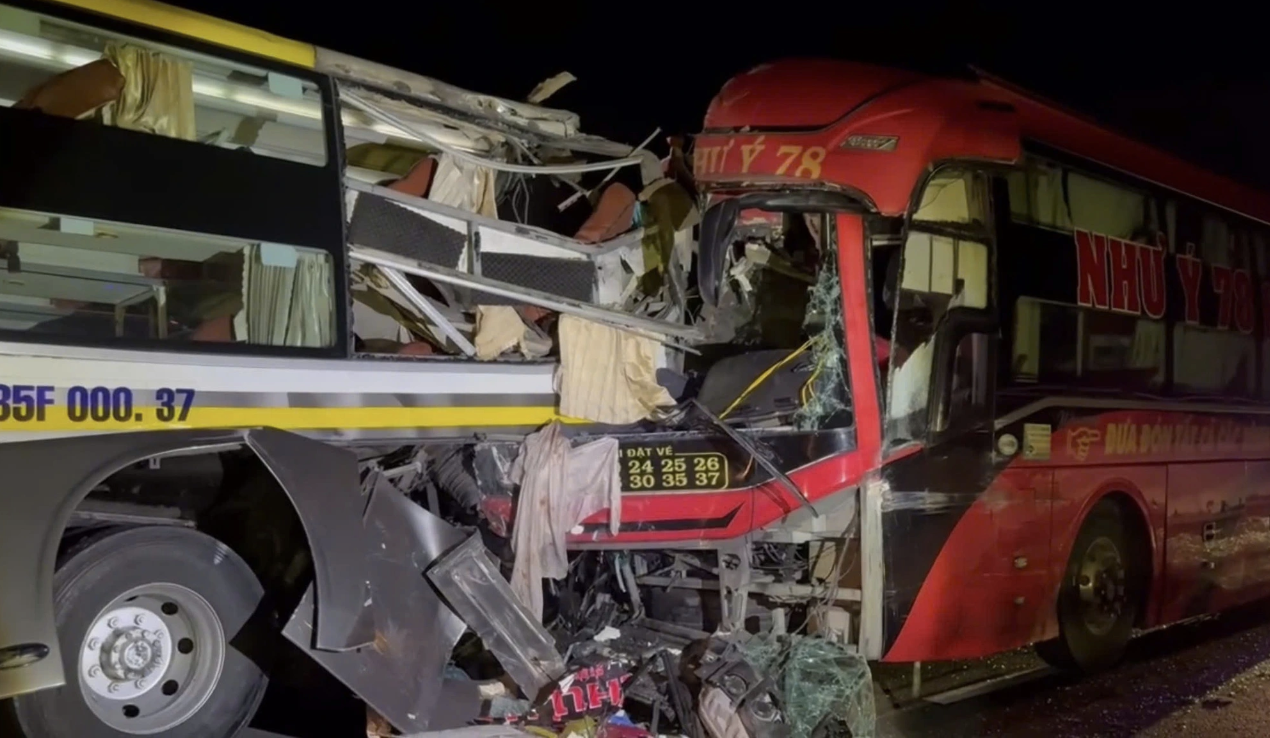
VietNamNet readers suggested that instead of banning, stricter oversight, enhanced driver ethics, and technology to monitor journeys could reduce accidents without affecting a transport mode that can serve millions.
Reader Nguyen Hung stated: “Proposing to ban sleeper buses demonstrates the mindset of ‘if you can’t manage it, ban it’, which has been condemned. Most accidents stem from drivers not following traffic laws, and deeper issues arise from training centers neglecting driver ethics education.”
Reader Tran Van Xuyen said that it would be a blunder to ban sleeper buses, a convenient mode of transport. “Sleeper buses offer many conveniences; the fault lies with drivers, not the vehicle. Long-distance driving, speeding, reckless overtaking, and weaving cause accidents. Should we ban something just because we can’t manage it? No way!”
Many people emphasized that it’s unfair to blame all sleeper buses for a few accidents. Reader Sang Tran Van wrote: “Accidents result from infrastructure, weather, or drivers, not the vehicle. Don’t blame the vehicle for every accident!”
Nguyen Minh warned: “Thousands of sleeper buses have been licensed with significant investment. Banning them would drive transport firms to bankruptcy.”
He noted that modern sleeper buses represent an evolution in transport services, from “stormy rides” to “ground planes.” Instead of banning, he suggested strict journey monitoring with technology, more rest time for drivers, and harsh penalties for violations, including revoking business licenses if necessary.
Professional pressure, lax management
Meanwhile, reader Nguyen Ngoc pointed out another reason. “Drivers don’t want to overspeed or overload passengers, because they don’t earn extra money from this, but they have to do this under the pressure from bosses. If they don’t meet demands, they’re fired. Even city buses face time pressures.”
He thinks that drivers shouldn’t be stereotyped as reckless, and transport companies need to take more responsibility.
Phan Hoang has also raised questions about driver training quality. He recalled that years ago, to drive large passenger buses, drivers had to work as assistants for 1-2 years, learning to navigate passes, understand passenger psychology, and stay calm. He suggested that consistent, fair penalties would deter violations more effectively than increasing fines.
While some readers have opposed the ban, others have suggested more specific management measures.
Hoang Bui suggested stricter technical inspections and higher penalties for violators. “It’d be better to limit bus speeds by type and restrict sleeper buses from dangerous mountain passes,” he said.
Reader Hoang Lam added: “Limit maximum speeds, enforce strict inspections, ensure drivers have appropriate licenses and years of experience, and tighten oversight by authorities to reduce accidents and ensure passenger safety.”
People all agreed that society unfairly blames vehicles while overlooking human factors and operational specifics.
One reader noted: “We often mistakenly assume sleeper buses are the main cause of accidents. In reality, they mostly operate at night, when drivers battle their biological clocks while driving at high speeds with tight arrival schedules. A small mistake can lead to serious accidents.”
“Vehicles aren’t at fault; people are,” this reader said, adding that banning sleeper buses would be challenging and not feasible since they meet legitimate and common needs - boarding at night, sleeping, and arriving in the morning for work.”
Canh Chim Khong Moi 919191 wrote that he could not understand why people blamed vehicles for accidents.
“Were buses or roads as good back then as they are now? So why blame the vehicle? Accidents are solely due to drivers. Speeding and weaving make it impossible to react in time, and fatigue from continuous driving causes crashes. Driver training was terrible - too much theory, and instructors lacked ethics, teaching recklessly. A driver honking loudly at midnight—where’s the ethics? Then they drive recklessly, and when something happens, the vehicle gets blamed,” he commented.
Reader Dien Huu Do wrote: “Among the reasons sleeper buses cause accidents, we must examine who approved converting seated buses into sleeper buses! Raising the vehicle’s center of gravity makes it prone to tipping, and the equipment isn’t suitable. Properly designed sleeper buses should be allowed, but converted ones should be reviewed and potentially stopped.”
Vu Diep
.svg)
