 Vietnamnet.vn

 Podcast



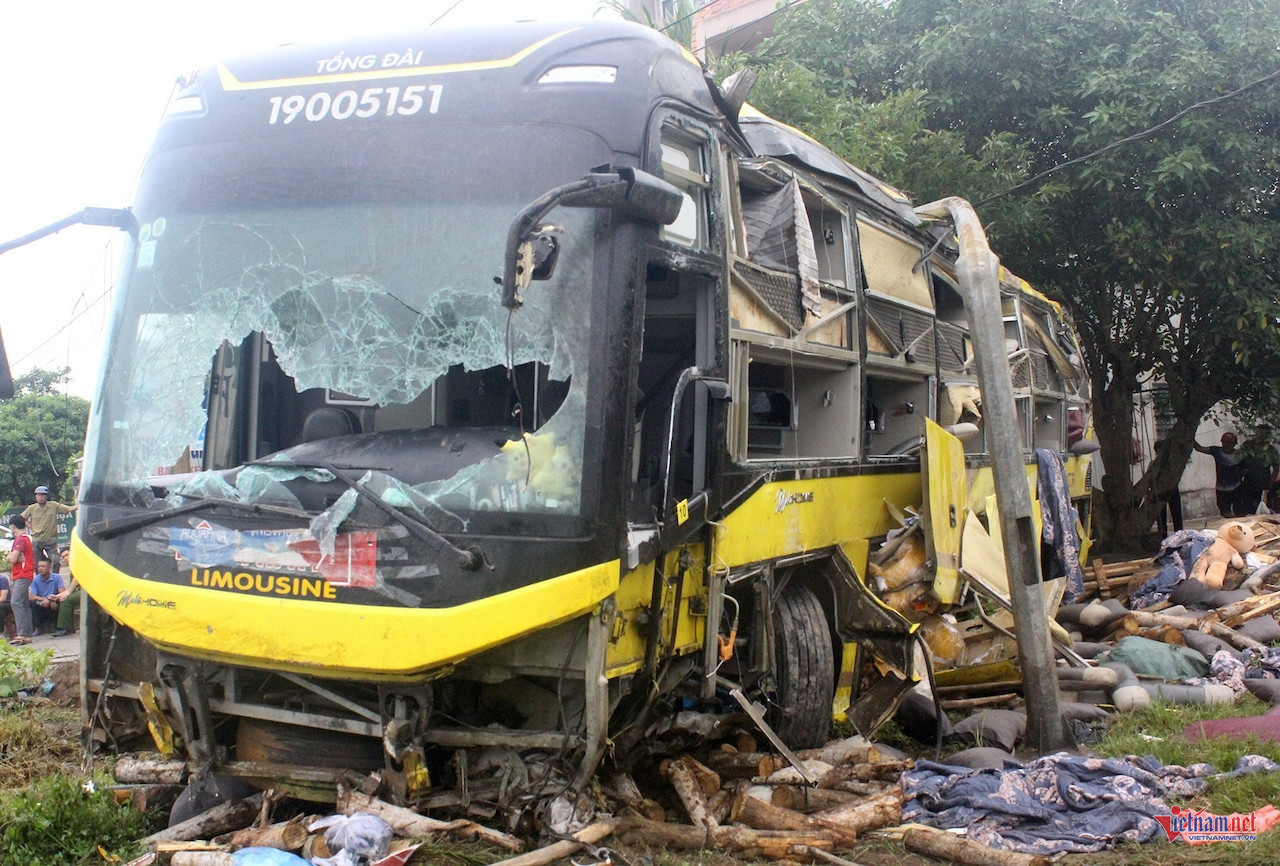
At a conference on August 1, organized by the Traffic Police Department (Ministry of Public Security), some attendees suggested stricter management or banning of sleeper buses to minimize traffic accidents.
Vu Duc Hoang, a representative of Hoang Long transport company, said these buses are no longer safe as they are essentially self-modified vehicles.
Major General Do Thanh Binh, head of the Traffic Police Department, noted that passenger buses account for only 2.49 percent of total road vehicles but are involved in 37.1 percent of traffic accidents and over 40 percent of fatal accidents. For trucks and semi-trailers, every 1.61 accident results in one death.
"The low number of transport vehicles causing a high number of accidents is a high figure," Binh said.
At the conference, Lieutenant Colonel To Quang Minh, head of the Patrol and Traffic Control Department, reported that in the past six months, five particularly severe traffic accidents involving passenger transport vehicles occurred nationwide, resulting in 26 deaths and 46 injuries.
Of these, four accidents involved sleeper buses. Notably, Tan Kim Chi Company had two buses involved in two accidents in February and July, causing 13 deaths and 22 injuries.
Vu Duc Hoang, director of Hoang Long Transport, said his company was among the first to operate over 100 sleeper buses. The buses were modified from 45-seat vehicles, and a roadmap to phase them out is needed to reduce accidents.
The company suggested prohibiting sleeper buses from operating between 2:30am and 5:30am, though further research and discussion are needed for consensus.
A representative from Hai Van Transport and Tourism proposed analyzing each accident to determine whether the cause lies with the driver or the vehicle.
"We were among the first to use sleeper buses. The biggest issue is safety management. With strict safety protocols, accidents are caused by human error, not the vehicle type," he said.
They also noted that some sleeper buses have double cabins. leading to a situation where a registered bus has 22 rooms but carries up to 44 passengers.
"Double cabins enhance passenger convenience but have only one seatbelt. In accidents, the main cause of death is not wearing seatbelts. We suggest traffic police strengthen enforcement against this violation to prevent accidents," the representative added.
Varied opinions
Nguyen Van Quyen, chair of the Vietnam Automobile Transport Association, said there is no legal basis to ban sleeper buses.
He explained that sleeper buses are registered and inspected per safety and environmental regulations. The self-modification only involves interiors and must follow approved designs and procedures by authorized agencies.
"All registered and inspected sleeper buses meet safety and environmental standards for road use. Concluding they are unsafe due to approved interior conversions is incorrect," Quyen said.
Do Van Bang, chair of the Hanoi Transport Association and director of Minh Thanh Phat Co, noted that road passenger transport bears a significant burden compared to other transport modes.
Ban said 94.7 percent of passengers choose road transport, while air travel accounts for 1.3 percent, with the rest using rail and waterways.
This highlights road transport's essential role amid underdeveloped infrastructure, as other modes cannot meet public travel demands.
Bang noted that with expensive airfares and slow train travel, sleeper buses remain the optimal choice for long-distance travelers. "No passenger would endure sitting for dozens of hours on trips from Lang Son, Ha Giang, or Hanoi to Vinh, Da Nang, or HCMC over thousands of kilometers."
"Only when high-speed rail with superior features emerges will sleeper buses naturally decline. If so, companies will refuse to use sleeper buses," Bang said.
The cause of accidents
Quyen added that many accidents stem not from vehicle structure but from human factors, such as expired tires, inadequate maintenance, or non-compliance with operating regulations. Blaming sleeper buses entirely is not objective.
Do Van Bang said that, based on recent sleeper bus accidents, most were due to human errors like speeding, reckless overtaking, or lack of observation, not the vehicles.
He noted that 97 percent of accidents are due to driver error. To reduce sleeper bus accidents, the priority should be stricter management.
Additionally, companies must enhance monitoring and comply with legal regulations, while drivers need to adhere to laws, including speed limits and certain working hours under specific conditions.
Vu Diep
.svg)
