 Vietnamnet.vn

 Podcast



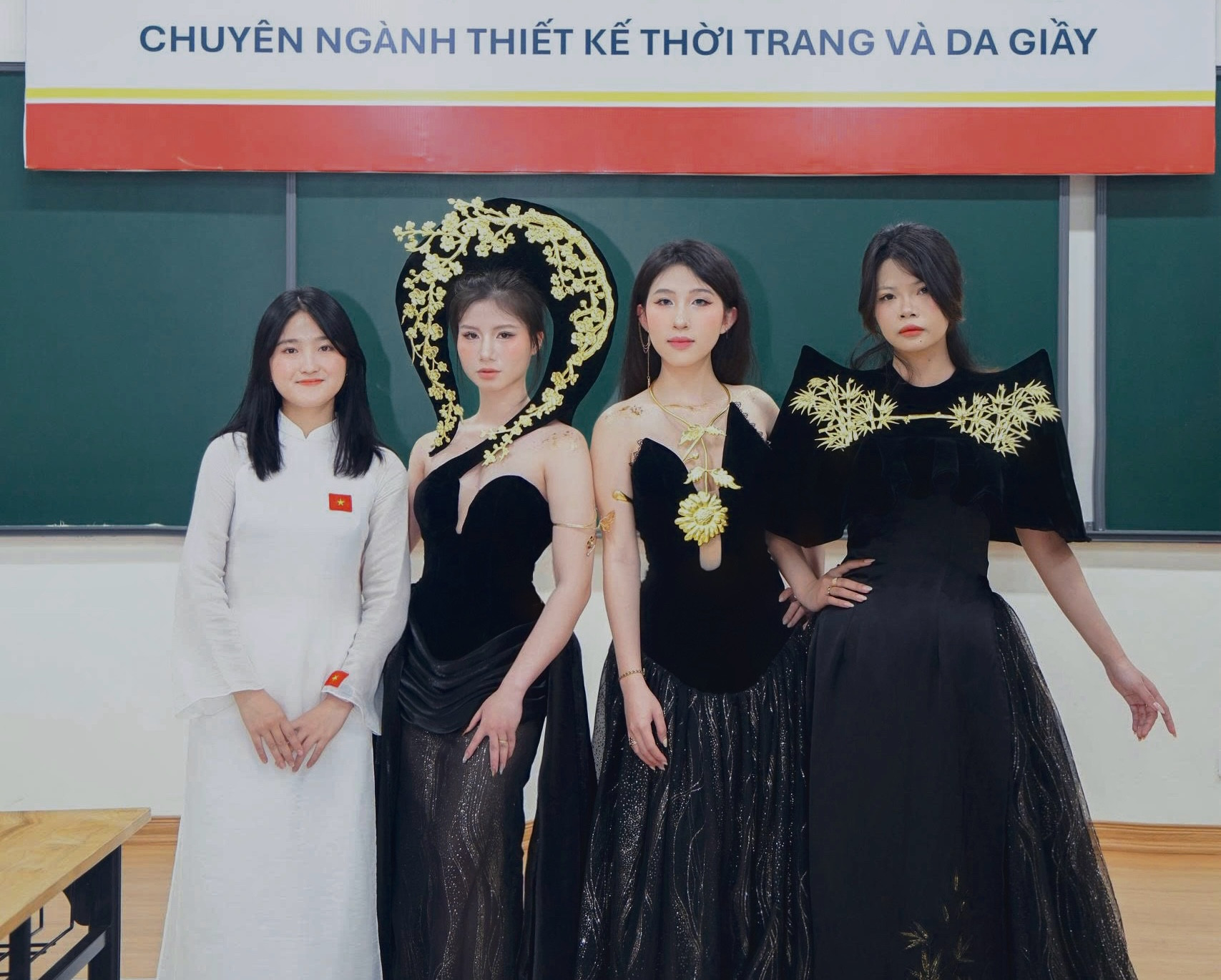
To preserve the craft, the Hanoi University of Science and Technology (HUST) student has chosen to incorporate the silver carving techniques into contemporary fashion.
Lien, originally from Thai Binh (now living in Hung Yen province), is a fashion design student at the School of Materials at HUST. Lien's childhood was associated with the daily sounds of artisans’ tools echoing from the workshop of her maternal grandfather and uncle in the village.
For Lien, silver carving is not just her family's livelihood but an integral part of her memories. It was the afternoons spent observing skillful, meticulous hands at work and the nights assisting her mother with packaging that sowed the seeds of her passion for traditional handicraft values.
Driven by a love for fashion design, Lien decided to pursue the major at HUST. She said fashion is about beautiful ideas as well as structure, technique, and the ability to turn drawings into applied products.
“The HUST environment has helped me develop systemic thinking, trained my perseverance and the ability to produce actual products rather than just drawings,” Lien said.
When pursuing projects that combine fashion, culture, and traditional crafts, Lien does not just view them from an aesthetic perspective but also researches, experiments, and develops ideas methodically.
During her university years, Lien published two publications, including an international paper presented at the 2024 International Design Conference on Integrated Interdisciplinary Innovation held in China.
The research focused on the "Tam Son Thuy Ba" motif, a characteristic pattern in Nguyen Dynasty royal art, and its use in fashion products such as shirts and recycled tote bags.
Lien and her group experimented with refreshing traditional values through manual methods, from hand-drawing to needle felting, helping this motif reach younger generations.
A common value of Lien's research is that she does not view fashion merely as an aesthetic product but as a solution.
“Compared to conventional designs, I want to emphasize sustainability, reusability, and how to connect traditional culture with the needs and tastes of the younger generation. I hope fashion is beautiful, useful, and capable of telling valuable stories,” Lien said.
Preserving traditional crafts
Before starting her graduation project, Lien was always concerned about what she could do to contribute to developing her hometown's traditional craft, which is gradually being forgotten.
From that concern, she decided her graduation project, titled “Three Seasons, One Sound of Carving”, would bring Dong Xam silver carving techniques into contemporary fashion, turning exquisite metal details into highlights on ready-to-wear garments.
The project focused on the problem of refreshing and expanding the output for the Dong Xam craft. Lien approached this by introducing handicraft techniques and values into contemporary fashion, creating products with high applicability and aesthetics, helping the craft village reach younger generations and new markets.
During the project, Lien returned to her hometown to work directly with artisans in Dong Xam village to understand the techniques, processes, and spirit of the craft. Lien said what she learned most was patience, meticulousness, and dedication in every stage.
“There are values that books cannot fully convey. Only by observing and listening to the craftspeople can one truly feel them,” Lien said.
Lien's desire to contribute to her hometown through her graduation project was recognized by HUST. Thanks to this project, she received the “Hometown Connection” scholarship awarded to students with good academic results whose graduation projects bring practical benefits to local development.
“The most meaningful thing is that this scholarship made me feel that the path I chose has companionship and understanding. It also gave me more faith to continue pursuing projects connecting fashion and traditional cultural values in the future,” Lien said.
Lien has completed her program at HUST and is working in the fashion design field to accumulate more practical experience. In the future, Lien wishes to pursue higher education to research and develop projects that combine contemporary fashion and traditional handicrafts.
“I believe that traditional crafts only truly 'live' when they can enter contemporary life naturally and sustainably,” Lien said.
Thuy Nga
.svg)
