 Vietnamnet.vn

 Podcast



As E10 gasoline becomes the only widely available replacement for RON 95 nationwide from June 1, 2026, Vietnam's Ministry of Industry and Trade has responded to a range of questions from motorists concerned about the new fuel's impact on vehicles.
The nationwide transition marks a significant step in Vietnam's efforts to reduce dependence on fossil fuels and move toward its net-zero emissions commitments.
However, the shift has also raised concerns among millions of vehicle owners, particularly those operating older cars and motorcycles.
Ahead of the nationwide rollout, the Ministry of Industry and Trade released a document containing 85 questions and answers about E10 gasoline. VietNamNet highlights some of the most frequently asked questions regarding its impact on vehicles.
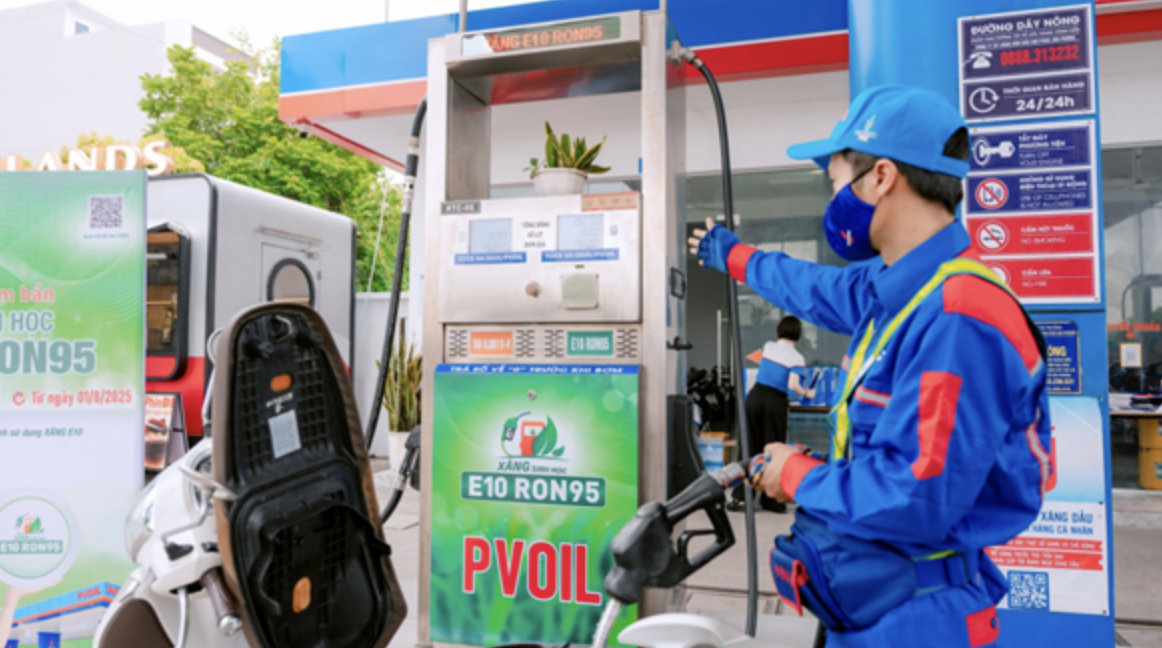
Which vehicles can use E10 gasoline?
Most motorcycles and passenger vehicles currently operating in Vietnam are compatible with E10 gasoline. Exceptions include one discontinued light-duty truck model produced between 1996 and 2023 and a small number of older Suzuki motorcycles whose compatibility has not been confirmed.
Gasoline-powered equipment such as lawn mowers, water pumps, leaf blowers and agricultural machinery manufactured in recent years is generally compatible with E10.
Which vehicles should continue using E5?
Very old cars, motorcycles and gasoline-powered equipment whose compatibility with E10 cannot be verified should continue using E5 gasoline.
Do engines need adjustment before switching to E10?
In most cases, no engine modifications are required. Owners of older vehicles should consult qualified technicians if they have concerns.
Is it necessary to clean the fuel tank before switching?
Generally, no. However, owners of older vehicles with rust inside fuel tanks are advised to clean the tanks before using E10.
Can E10 gasoline damage engines?
Scientific studies conducted both in Vietnam and internationally, as well as years of practical use in countries where E10 has been widely adopted, have found no evidence that E10 damages engines.
Does E10 reduce vehicle performance?
Most drivers are unlikely to notice a significant difference under normal operating conditions. However, in vehicles with rust or deposits in fuel tanks and fuel lines, ethanol's higher solvent properties may loosen debris, potentially restricting fuel flow and affecting performance.
Does E10 increase fuel consumption?
Some tests have shown fuel consumption to be around 2-3% higher than equivalent conventional gasoline. Other studies, however, have produced the opposite result.
Although ethanol contains less energy than conventional gasoline, the presence of 10% ethanol can improve combustion efficiency, helping offset the difference.
Does E10 make engines run hotter?
There is no evidence that E10 causes abnormal engine temperatures when vehicles are operating properly.
Does E10 cause corrosion?
Scientific testing indicates that while ethanol is more corrosive than conventional gasoline, the impact of E10 on engine components is minimal. Most modern vehicles are designed with materials compatible with E10 fuel.
Are there special considerations for vehicles used infrequently?
Owners should start vehicles periodically, monitor fuel condition and follow manufacturers' maintenance schedules.
Should fuel additives be used with E10?
Drivers should not use additives unless specifically recommended by qualified experts or vehicle manufacturers.
Is a water-removal additive necessary?
No additives should be used unless recommended by the engine manufacturer.
Should engine oil be changed when switching to E10?
No. Oil should only be changed according to normal maintenance intervals.
Does E10 affect vehicle warranties?
All automobile and motorcycle manufacturers producing or assembling vehicles in Vietnam accept E10 as an approved fuel. E10 is not listed as a warranty exclusion. Vehicle owners should consult their owner's manuals for specific guidance.
Does E10 affect engine starting?
E10 does not affect vehicle starting under normal operating conditions.
Why do some drivers feel their vehicles lose power with E10?
Reduced performance may result from fuel-system contamination, deposits or inadequate maintenance rather than the fuel itself.
Do driving habits need to change?
Vehicle owners should avoid leaving vehicles unused for extended periods and should continue routine maintenance as recommended by manufacturers.
Should vehicles in storage have full fuel tanks?
There are no official recommendations requiring fuel tanks to be kept full during long-term storage.
Does E10 affect spark plugs?
There is no evidence that E10 adversely affects spark plugs.
Can E10 be used in fuel-injected vehicles?
Yes.
Can large-displacement motorcycles use E10?
Yes, although owners should consult manufacturer guidance for specific models.
Does E10 cause engine deposits?
No.
Can E10 help clean fuel systems?
Yes. Ethanol has solvent properties that may help dissolve and remove existing deposits in fuel systems, particularly in older vehicles with rust or residue buildup.
Does E10 affect engine oil?
There is no evidence that E10 negatively affects engine oil.
Does a vehicle need a new break-in period after switching?
No.
Does E10 affect electrical or air-conditioning systems?
No.
Does E10 affect engine sensors?
For vehicles designed to use compatible fuels, E10 does not cause abnormal effects on engine sensors.
What if E10 is accidentally used in an older, potentially incompatible vehicle?
In most cases, it will not cause immediate problems.
Who is responsible if a vehicle is damaged by E10?
If sufficient evidence proves that E10 fuel caused the damage, the fuel supplier would bear primary responsibility, followed by relevant state agencies responsible for fuel management.
Ngo Minh
.svg)
