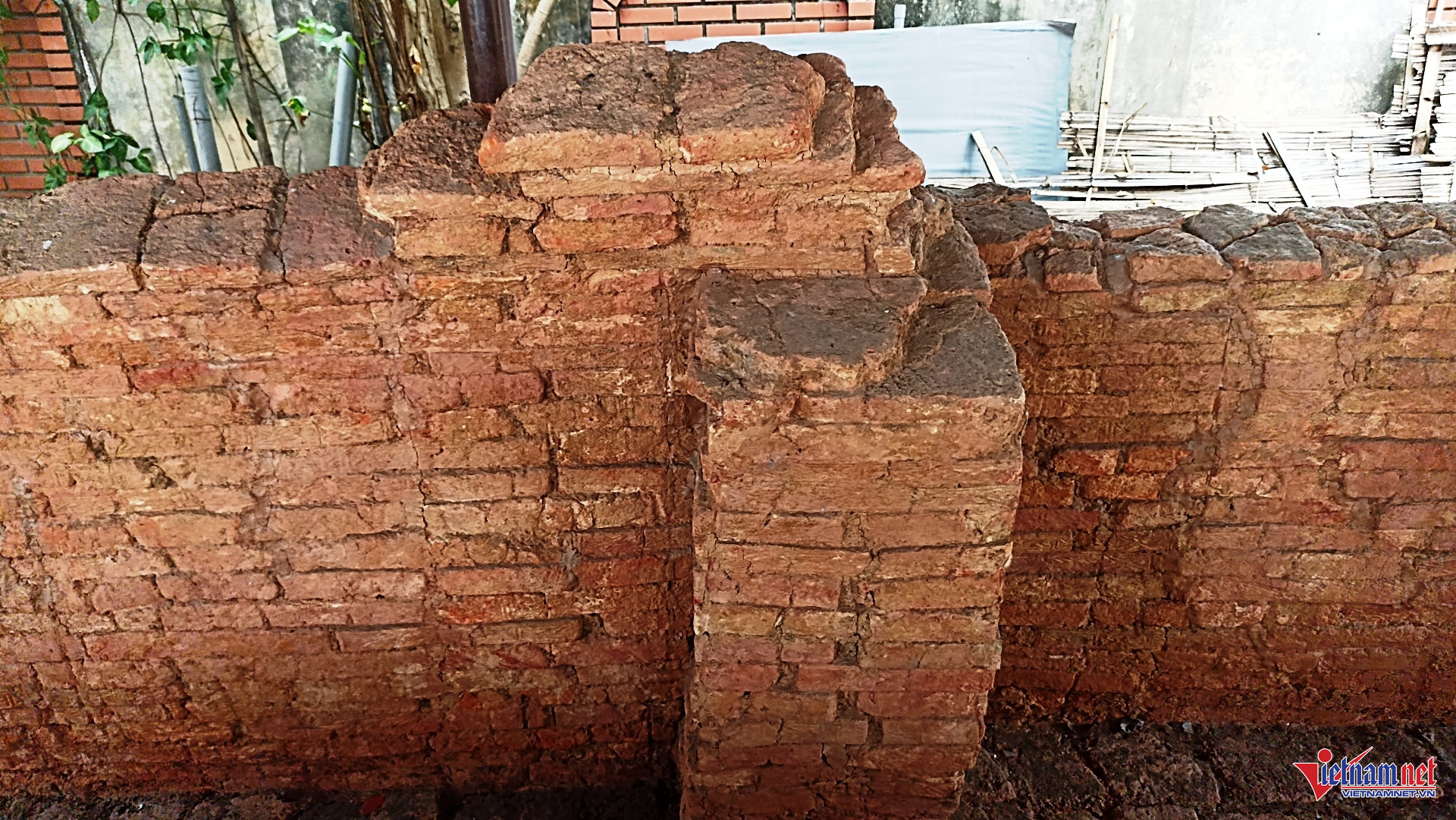
An ancient brick tomb dating to the third century AD was discovered during school construction in Ninh Binh Province. Its vaulted chambers and surviving burial objects offer clues to the region's history nearly 1,800 years ago.
An ancient brick tomb unearthed during construction work at a primary school in northern Vietnam is now preserved and displayed at the Ninh Binh Provincial Museum, offering visitors a rare glimpse into burial practices dating back nearly two millennia.
Known as the Gia Thuy brick tomb, the archaeological structure is believed to date to the third century AD and features distinctive architectural elements associated with Han-style burial traditions.
The tomb is currently housed at the museum's first facility, where its surviving structure and artifacts are presented to visitors.
Ancient tomb discovered during school construction
Archaeologists and specialists excavate the Gia Thuy brick tomb in 2020. Photo: Ninh Binh Provincial Museum.
According to the Ninh Binh Provincial Museum, the discovery occurred in December 2019, when workers were excavating land to build additional classrooms at Gia Thuy Primary School in the former Nho Quan District, now part of Gia Tuong Commune, Ninh Binh Province.
During the excavation, an excavator operator unexpectedly exposed an ancient brick structure buried underground.
Local authorities subsequently reported the discovery to relevant agencies and cultural heritage officials, who conducted an initial site assessment.
Their preliminary findings identified the structure as a brick tomb, a type of burial architecture found in Vietnam from the first to the tenth centuries AD.
The rectangular tomb is divided into three sections: a front chamber, a middle chamber and a rear chamber. The front chamber was used for burial offerings, while the rear chamber accommodated the deceased.
In February 2020, the Ninh Binh Department of Culture, Sports and Tourism coordinated with the Institute of Archaeology to carry out an emergency excavation.
The tomb was located on an ancient mound approximately 550 meters east of the Boi River.
Three chambers and a Han-style vaulted roof
Archaeologists found that the tomb had a rectangular layout and a vaulted roof characteristic of Han-style burial architecture.
Its interior was divided into three sections: a front chamber, a middle chamber and a rear chamber.
The front chamber was intended for burial offerings, while the rear chamber was used to accommodate the deceased.
The structure was aligned along a north-south axis, with its main entrance facing north.
In front of the entrance, archaeologists identified a sloping passageway that had originally provided access to the burial chamber.
This passage had been filled with soft, fine-grained gray sandy alluvial soil.
The tomb features a vaulted roof constructed in the style of Han-period burial architecture.
Excavations revealed that the tomb had been disturbed repeatedly by treasure hunters and modern construction activities.
The passageway had an isosceles trapezoidal cross-section, measuring 1.68 meters wide at the top, 1.44 meters at the bottom and 0.7 meters in height.
The tomb walls were constructed using a single course of lengthwise-laid bricks, while the main entrance incorporated three courses and the entrance to the rear chamber had two.
Its architectural design reflects the sophisticated construction techniques associated with brick tombs of the Han period.
Distinctive bricks and evidence of repeated disturbance
Excavations revealed that the tomb had been disturbed multiple times, both by illegal treasure hunting and modern construction activities.
The structure was built using two main types of bricks: rectangular bricks and wedge-shaped bricks, traditionally described in Vietnamese as resembling segments of a pomelo.
Archaeologists preliminarily date the tomb to the third century AD.
Both types were dark red with pale yellow mottling.
The rectangular bricks were used for flooring and walls, while the wedge-shaped bricks formed the vaulted roof.
The tomb floor was paved with rectangular bricks and sloped gently from the interior toward the entrance.
It was also constructed on two levels, with the rear chamber floor raised above the front chamber by approximately the thickness of one brick.
Although parts of the structure had been damaged, the surviving architectural features enabled archaeologists to identify its original layout and construction methods.
Bronze mirror and gold bead among surviving burial objects
Many of the tomb's original burial offerings had been lost, apparently as a result of repeated disturbances.
Nevertheless, archaeologists recovered several significant artifacts.
These included a bronze mirror, a heavily deteriorated bronze basin, one gold bead, three gemstone beads and numerous fragments of glazed pottery and stoneware.
Researchers believe the tomb may have belonged to a high-ranking official or noble of Han origin, or a member of the local elite strongly influenced by Han culture.
The surviving objects, together with the tomb's architectural features, provided important evidence for determining its age.
Based on these findings, archaeologists preliminarily dated the tomb to the third century AD.
Its division into separate chambers for human remains and burial offerings was consistent with architectural characteristics commonly found in Han-period brick tombs.
Although no human remains survived, researchers were able to make preliminary assessments of the tomb owner's possible social status.
Tomb may have belonged to a wealthy official or noble
Based on the dimensions of the burial mound, the coffin enclosure and the remaining grave goods, archaeologists believe the tomb may have belonged to someone of relatively high social standing.
Possible occupants include a Han official or aristocrat, or a member of the local elite whose burial practices were strongly influenced by Han culture.
The use of a vaulted brick structure and the inclusion of objects such as a bronze mirror and gold bead suggest that the burial involved considerable resources.
However, without surviving human remains or inscriptions identifying the deceased, the tomb owner's identity remains uncertain.
The findings nevertheless provide valuable evidence of cultural influences and social distinctions in northern Vietnam during the early centuries AD.
Second brick tomb discovered nearby
The Gia Thuy brick tomb discoveries provide important evidence for understanding Ninh Binh's history during the first ten centuries AD.
A bronze mirror recovered among the burial offerings during excavation. Photo: Ninh Binh Provincial Museum.
Rectangular bricks used to pave the floor and construct the tomb walls.
The Gia Thuy burial site is particularly significant because another ancient brick tomb was excavated nearby in 2020.
The second tomb had originally been discovered in 2002 during the construction of a residential building.
Located approximately 30 meters from the first tomb, it also featured a rectangular layout and a vaulted roof.
The presence of two similar burial structures in close proximity provides additional material for investigating burial customs and settlement history in the area.
Researchers consider the discoveries important for understanding the historical development of Ninh Binh during the first ten centuries AD.
The tombs also contribute valuable archaeological data on brick burial structures in northern Vietnam during this period.
Today, the preserved Gia Thuy tomb and its surviving artifacts offer visitors an opportunity to examine the region's ancient architectural traditions and learn more about the people who lived there nearly 1,800 years ago.
 Vietnamnet.vn

 Podcast