 Vietnamnet.vn

 Podcast



New crop delivers promising returns
After years of relying on coffee, Ho Thi Dung’s family in Tam Thuan Village, Tam Giang Commune, Dak Lak Province, found themselves facing a familiar challenge: more than three hectares of ageing coffee trees with declining yields.
When the family decided to replant their coffee plantation, they chose to do it gradually rather than clearing the entire area at once, allowing them to maintain an income while renewing the ageing trees.
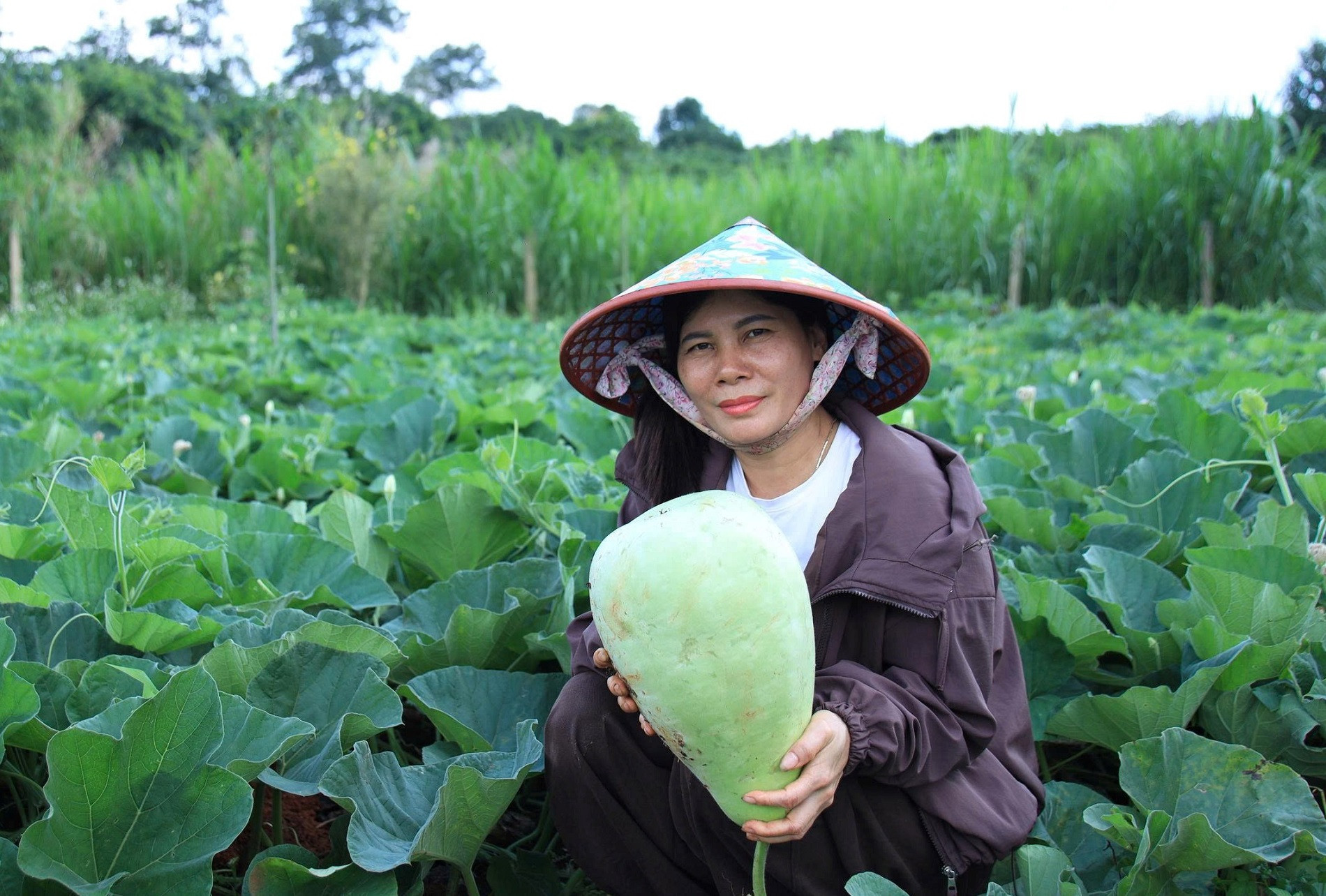
In early 2025, Dung removed nearly five sao of poorly performing coffee trees. With land temporarily available while the newly planted coffee trees were still small, she decided to grow short-term crops to generate additional income.
Following a recommendation from an acquaintance, she set aside about two sao to trial a Japanese giant gourd variety grown specifically for its seeds.
Around four months after sowing, the first gourds were ready for harvest, with individual fruits weighing between 5kg and 10kg.
Unlike conventional gourds grown primarily for their flesh, the real value of this giant variety lies inside: its seeds.
The dried seeds sell for around VND400,000 ($15) per kilogram.
From her initial trial plot, Dung cut open the mature gourds, collected their seeds and dried them, eventually producing 100kg. The entire harvest was purchased by a company for export to Japan.
Dung said the Japanese variety appeared well suited to the local climate and soil. The plants grew vigorously, suffered relatively little from pests and diseases, and did not require an overly complicated cultivation process.
“I thought I was simply trialling a new gourd variety, but I never expected the results to exceed my expectations,” Dung said. “The income from these gourds is much higher than from traditional short-term crops.”
From trial plot to a larger crop
Encouraged by the success of her first harvest, Dung expanded the crop to five sao, planting around 500 Japanese gourd plants.
Favourable weather has helped the new crop develop evenly, with healthy vines and a high fruit-setting rate. Giant, rounded gourds now spread beneath the dense foliage as the field enters harvest season.
After deducting all investment costs, the family expects to earn a profit of more than VND100 million ($3,800) from this year’s crop.
“To achieve good yields, farmers need to pay attention from the very beginning, from choosing seeds and raising seedlings to looking after the plants,” Dung said. “The seeds need to come from a reputable supplier.”
The seeds are not the crop’s only source of value.
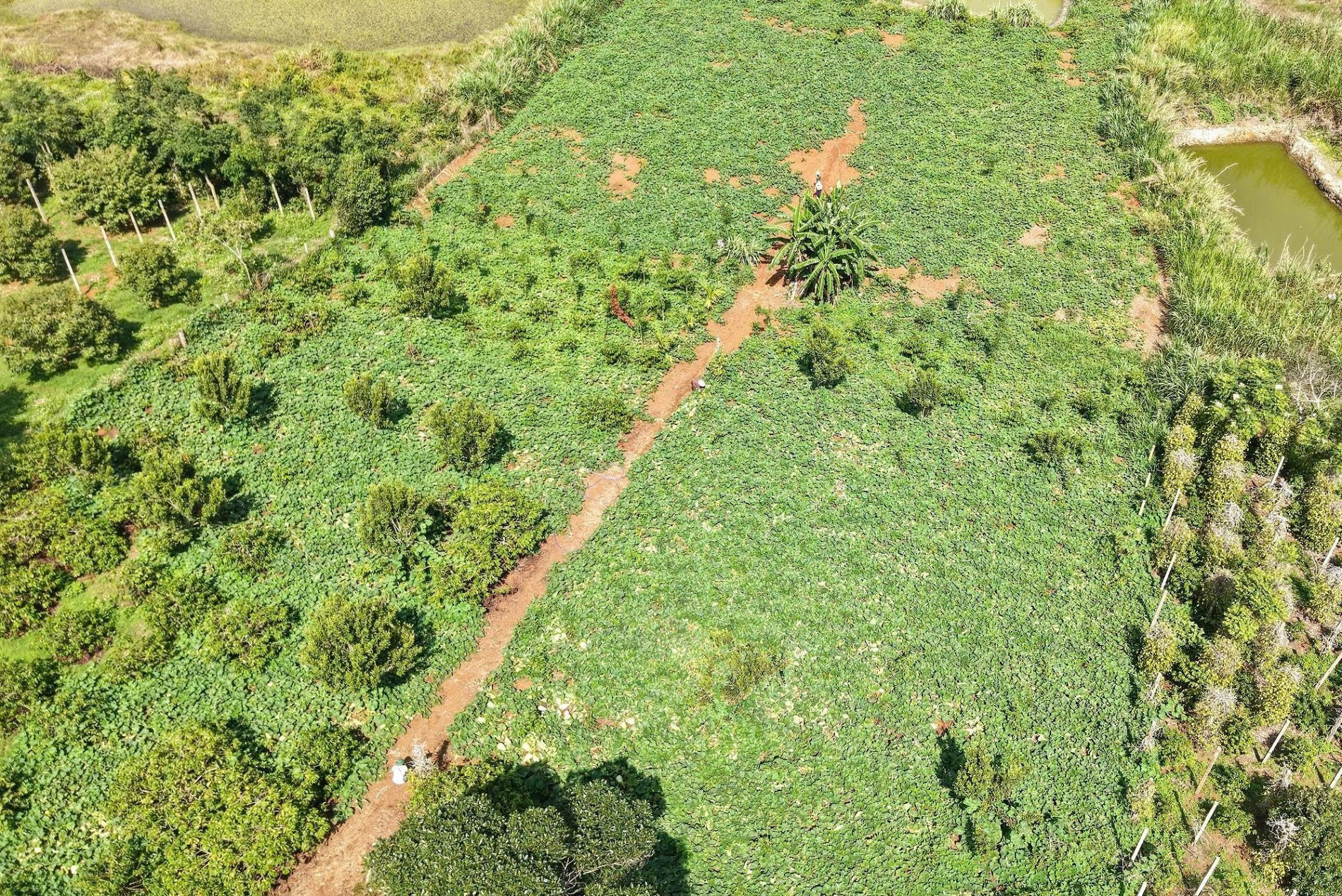
Dung’s family also uses young shoots and immature gourds as food or sells them on the market, providing an additional source of income.
A major factor giving the family confidence to expand production is its partnership with a company that supplies quality seeds and signs contracts to purchase the harvested product.
The company also sends technical staff to provide guidance on cultivation methods.
The farmer-business partnership helps reduce concerns about finding buyers, allowing growers to focus on production and improve product quality to meet export-market requirements.
A new option for local farmers
Dung’s success has quickly attracted interest from other households in the area, with several families beginning small-scale trials of the seed-producing gourds on land previously used for other short-term crops.
Dung has been sharing cultivation techniques, providing seedlings and showing interested farmers how to care for the plants.
She is also helping connect growers with the company buying the seeds, giving local farmers greater confidence that they will have a market for their harvests.
Dung believes Japanese gourds grown for seed could become a high-value crop in the area if production is organised around stronger links between farmers and businesses.
The model could be particularly useful during the replanting of perennial crops such as coffee.
Instead of leaving land underused while young perennial trees become established, farmers can grow the gourds as a short-term crop, creating an additional source of income while diversifying agricultural production.
For Dung, what began as a small experiment on a patch of land between coffee cycles has already developed into a crop with significantly greater ambitions - one whose most valuable product is not the giant fruit itself, but the seeds hidden inside.
Le Huong
.svg)
