 Vietnamnet.vn

 Podcast



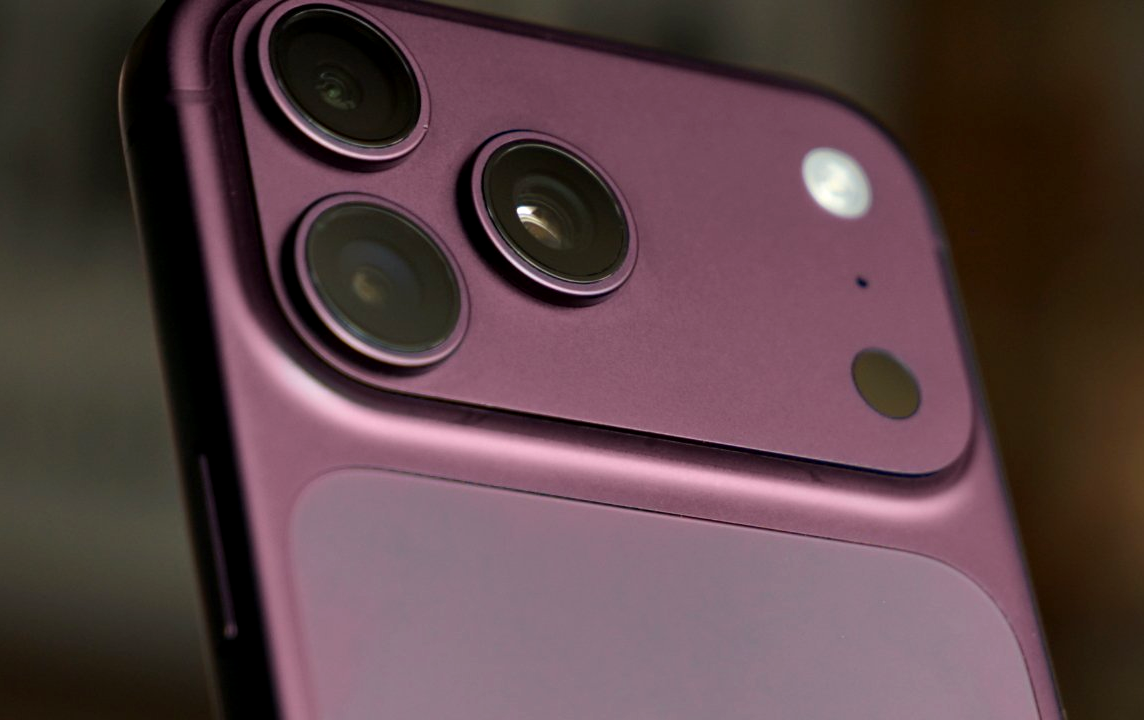
With less than three months reportedly remaining before Apple unveils the iPhone 18 Pro and iPhone 18 Pro Max, alongside what is expected to be its first foldable iPhone Ultra, attention has largely focused on the devices' design and rumored 2nm processor.
However, a new report from well-known Weibo leaker Fixed Focus Digital points to another notable change: the rear camera module on the iPhone 18 Pro Max could become significantly thicker.
At first glance, that might appear to be a design compromise.
If the leaked information proves accurate, however, the larger camera housing could signal one of Apple's most significant iPhone photography upgrades in years.
A camera module reportedly 2mm thicker
According to the leak, Apple has completed development of an upgraded primary wide-angle camera for the iPhone 18 Pro Max.
To accommodate the new system, the aluminum rear panel is reportedly being redesigned to allow for a camera module approximately 2mm thicker than before.
The increase is said to be driven not by aesthetics but by the need to house a larger camera module containing physically larger components.
That aligns with reports circulating over recent months suggesting Apple is preparing a substantial hardware upgrade for the next-generation iPhone camera.
A larger module could allow room for a bigger image sensor, a more sophisticated lens assembly and a mechanical variable-aperture system.
Variable aperture could be the biggest photography upgrade
Among the most anticipated rumored features is a variable-aperture camera.
Unlike previous iPhone models, which have relied on fixed apertures, the new system is expected to adjust the lens opening automatically according to lighting conditions.
In bright environments, the aperture blades would narrow, increasing the f-stop value and reducing the amount of light reaching the sensor. That could help minimize overexposure while preserving highlight detail.
In low-light conditions, the aperture would open wider, allowing more light to reach the sensor for brighter images while reducing image noise caused by high ISO settings.
Fixed Focus Digital also claims Apple will use larger camera components, further supporting speculation that the company is investing heavily in optical hardware rather than relying solely on computational photography.
Apple would not be the first smartphone maker to introduce variable aperture technology.
Huawei launched the Mate 50 Pro in 2022 with a multi-level variable aperture system inspired by DSLR cameras, allowing users to switch among f/1.4, f/2.0, f/2.8 and f/4.0 for greater control over depth of field and light intake.
Samsung introduced a dual-aperture system even earlier with the Galaxy S9 and Galaxy S9+ in 2018, enabling the camera to switch between f/1.5 for low-light photography and f/2.4 in bright daylight.
If Apple adopts a similar system, the company may differentiate itself through image processing and artificial intelligence, areas in which the iPhone has traditionally performed strongly.
A20 Pro chip expected to debut on TSMC's 2nm process
Supply-chain reports also suggest Apple could revise its product launch strategy this year.
During its September event, the company is expected to introduce three premium models: the iPhone 18 Pro, iPhone 18 Pro Max and the foldable iPhone Ultra.
The two Pro models are rumored to go on sale in September, while the foldable Ultra could arrive later in the autumn.
The standard iPhone 18, iPhone 18e and iPhone Air 2 are expected to follow next spring, expanding Apple's release schedule beyond previous years.
Beyond the camera system, the iPhone 18 Pro Max is also expected to become the first iPhone powered by Apple's A20 Pro processor, reportedly manufactured using TSMC's 2nm process.
The chip is also rumored to adopt Gate-All-Around (GAA) transistor architecture.
The technology surrounds the electrical channel with nanosheets on all four sides, reducing current leakage while improving both performance and energy efficiency compared with the previous FinFET architecture.
Current industry estimates suggest the A20 Pro could deliver around 15 percent higher CPU performance than the A19 Pro while offering better power efficiency, improvements that would benefit AI processing, 8K video recording and professional photo editing.
Apple has often been among the first companies to commercialize advanced semiconductor manufacturing processes, introducing 7nm chips with the iPhone XS in 2018, 5nm with the iPhone 12 in 2020 and 3nm with the iPhone 15 Pro in 2023.
However, reports suggest Apple may not be first to market with a 2nm smartphone processor.
That distinction is expected to belong to Samsung's Galaxy S26 and Galaxy S26+ in selected markets, where the devices are rumored to use Samsung's Exynos 2600 processor manufactured by Samsung Foundry.
Even so, Apple's long-standing strength in integrating hardware and software has fueled expectations that the company could fully exploit the capabilities of the A20 Pro alongside its rumored next-generation camera system.
If current leaks prove accurate, the iPhone 18 Pro Max could represent one of the biggest advances in iPhone photography since Apple introduced Night Mode and ProRAW.
Hai Phong
.svg)
