 Vietnamnet.vn

 Podcast



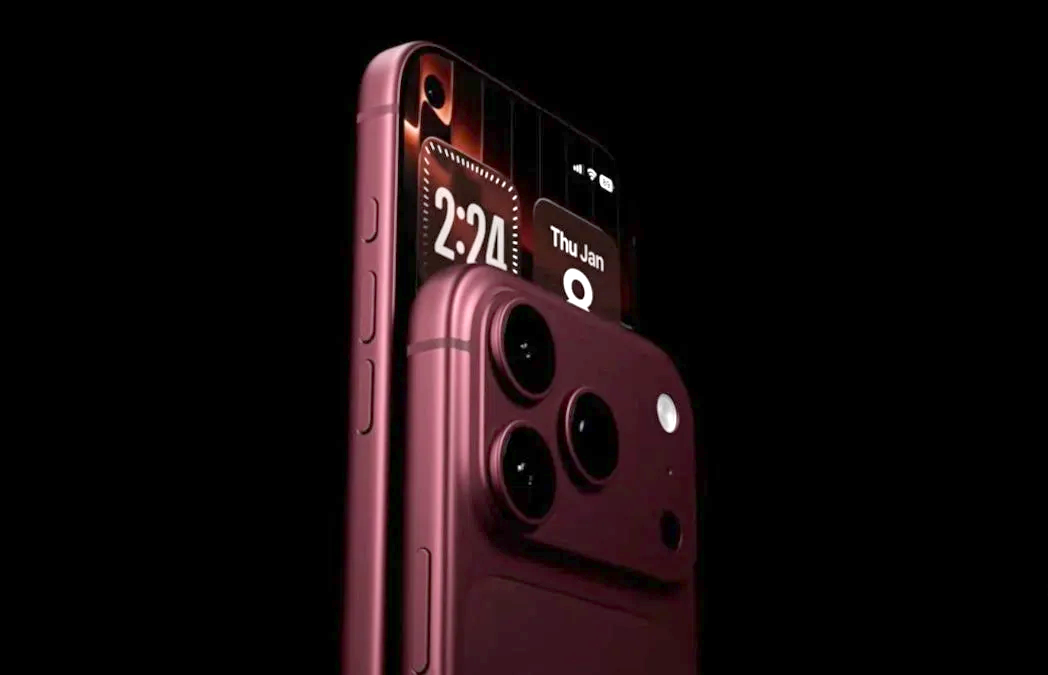
According to trusted leaker Digital Chat Station on Weibo, Apple is currently testing a completely redesigned main camera for both the iPhone 18 Pro and Pro Max. The most exciting change? A variable aperture lens - a rare feature in smartphones that may finally become mainstream in 2026.
A feature worth revisiting
The concept of variable aperture has surfaced before, notably in reports from analyst Ming-Chi Kuo as early as December 2024. By October 2025, Apple was said to be in active talks with suppliers to source components, suggesting serious commitment to the idea.
Variable aperture allows a smartphone camera to adjust how much light enters the sensor based on shooting conditions. In low light, it can open wider to let in more light. Under bright sunlight, it narrows to prevent overexposure.
Beyond exposure control, this technology enables more natural background blur and depth control - something traditionally reserved for DSLR and mirrorless cameras. Most smartphones currently rely on software-based effects to mimic this.
If Apple implements variable aperture, it would mark a fundamental shift from software-driven image processing to true optical advancement. Current iPhone Pro models use a fixed ƒ/1.78 aperture. The move toward adjustable hardware would be a first in iPhone history.
Interestingly, Apple isn't alone in this direction. Samsung is also said to be reviving the technology for its upcoming Galaxy S27 Ultra.
Samsung’s redemption arc
A new report suggests Samsung has placed orders for camera modules with variable aperture, inspired in part by Apple’s rumored plans. If approved and executed on schedule, the Galaxy S27 Ultra could be Samsung’s first phone since 2019 to include this feature.
Samsung was the pioneer of variable aperture in smartphones, introducing it with the Galaxy S9 (2018) and Galaxy S10 (2019). Those models could switch between two aperture settings depending on lighting. However, the feature was dropped in 2020, largely due to increased device thickness and production costs.
The S26 Ultra’s wider lens has already boosted low-light performance. But with Apple making bold camera moves, Samsung seems keen not to fall behind - especially on hardware innovations that once defined its identity.
If both the iPhone 18 Pro Max and Galaxy S27 Ultra ship with variable aperture, 2026–2027 could mark a long-awaited return to camera-centric smartphone upgrades, shifting focus back to optics rather than AI post-processing alone.
Telephoto gains and more
Digital Chat Station also claims Apple is testing a new telephoto lens for the iPhone 18 Pro Max with a wider aperture than its predecessor. For context, the iPhone 17 Pro and Pro Max telephoto lenses are locked at ƒ/2.8, though they did receive a major resolution bump to 48MP.
The Galaxy S26 Ultra is expected to follow suit with a larger telephoto aperture, which is crucial for improved low-light zoom, reduced noise, and faster shutter speeds - especially in nighttime or action shots.
These enhancements could dramatically improve zoom sharpness and stability in difficult conditions.
More upgrades on the way
Beyond the headline features, both Apple and Samsung are rumored to be working on broader camera upgrades. Apple may include a teleconverter module to extend focal lengths and zoom capabilities, and the selfie camera could get a long-awaited bump to 24MP for sharper front-facing photos and videos.
The iPhone 18 Pro and Pro Max are expected to launch in fall 2026, possibly alongside Apple’s first foldable iPhone - a potential milestone in the company’s product evolution.
If both brands fully embrace variable aperture and complementary upgrades, 2026 could be a watershed year for smartphone photography. For users frustrated by the physical limits of mobile cameras, this may finally be the leap forward they've been waiting for.
Should these rumors prove accurate, Apple and Samsung are headed for a fierce battle to claim the crown of best camera phone of 2026–2027.
Hai Phong
.svg)
