 Vietnamnet.vn

 Podcast


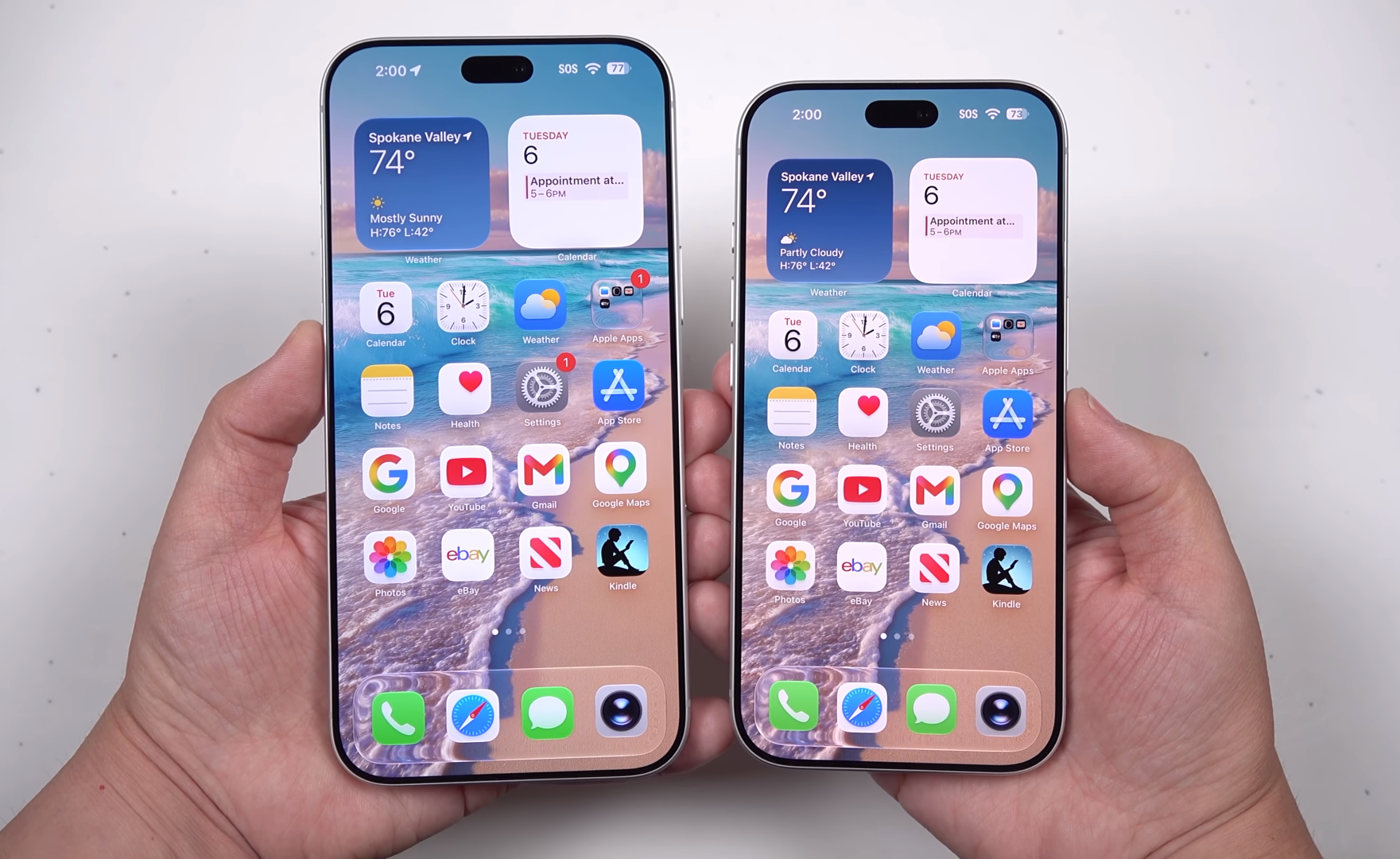
Despite receiving largely positive reviews, Apple's iPhone 18 Pro and iPhone 18 Pro Max have not been entirely free of complaints.
Among the most notable concerns is display quality, with some users reporting that colors appear less warm than on previous iPhone generations. Others have described blue or pink tints and unusually pale or washed-out images.
There is currently no confirmation that these issues result from manufacturing defects, nor is it clear how widespread they are.
Nevertheless, some owners have begun investigating the origins of their devices' OLED panels in an attempt to understand the differences and find possible solutions.
iPhone 18 Pro owners question display color accuracy
Samsung Display and LG Display are Apple's two iPhone screen suppliers. However, buyers cannot choose an iPhone 18 Pro based on which company manufactured its OLED panel, as Apple does not distinguish retail devices by display supplier.
In principle, panels from both manufacturers are expected to deliver comparable performance and viewing experiences. They undergo similar color calibration procedures and must meet the same quality control standards before being installed in new iPhones.
On paper, the iPhone 18 Pro and iPhone 18 Pro Max offer similar display performance.
Both support ProMotion technology with adaptive refresh rates of up to 120Hz, a contrast ratio of 2,000,000:1 and a minimum brightness of 1 nit.
Typical brightness reaches 1,000 nits, while peak brightness can climb to 1,600 nits and up to 3,000 nits outdoors.
These specifications remain unchanged from the iPhone 17 Pro and iPhone 17 Pro Max.
Users who believe their new displays are not performing as expected may therefore want to have their devices examined by Apple to determine whether corrective action is necessary.
One widely discussed complaint appeared on Reddit, where a user named junglehypothesis reported that the display on their iPhone 18 Pro Max looked noticeably abnormal.
According to the user, the device contained an LG GH3 panel that produced washed-out images with a bluish cast. Colors also appeared unnaturally exaggerated, sometimes resembling cartoon graphics or neon tones.
The user shared a list of OLED panel variants reportedly found in the iPhone 18 Pro and iPhone 18 Pro Max, including Samsung G9N, G9Q and G9P, along with LG GVC and GH3.
In the user's assessment, the LG GH3 belonged to a lower-quality category.
They claimed it could be more susceptible to subtle image inconsistencies, including pale colors, reduced brightness, excessive saturation and pink, green or yellow tints when viewed from different angles.
By contrast, the Samsung G9N was described as offering more accurate color reproduction, sharper text and greater color consistency across viewing angles.
Its green subpixel structure was also claimed to contribute to improved text clarity.
However, the origins of these panel classifications and performance assessments remain unclear.
Apple has not published such detailed descriptions of individual OLED panel variants used in its iPhones, meaning the claims cannot currently be independently verified.
Notably, junglehypothesis said they exchanged their LG GH3-equipped iPhone 18 Pro Max for another unit containing a Samsung G9Q panel.
According to the user, the difference was immediately apparent when the replacement phone was switched on, without any need for diagnostic testing.
The new display reportedly produced more natural colors, without the washed-out appearance or blue tint seen on the original device.
Other users have reported similar concerns.
Another Reddit user, evilZardoz, compared an iPhone 18 Pro side by side with an iPhone 17 Pro and observed a noticeably stronger pinkish-purple tint on the newer model.
Is the iPhone 18 Pro's cooler display actually a problem?
Not everyone considers the iPhone 18 Pro's color changes a step backward.
Some users welcome the shift, particularly those who have long been dissatisfied with the warmer, more yellowish displays found on earlier iPhone generations.
YouTuber Erica Griffin conducted her own analysis of the latest OLED panels, comparing them with screens used in previous iPhones.
Griffin said she had complained for years that iPhone displays were becoming progressively warmer and more yellow with each generation.
The iPhone 18 Pro, however, represents a noticeable departure from that trend, with a cooler and more neutral appearance.
According to Griffin, Apple calibrates iPhone and MacBook displays around the D65 white point, a widely used industry reference for reproducing neutral white under daylight conditions.
Even when different panels are calibrated toward the same standard, they may not produce identical perceived colors.
Griffin was particularly dissatisfied with the warm tones and yellow cast of the iPhone 17 Pro.
When she measured the iPhone 18 Pro display, she initially found that its colors appeared significantly cooler than the D65 reference.
However, the results changed after she adjusted her measurement methodology, using the Judd Modified OLED model instead of the CIE 1931 standard observer model.
With the revised approach, measurements for both the iPhone 18 Pro and iPhone 18 Pro Max improved.
The screens still exhibited a cooler appearance, but their results fell within an acceptable range under this evaluation method.
Interestingly, the Samsung panel in Griffin's iPhone 18 Pro Max performed worse in her tests than the LG panel in her iPhone 18 Pro.
This finding challenges the assumption that Samsung displays are necessarily superior to LG panels, even though some users have reported the opposite experience.
Griffin suspects Apple may have modified its color-matching methodology to better reflect how the human eye perceives newer generations of OLED displays.
Apple, however, has not publicly confirmed whether it has made such a change.
Replacement iPhones may come with different display panels
Griffin said she was pleased with the new display characteristics, finding the cooler colors more neutral than the warm, yellowish tones she had previously disliked.
Her experience contrasts sharply with that of some iPhone 18 Pro buyers who consider the new screens excessively cool or visibly tinted.
The differing reactions illustrate how perceived display quality depends on more than technical specifications.
Color calibration, panel characteristics and individual visual preferences can all influence how users evaluate a smartphone screen.
For owners experiencing pronounced blue or pink tints, or noticeably washed-out colors, having the device inspected by Apple remains a reasonable course of action.
However, customers receiving replacement phones should be aware that they cannot know in advance which supplier manufactured the replacement device's OLED panel.
That information generally becomes apparent only after the device is in use and its panel details are examined.
With Apple yet to confirm whether the reported differences reflect manufacturing defects or intentional changes to display calibration, it is too early to conclude that the iPhone 18 Pro lineup suffers from a widespread problem.
Nevertheless, the complaints highlight the need for greater clarity about differences in display performance, particularly given the premium positioning and high prices of both the iPhone 18 Pro and iPhone 18 Pro Max.
Hai Phong

