 Vietnamnet.vn

 Podcast


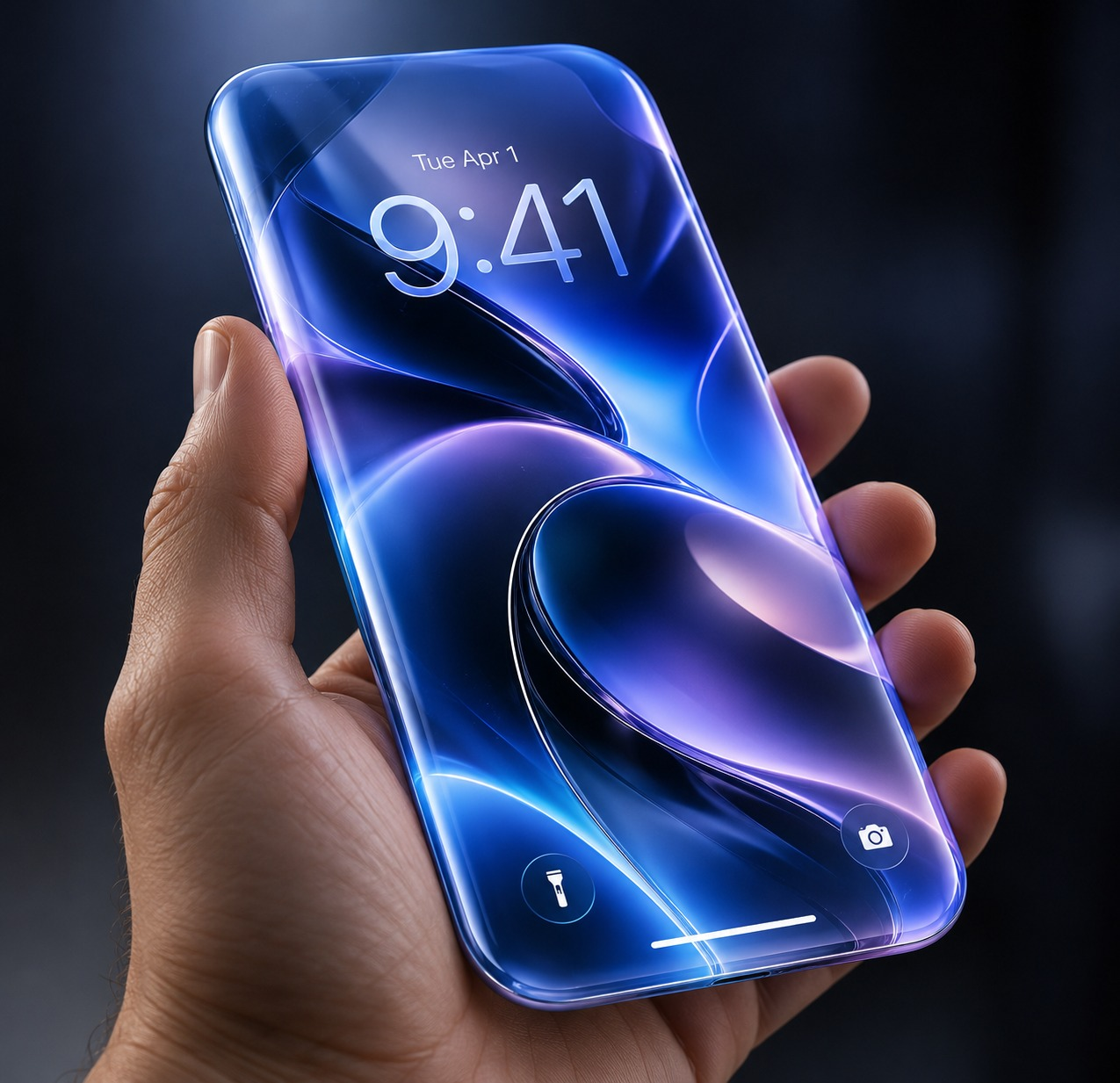
Apple is reportedly saving some of its most ambitious smartphone innovations for the iPhone 20, expected in 2027 to mark two decades since the original iPhone debuted.
The anniversary model could represent a major turning point for the company's flagship smartphone, potentially introducing a radically different design and technologies that make upgrading to the iPhone 18 Pro less appealing.
1. All-glass design with a display curved on all four sides
According to recent leaks, the iPhone 20's most striking feature could be an all-glass design, with the display curving seamlessly around all four edges.
Apple is reportedly working with Samsung to develop a glass structure with uniform curvature, effectively concealing the metal frame when viewed from the front.
The result could make the device look like a single piece of glass floating in the user's hand, with almost no visible borders.
Beyond its appearance, Apple is also expected to adopt a thinner, more advanced OLED display using Color Filter on Encapsulation (COE) technology.
By eliminating certain conventional display layers, COE can improve light transmission while reducing panel thickness.
This could allow the iPhone 20 to deliver higher brightness outdoors while consuming less power than the OLED display expected on the iPhone 18 Pro.
2. A truly uninterrupted display with an under-screen selfie camera
One of the most anticipated iPhone changes could finally arrive with the elimination of Dynamic Island.
Apple is reportedly exploring ways to move the entire Face ID system and front-facing camera beneath the display.
If successful, the iPhone 20 could feature a completely uninterrupted screen, free from notches or camera cutouts.
Under-display camera technology has long been discussed as one of Apple's design ambitions. Recent prototypes are reportedly showing significant progress, raising the possibility that the technology could finally reach a commercial iPhone.
Some related technology has also reportedly been tested in the iPhone Duo's selfie camera, suggesting that Apple is gradually refining the approach before introducing it in its premium anniversary model.
3. Apple-designed camera sensors with dramatically improved image quality
Another potentially significant upgrade concerns the camera system.
Apple is reportedly preparing to reduce its longstanding reliance on Sony image sensors by developing its own stacked image sensor technology.
Prototypes are said to be undergoing tests with advanced Lateral Overflow Integration Capacitor (LOFIC) technology.
LOFIC enables pixels to capture a wider range of light intensities with greater precision, potentially delivering a substantial improvement in dynamic range.
According to leaks, the new sensor could achieve approximately 20 stops of dynamic range.
If realized, this would significantly improve the camera's ability to preserve details in extremely bright and dark areas of an image.
Such an improvement could bring smartphone photography closer to the image quality associated with professional cinema cameras, potentially creating a considerable gap between the iPhone 20 and iPhone 18 Pro.
4. Solid-state buttons replacing mechanical controls
Apple is also reportedly testing a major redesign of the iPhone's physical buttons.
Instead of conventional mechanical switches, the iPhone 20 could introduce solid-state buttons integrated directly into the frame.
The technology could extend to the power button, volume controls, Action Button and Camera Control.
Without moving mechanical components, these buttons would rely on highly responsive haptic motors to simulate the sensation of pressing a physical button.
Besides creating a more seamless appearance, the design could reduce openings in the device's body, potentially improving resistance to water and dust.
5. Silicon-anode battery for longer endurance
Battery technology could receive an equally important upgrade.
Apple is reportedly investigating silicon-anode batteries as an alternative to conventional graphite-based designs.
Silicon anodes can store more lithium ions per unit of mass, allowing batteries to achieve higher energy density.
For the iPhone 20, this could translate into longer battery life without increasing the device's thickness or weight.
Such an improvement would be particularly valuable as smartphones take on increasingly demanding AI tasks and other power-intensive functions.
6. A21 Pro chip built on an improved 2nm process
The iPhone 20 is expected to introduce the A21 Pro processor, potentially manufactured using an enhanced 2nm semiconductor process.
By comparison, the iPhone 18 Pro is expected to feature the A20 Pro, reportedly built on a first-generation 2nm process.
The improved architecture could deliver gains in processing performance and energy efficiency, supporting more demanding applications while helping manage power consumption.
However, the potential benefits of the new chip may extend well beyond conventional improvements in speed.
7. Advanced memory designed for on-device AI
Apple is also rumored to be exploring vertically stacked DRAM using high-bandwidth memory technology, sometimes referred to as Mobile HBM.
Combined with the A21 Pro processor, this memory architecture could significantly increase data transfer speeds.
The additional bandwidth would provide a stronger foundation for running generative AI models directly on the device.
As a result, future iPhones could process more complex AI tasks faster and more smoothly, while reducing their dependence on cloud servers.
This could prove especially important as Apple expands its on-device AI capabilities.
8. Larger displays for Pro and Pro Max models
Screen sizes could also increase with the anniversary generation.
While the iPhone 18 Pro and iPhone 18 Pro Max are expected to retain 6.3-inch and 6.9-inch displays, respectively, Apple may introduce slightly larger panels on the iPhone 20 lineup.
The Pro model could grow to 6.4 inches, while the Pro Max could reach 7 inches.
Combined with the rumored curved-edge design and under-display camera technology, the larger screens could provide more usable display space without the visual interruptions found on current iPhones.
9. A potential redesign comparable to the iPhone X
Although the iPhone 20 is still roughly a year away from its anticipated debut, the rumored changes suggest Apple could be preparing one of the most substantial overhauls of its flagship smartphone in years.
The situation recalls 2017, when many consumers chose to skip the iPhone 8 and wait for the iPhone X.
That 10th-anniversary model introduced a dramatically different design and helped usher in a new era for the iPhone.
Apple may be aiming for a similarly significant moment with its 20th-anniversary device.
Still, most of the information currently circulating comes from leaks and experimental prototypes rather than official announcements.
Complex technologies, particularly under-display cameras and advanced glass designs, could encounter development challenges that affect the final specifications or launch schedule.
Whether the iPhone 20 ultimately delivers all nine rumored upgrades remains uncertain. But if even a substantial portion of these technologies reaches production, the anniversary model could offer a compelling reason for iPhone users to postpone their next upgrade.
Hai Phong

