 Vietnamnet.vn

 Podcast



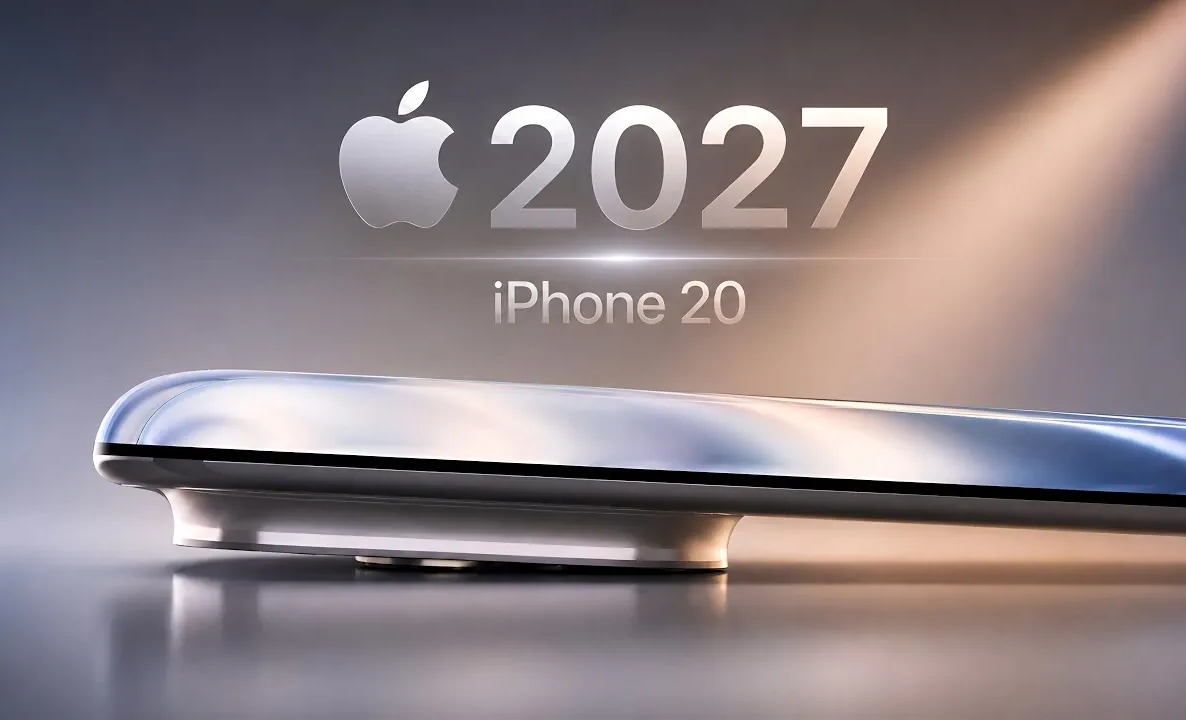
iPhone 20 could usher in a new era of wraparound smartphone displays
The iPhone 20 is being tipped as a potential turning point in Apple's smartphone design history.
Rather than simply making the bezels thinner, as Apple has done with recent iPhone generations, the device could take a much bigger leap with a display that wraps around the body, creating a continuous visual surface extending from the front toward the sides and back.
At the heart of the concept is an OLED panel capable of bending nearly 90 degrees around the edges. If successfully implemented, the design could eliminate much of the traditional frame, making the phone appear almost entirely made of screen.
Beyond its futuristic appearance, a four-sided curved display could introduce new ways for users to interact with their devices.
The edges of the iPhone 20 could become touch-sensitive areas for adjusting volume, viewing notifications or quickly launching frequently used apps.
Users might also benefit from a more immersive viewing experience when watching videos, playing games or using entertainment apps.
However, the concept remains highly ambitious. Producing an OLED panel that can bend so sharply without compromising image quality, durability or everyday usability presents a formidable engineering challenge for Apple and its suppliers.
Three technical challenges Apple must overcome
The first major obstacle involves display quality along the curved sections.
When an OLED panel bends at extreme angles, the image may suffer from color shifts, uneven brightness or other visual distortions. These imperfections could make content appear inconsistent, particularly when viewed from different angles.
Addressing these issues may require manufacturers to develop new materials alongside more sophisticated image-processing algorithms.
The goal would be to preserve color accuracy, brightness and contrast even in the areas subjected to the greatest degree of curvature.
Durability presents another serious concern.
On conventional smartphones, the surrounding frame helps protect the display from external impacts. But if the screen extends across nearly the entire body, the edges and corners could become especially vulnerable to scratches, cracks and long-term wear.
Apple would need to develop a protective structure that is both strong enough to withstand everyday use and flexible enough to accommodate the curved display.
Finding that balance is particularly difficult. A protective layer that is too rigid could restrict the panel's curvature, while a softer material might offer insufficient resistance to impacts and abrasion.
The third challenge lies in antenna placement.
Modern smartphones typically house antennas within or along their frames to support cellular connectivity, Wi-Fi and other wireless communication technologies.
If the conventional frame largely disappears, Apple would have to rethink where these components are positioned without sacrificing signal reception or transmission performance.
Possible solutions could involve embedding antennas in specially designed sections of the device or using materials that allow radio signals to pass through with minimal interference.
Even so, such approaches would need to be validated through extensive engineering and real-world testing.
Why Apple may have to wait for Samsung
Samsung could play a crucial role in Apple's plans for a four-sided curved display, given the South Korean company's position as a leading developer and manufacturer of OLED technology.
According to reports citing leaked information, Samsung is working on a new generation of OLED panels capable of more extreme curvature while maintaining image quality and durability.
The company could test the technology in its own devices before considering supplying it to Apple.
Such an approach would allow Samsung to evaluate the panels under real-world conditions while refining its manufacturing processes ahead of potential large-scale production.
Samsung has considerable experience developing curved smartphone displays, including those used in its Galaxy Edge lineup.
That expertise could give the company an advantage in developing panels with more complex shapes.
However, bending a display along one or two edges is very different from wrapping it around nearly an entire smartphone body without creating new problems involving durability, visual performance or manufacturing costs.
If Samsung manages to overcome these limitations, the resulting OLED technology could have implications far beyond Apple's future iPhones, potentially opening up new design possibilities across the premium smartphone market.
Still, Apple's potential reliance on advances in OLED manufacturing does not mean the iPhone 20 will necessarily adopt such a design.
For now, the details remain speculative, with neither Apple nor Samsung officially confirming the reported plans.
Hai Phong
.svg)
