 Vietnamnet.vn

 Podcast


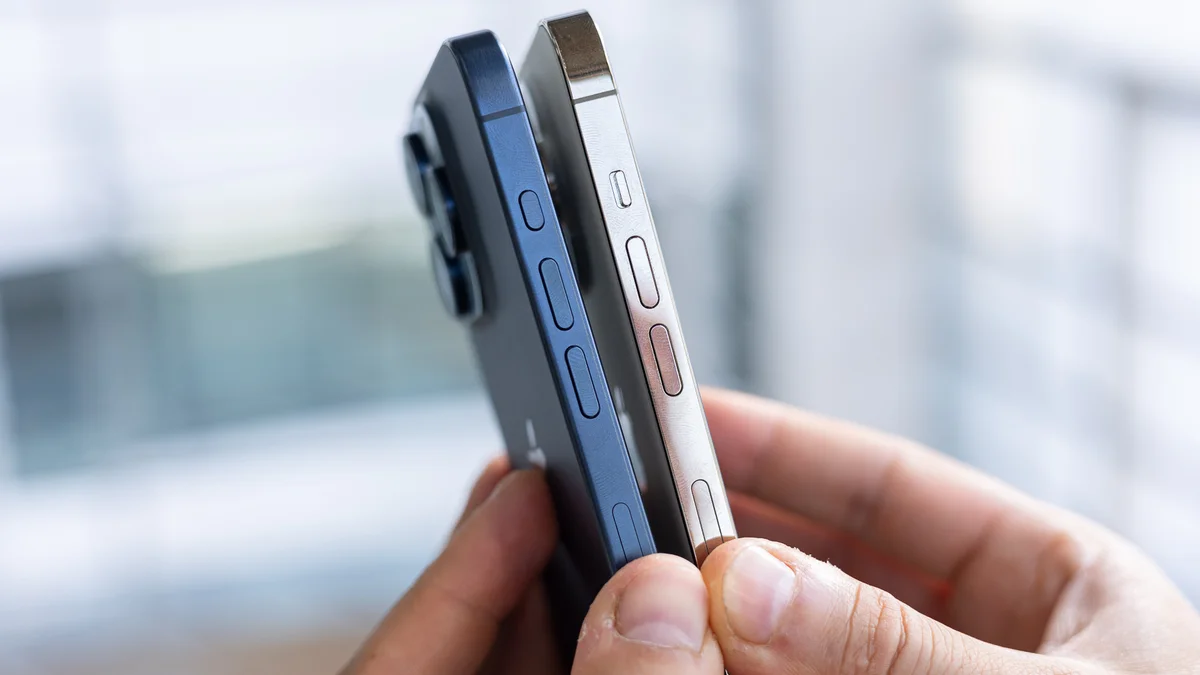
Apple may remove the Action Button from iPhone 20 Pro
For years, Apple equipped iPhones with a dedicated physical switch for toggling between ring and silent modes. Starting with the iPhone 15 series, however, the company replaced the traditional mute switch with the customizable Action Button.
Just a year later, Apple introduced Camera Control on the iPhone 16 lineup, adding another physical button designed for photography and video recording.
Both the Action Button and Camera Control remain available on the current iPhone 18 Pro models.
However, that arrangement may not last much longer.
According to a recent claim by Instant Digital, an Apple-focused tipster on China's Weibo social media platform, Apple is planning to remove the Action Button from iPhone models launching in the second half of next year.
If the information proves accurate, the iPhone 20 Pro could become the first generation of Apple's premium smartphones to eliminate the standalone Action Button.
Notably, the ability to switch between ring and silent modes would not disappear entirely.
Instead, Apple is reportedly considering integrating the Action Button's default function into Camera Control. Users would simply press and hold Camera Control to perform the action previously assigned to the dedicated button.
Camera Control could take on two functions
At first glance, removing a separate physical button may seem like an unusual decision.
However, considering how current iPhones operate, the proposed change is not necessarily impractical.
On existing models, the Action Button is primarily activated through a long press. Transferring this function to Camera Control could therefore preserve a familiar interaction without significantly changing the user experience.
Camera Control also currently supports several functions that overlap with other camera-related features.
Previously, pressing and holding the button activated Visual Intelligence, Apple's AI-powered feature for identifying objects and retrieving information through the camera.
However, Apple has reportedly integrated this functionality into the Camera app and renamed it Siri Mode in iOS 27.
Meanwhile, a quick press of Camera Control continues to launch the camera.
If Apple assigns the Action Button's functionality to a long press of Camera Control, the company could make more efficient use of existing hardware while eliminating the need for an additional button.
Nevertheless, the rumor has prompted mixed reactions among iPhone users.
Some say they rarely use the Action Button, meaning its removal would have little impact on their daily experience.
Others remain dissatisfied with Camera Control itself, arguing that the button has yet to prove particularly useful in everyday situations.
These differing opinions suggest that Apple's strategy of adding physical controls has not convinced all users.
iPhone Duo has already abandoned the Action Button
Apple has already experimented with an iPhone design without an Action Button on its first foldable smartphone, the iPhone Duo.
Rather than retaining a traditional mute switch or Action Button, the iPhone Duo features Camera Control and integrates a Touch ID fingerprint sensor into its power button.
Users who want to activate silent mode must do so through software rather than a dedicated physical control.
However, this design decision may not have fully met Apple's expectations.
According to Bloomberg journalist Mark Gurman, who closely follows Apple's internal developments, some employees are reportedly exploring ways to bring the Action Button back on the next-generation iPhone Duo 2.
Even so, the likelihood of the button returning is considered relatively low.
Against this backdrop, integrating Action Button functionality into Camera Control could offer a compromise.
Apple would be able to preserve familiar interactions while reducing the number of physical buttons on the device.
Such an approach could also address the increasing complexity of the iPhone's button layout.
Currently, the Action Button performs only one assigned function at a time by default, although users can configure more elaborate actions through Apple's Shortcuts app.
One limitation is that the button does not fully support multiple interaction patterns, such as single presses, double presses or triple presses, to trigger different functions.
As a result, the potential of a highly customizable physical button remains underutilized.
Apple may need to rethink its iPhone button strategy
Removing the Action Button could prove controversial, but the decision would not be without design justification.
If one physical button performs a relatively simple task that another button can handle just as effectively, combining the two could simplify the device's hardware and improve its overall design.
However, reducing the number of buttons may not necessarily be what users want most.
Some iPhone owners still hope Apple will restore the traditional ring/silent switch, which was a recognizable feature of the smartphone for many years.
Nevertheless, a return to the older design appears unlikely.
Instead, Apple seems to be moving toward a more minimalist control system in which each physical button can serve multiple purposes.
If the latest rumor proves accurate, the iPhone 20 Pro could represent another significant step in the evolution of Apple's smartphone hardware design.
Hai Phong

