 Vietnamnet.vn

 Podcast



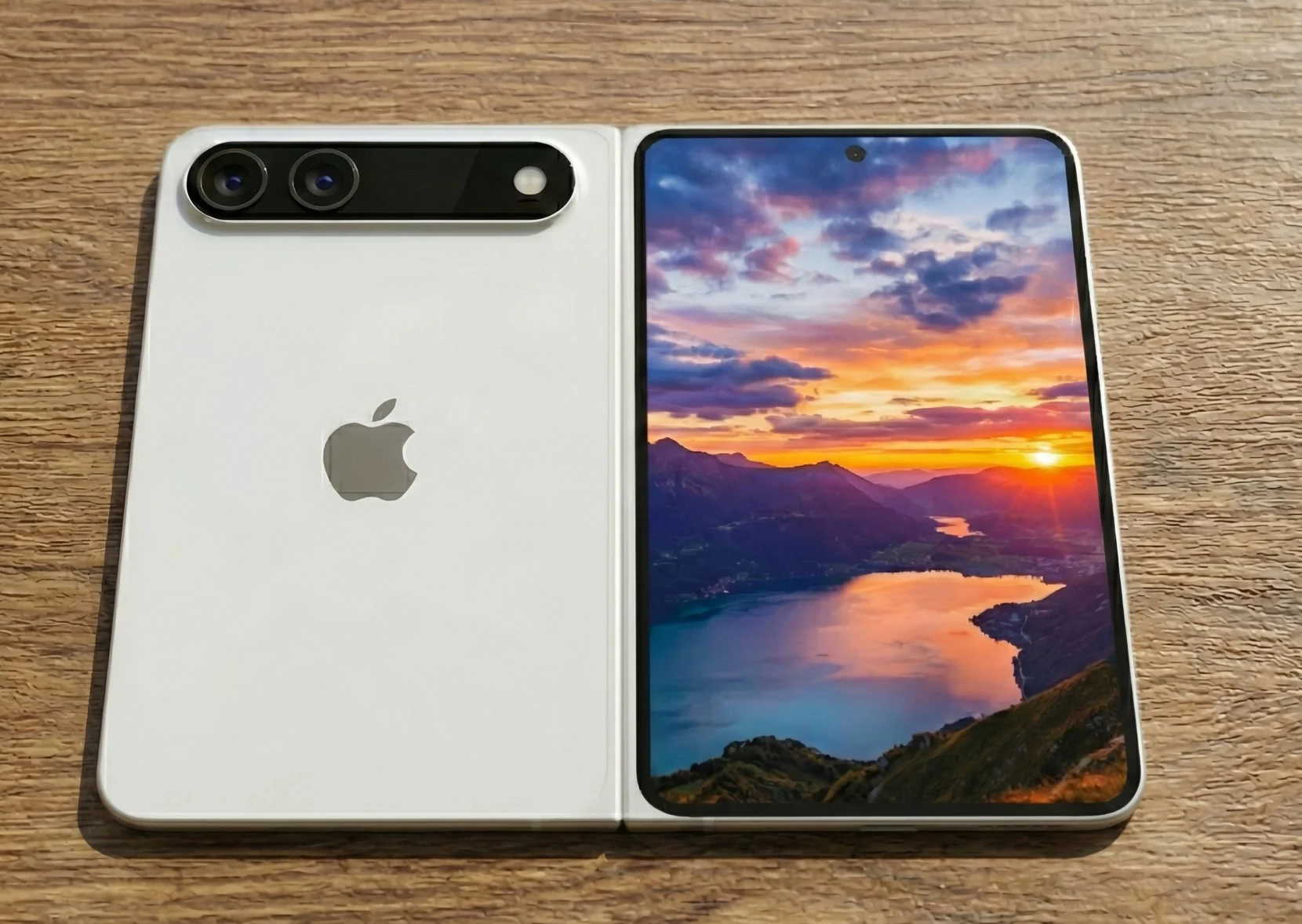
As the production phase draws nearer, an increasing number of detailed leaks have emerged, accompanied by increasingly realistic renderings of the foldable device.
Recently, renowned tech insider @Ice Universe unveiled a series of renders created using the latest leaked information. Artificial intelligence played a key role in visualizing the design. Following numerous refinements, these images are now considered the most accurate depiction of the iPhone Fold to date.
A design that breaks away from the foldable crowd
According to multiple trusted sources, Apple’s foldable will adopt a surprisingly unorthodox design philosophy. Unlike the vertical orientation found in most book-style foldables, Apple’s device is expected to favor a horizontal layout - wider rather than taller.
The external display is believed to be relatively compact, intended primarily for quick tasks such as checking notifications, viewing the time, or responding to basic prompts. Nonetheless, it will still function as a conventional phone display when needed.
Apple appears to be aiming for an experience that mimics the iPad - a broad, immersive screen ideal for running iPadOS or tablet-optimized applications.
If these expectations hold true, the iPhone Fold could deliver an entirely new usage paradigm for smartphones.
Based on current information, experts believe the latest renderings are very close to the final design. If there’s any inaccuracy, it may be in the size of the external screen. The renders suggest it’s slightly larger than previous reports, which indicated a size of around 5.49 inches.
One detail that stands out is the screen crease. The render shows a faint ripple along the fold line. While Apple is reportedly striving to eliminate any visible crease, insiders confirm the company has yet to achieve a perfectly smooth fold. Still, the iPhone Fold’s hinge is described as the most advanced to date, making the crease as subtle and unobtrusive as possible.
A divisive design: Loved and loathed
The biggest challenge facing the iPhone Fold might be user perception. For some, the design represents a refreshing innovation. For others, it lacks appeal.
Even some Apple loyalists have cooled their enthusiasm after seeing the leaked renders. The horizontal form factor, smaller front screen, and tablet-oriented interface may not align with everyone’s expectations or needs.
Interestingly, Apple is not alone in pursuing this form factor. Samsung, the current leader in the foldable market, is reportedly developing a similar design. This lends credibility to Apple’s vision and suggests the company may be tapping into an emerging industry trend.
Historically, Apple has transformed once-skeptical trends into mainstream standards. The iPhone Fold may be the next in line, though it’s clear not everyone will embrace the shift. Some users will inevitably choose to sit this one out.
Regardless of opinions, the iPhone Fold stands out as one of the boldest products Apple has developed in recent years. It signals a key transition from traditional smartphones to a hybrid era, where phones and tablets converge.
Based on what we know so far, users can expect a high-end, meticulously crafted device with deeply optimized software and a uniquely Apple experience. Like many of Apple’s revolutionary products before it, the iPhone Fold may both spark debate and redefine how we use mobile devices in the future.
Hai Phong
.svg)
