 Vietnamnet.vn

 Podcast



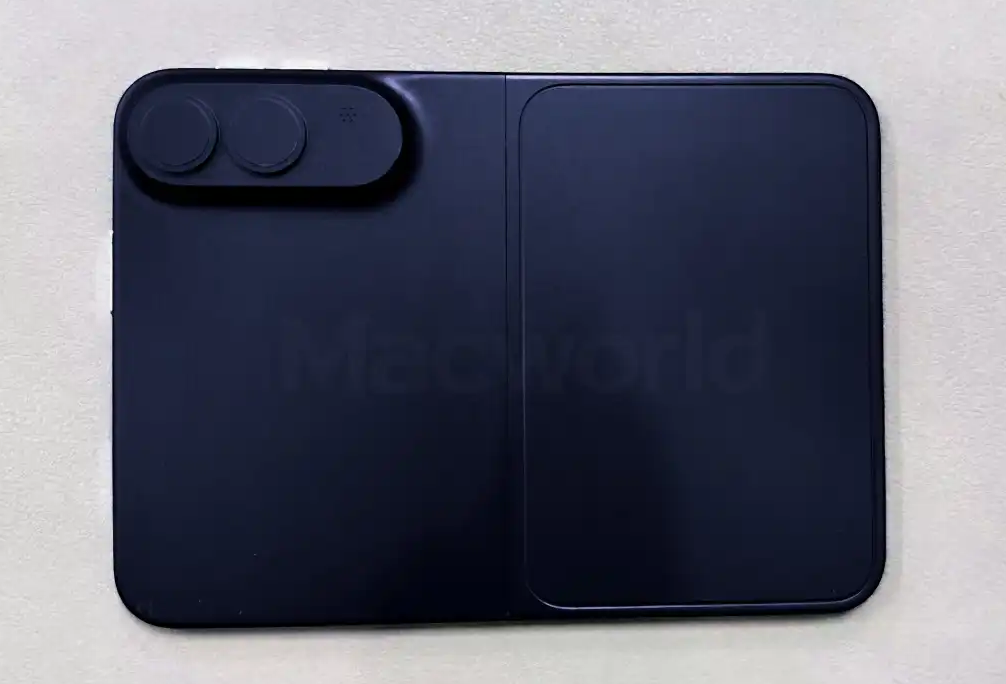
A concept image of the foldable iPhone, often referred to as iPhone Fold or iPhone Ultra, featuring a deep Indigo color option. Photo: Macworld
Within just 24 hours, the iPhone world has seen two major developments surrounding Apple. On one hand, the company announced a new CEO, marking a strategic turning point. On the other, fresh rumors have continued to surface about a completely new product category - a foldable iPhone.
Yet instead of generating pure excitement, one small detail has prompted questions about whether Apple is heading in the right direction.
A camera control button that may miss the point
According to recent leaks, the iPhone Fold could feature a dedicated camera control button on its side, similar to what is expected on standard iPhone 17 models. At first glance, this might sound reasonable, but the reality is more nuanced.
A camera button is not inherently a bad idea. Some users will appreciate it, and it could be useful in certain situations. The issue lies in its relevance to a foldable device.
Very few people buy foldable phones for their camera capabilities. Photography has never been the primary reason for users to invest in such expensive devices.
Foldable phones are, first and foremost, premium products. For some, they serve as status symbols. But beyond that, their core value lies in two key elements: the inner display and the hinge.
The true “magic” happens when the device unfolds, transforming from a conventional smartphone into a much larger screen. Everything becomes more immersive, more intuitive, and more efficient, especially when it comes to multitasking.
Users can run multiple apps simultaneously without constant scrolling. When finished, they simply fold the device and slip it back into their pocket. This is the experience that traditional smartphones cannot replicate.
While the iPhone Fold would not be an iPad, it clearly moves toward a hybrid role between a phone and a tablet - and that distinction is crucial.
Tablet users are drawn to large displays for content consumption, reading, work, and multitasking. Camera performance has never been a top priority for such devices.
The reason is simple: tablets are designed for viewing and productivity, not for photography or video capture. In many cases, a reliable front-facing camera for video calls matters more than high resolution.
Where Apple should focus
If launched, the iPhone Fold would represent a first-generation product, meaning early challenges are almost inevitable.
Rather than trying to turn it into a “camera powerhouse”, Apple would be better served focusing on fundamental aspects. The folding mechanism must be smooth, durable, and free from unwanted noise over time.
The crease on the display remains another critical issue the entire industry is still working to minimize. A less visible crease would significantly enhance the premium experience.
Battery life is equally important, as larger screens consume more power. Overall durability must also be strong enough to justify a price tag exceeding US$2,000.
Equally essential is optimizing iOS to fully leverage the foldable design, rather than simply scaling up existing apps.
Apple is reportedly aiming for a “crease-free” display, though this remains technologically challenging. Competitors, however, have made notable progress.
Devices like the Oppo Find N6 have impressed with shallower, less noticeable creases compared to earlier generations. This represents a practical direction Apple could prioritize for its first foldable device.
In reality, the market already offers plenty of photography-focused smartphones. From Samsung, Xiaomi, Oppo, and Vivo Ultra models to Apple’s own Pro Max lineup, users have no shortage of options for high-quality imaging.
Foldable phones do not need to excel at everything. They simply need to deliver on their core promise: superior multitasking and expanded screen space.
A camera button may be an interesting addition, but at this stage, it feels like an early warning sign - a hint that Apple could be focusing on features that are not truly essential.
For the iPhone Fold, what users need is not more features, but a strong foundation that allows foldable technology to truly shine.
Hai Phong
.svg)
