 Vietnamnet.vn

 Podcast



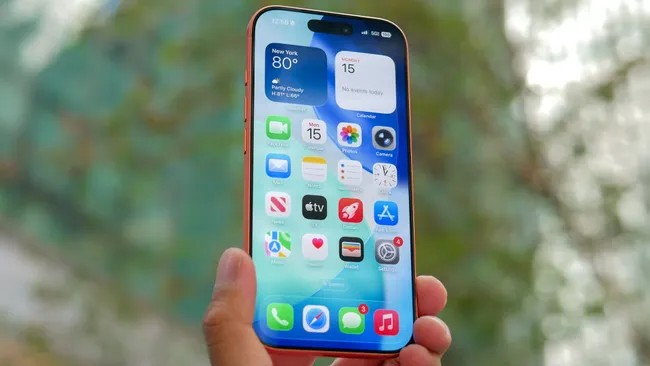
Apple has released iOS 26.6.1, iPadOS 26.6.1 and macOS Tahoe 26.6.2 security updates, addressing nearly 30 vulnerabilities, according to the company’s support documentation. This marks Apple’s third security update in just three weeks.
Earlier this month, the Financial Times reported that AI is helping uncover vulnerabilities faster than Apple’s usual update cycle can keep pace with.
According to Apple, the fixes included in this round of updates have also been incorporated into beta versions of iOS 27, iPadOS 27 and macOS Golden Gate currently available to testers.
Most of the vulnerabilities involve WebKit, the browser engine used by Safari. Simply visiting a webpage containing content crafted to exploit the flaws could cause Safari to crash or unexpectedly close.
The vulnerabilities stem from a range of issues involving memory handling, input validation and state management.
Apple also fixed an audio vulnerability that could allow an app to leak sensitive information, an image-processing flaw that could potentially lead to arbitrary code execution, and three vulnerabilities affecting the kernel.
On iOS specifically, Apple addressed a flaw in the communications system that could allow an attacker with privileged access to the same network to bypass IPSec authentication and intercept a user’s network traffic.
Of the vulnerabilities disclosed, 21 are related to WebKit, while nine were credited to OpenAI’s Codex Security.
Apple said none of the vulnerabilities on this latest list have been confirmed as being actively exploited in the wild. Users are nevertheless advised to update their devices as soon as possible, as publicly disclosed vulnerabilities could become targets for future attacks.
Apple has also released iOS 18.7.10 and iPadOS 18.7.10 for devices unable to run iOS 26 or iPadOS 26, providing similar security fixes and protections for older models.
To update, users can go to Settings > General > Software Update, then download and install the latest available version.
Du Lam
.svg)
