 Vietnamnet.vn

 Podcast



Her address conveyed a strong message about the future of the Vietnam-Japan Comprehensive Strategic Partnership, while also announcing key updates to Japan’s “Free and Open Indo-Pacific” (FOIP) vision.
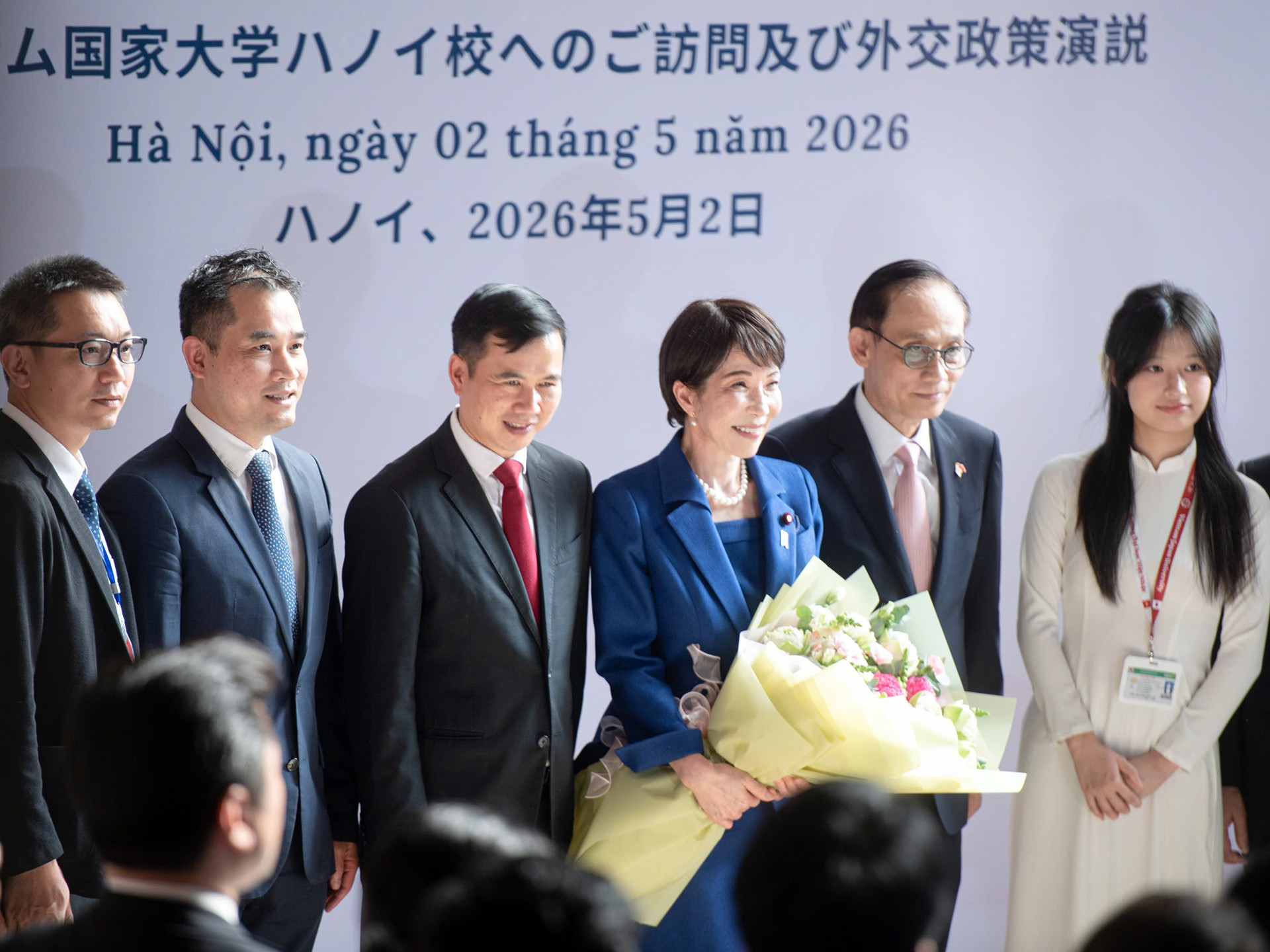
Japan’s Prime Minister Sanae Takaichi visits and delivers a policy speech at Vietnam National University in Hanoi.
At the opening, Prime Minister Sanae Takaichi recalled her visit to Vietnam six years ago and expressed her wish to return to Hoi An, home to the Japanese Bridge (Nihonbashi), which was restored with Japanese cooperation two years ago.
She described the site as a testament to more than 400 years of vibrant trade exchanges between the two nations across open seas. Building on that spirit, in 2013, former Prime Minister Abe Shinzo chose Vietnam as the destination for his first overseas trip after taking office.
Reflecting on Vietnam’s economic development, the Japanese Prime Minister expressed admiration for the country’s remarkable progress. From primarily producing garments and textiles a decade ago, Vietnam has now become a manufacturing hub for many global companies, including advanced electronic devices incorporating core Japanese technologies.
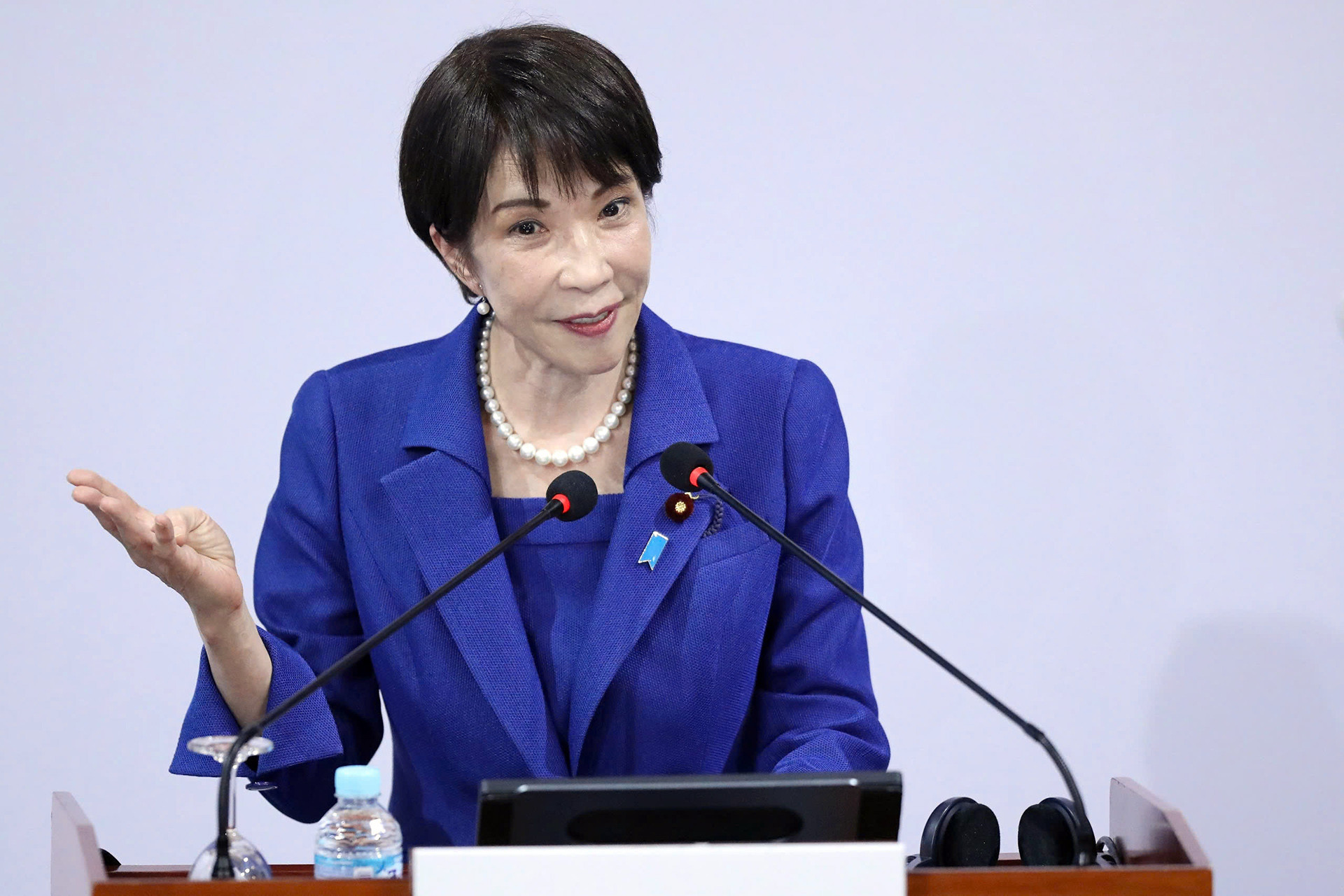
She emphasized that Vietnam’s manufacturing sector is now deeply intertwined with Japan’s economy. In the three Thang Long industrial parks near Hanoi alone, 205 Japanese companies are operating, creating around 100,000 jobs. Companies such as Canon source components from Vietnam, Japan, and across Asia to produce up to a quarter of the world’s printers in Vietnam.
Looking ahead, Prime Minister Sanae Takaichi affirmed that bilateral cooperation has extended into outer space. She highlighted the inauguration of the Vietnam Space Center in March at Hoa Lac Hi-Tech Park in Hanoi, a project funded by Japanese ODA and the result of nearly two decades of sustained effort since 2006. Japan is also supporting Vietnam in developing the LOTUSat-1 Earth observation satellite to aid disaster forecasting and climate change response.
In the field of high technology, both countries are strengthening cooperation in semiconductors. The launch of a semiconductor engineering program at the Vietnam-Japan University in 2025 is expected to reinforce Japan’s supply chains while contributing to Vietnam’s industrial advancement. Japan also aims to deepen public-private cooperation with Vietnam in developing critical mineral supply chains.
Marking the 10th anniversary of the FOIP vision first proposed by former Prime Minister Abe Shinzo in Kenya in 2016, Prime Minister Sanae Takaichi reaffirmed its relevance, particularly as ASEAN adopted its own Indo-Pacific outlook (AOIP) in 2019 with shared core values.
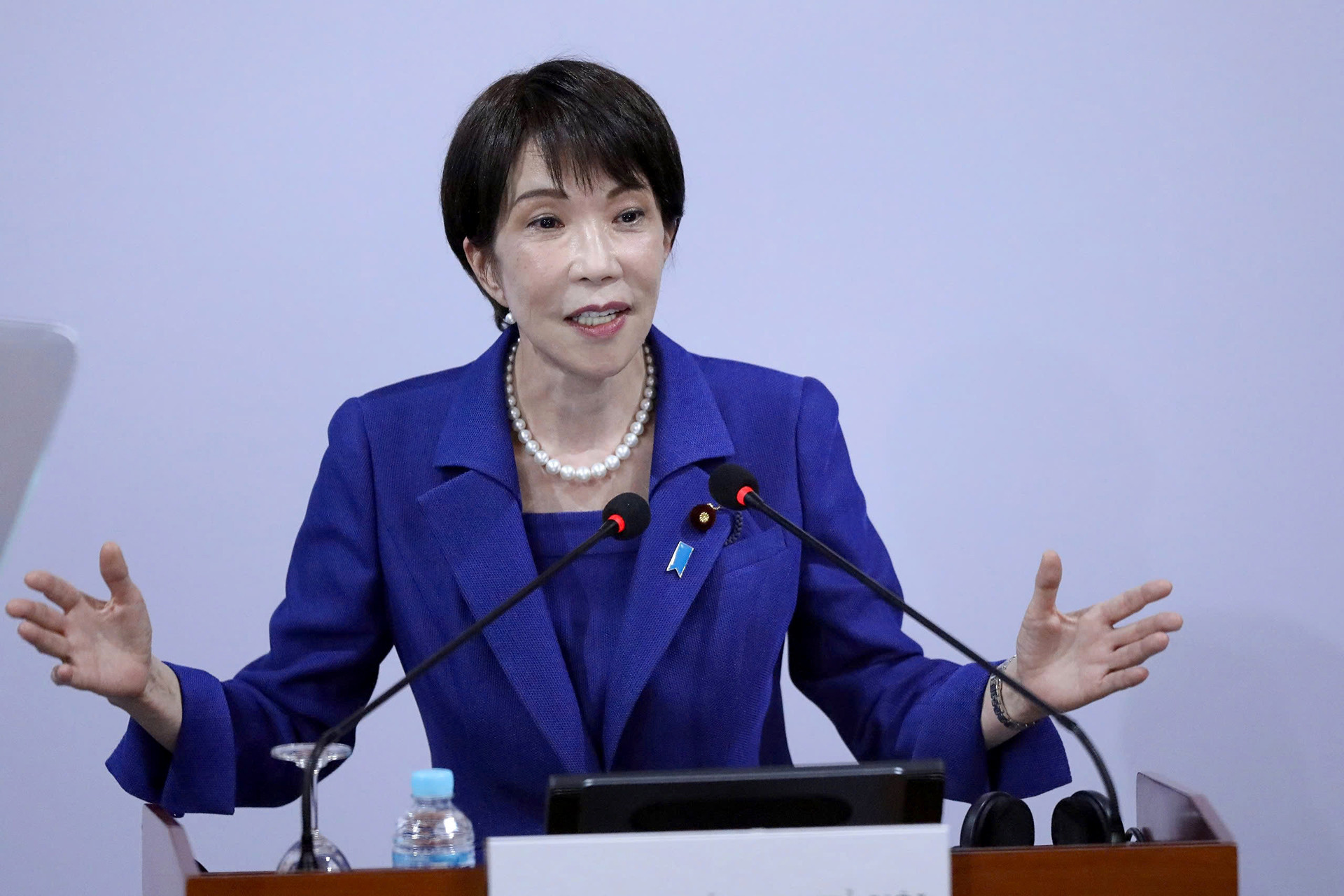
In October last year, she and ASEAN leaders issued a joint statement confirming the alignment between FOIP and AOIP.
Amid structural shifts in the global order, including geopolitical competition, technological innovation, and the rise of the Global South, she formally announced an updated FOIP framework focusing on three priorities: building economic infrastructure for the AI and data era, strengthening energy and materials supply chains, and creating growth opportunities through public-private cooperation and shared rules, alongside enhanced security cooperation to ensure regional peace and stability.
On energy security, Prime Minister Sanae Takaichi revealed that she had recently convened an emergency online meeting with Asian leaders and launched the “Partnership for Energy and Resource Resilience in Asia” (POWERR ASIA), while expressing appreciation for the support of Prime Minister Le Minh Hung.
Japan will assist in securing crude oil supply for the Nghi Son Refinery. Over the medium and long term, the two countries will work toward building a regional oil reserve system and developing new energy sources such as biofuels, next-generation solar power, nuclear energy, and liquefied natural gas.
She also highlighted joint efforts to gain an advantage in the digital era. Through the ASEAN-Japan AI co-creation initiative announced last October, countries aim to develop AI models that reflect Asia’s diverse languages and cultures. Japan also introduced the concept of a “Digital Corridor” under FOIP, focusing on subsea cables, open radio access networks (Open RAN), satellite communications, and all-optical networks across the Indo-Pacific.
On trade, the Japanese Prime Minister stressed the importance of strategically expanding the Comprehensive and Progressive Agreement for Trans-Pacific Partnership (CPTPP) while maintaining its high standards.
Concluding her speech, she emphasized that every nation has its own Indo-Pacific vision, expressing hope that resilient countries will work together to build a “free and open” Indo-Pacific region as a foundation for peace and prosperity.
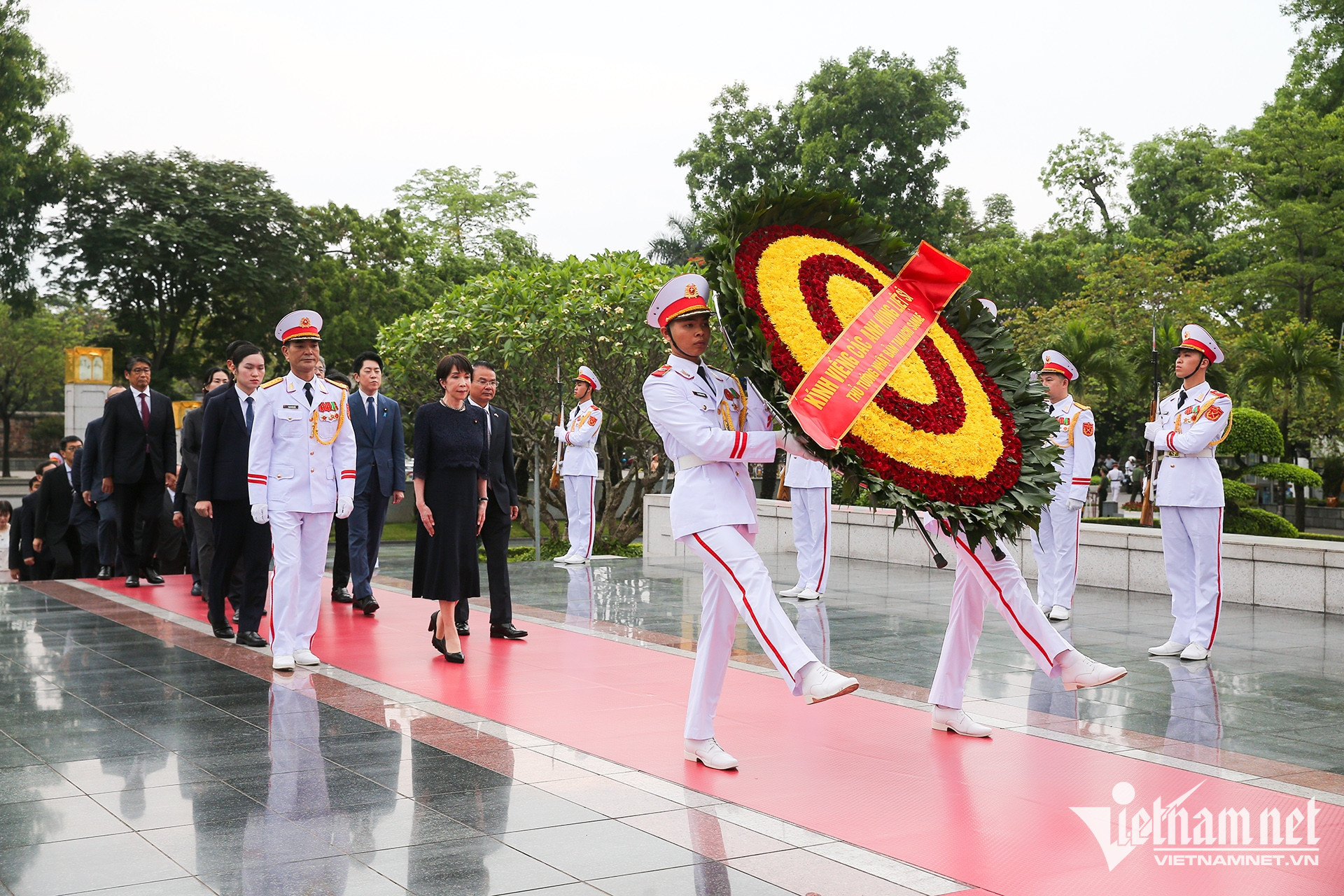
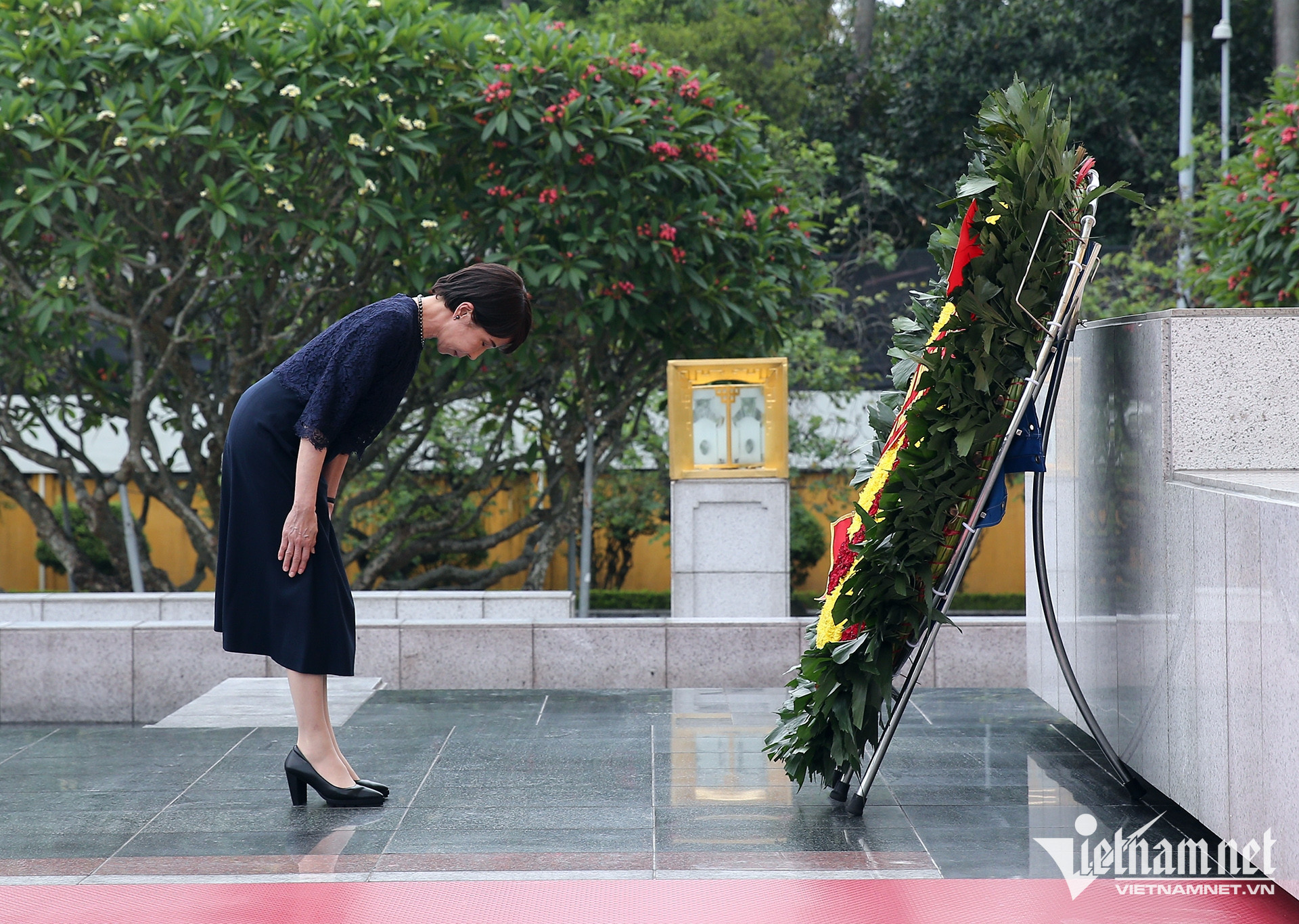
On the afternoon of May 2, Prime Minister Sanae Takaichi lays a wreath at the Monument to Heroes and Martyrs on Bac Son Street.
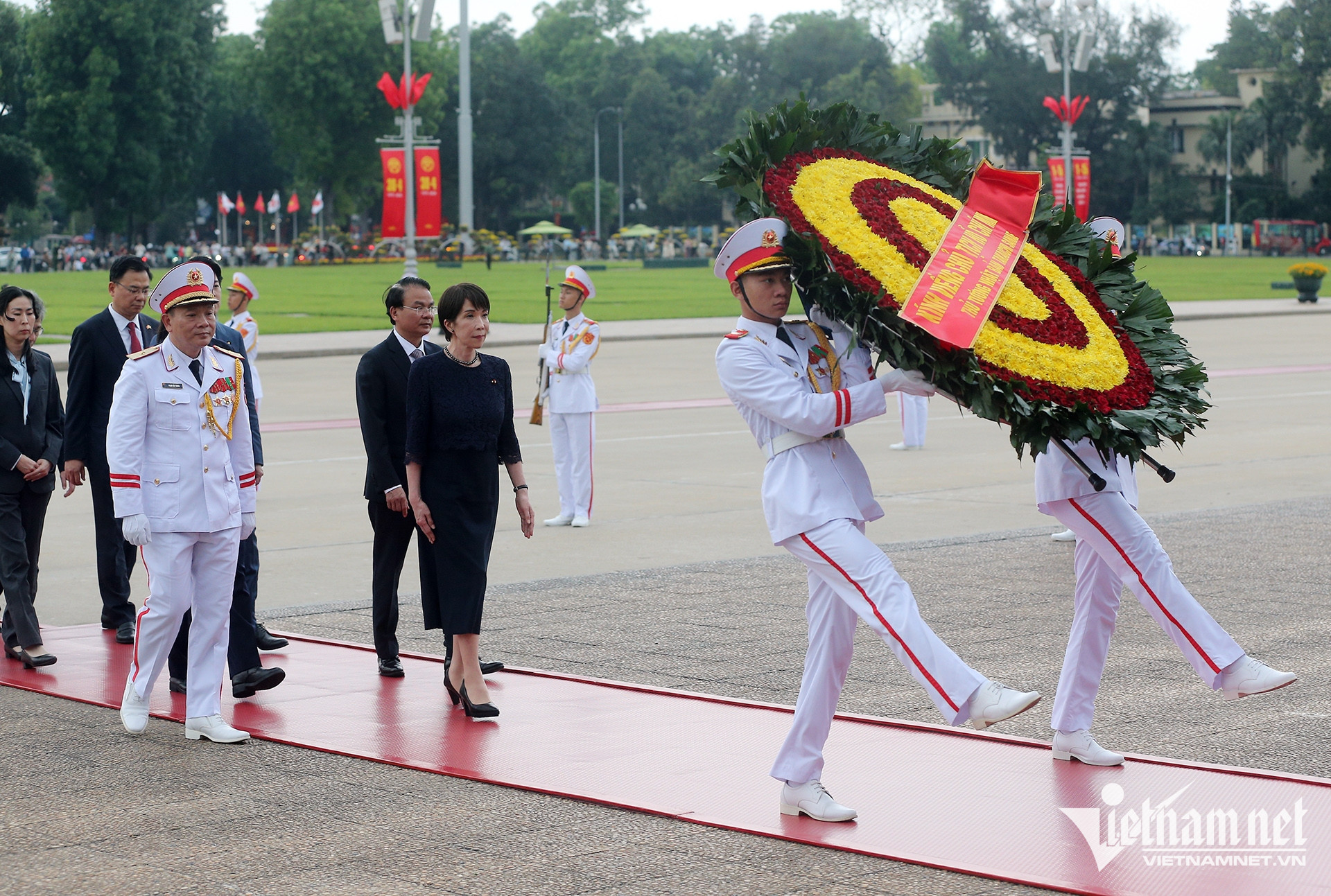
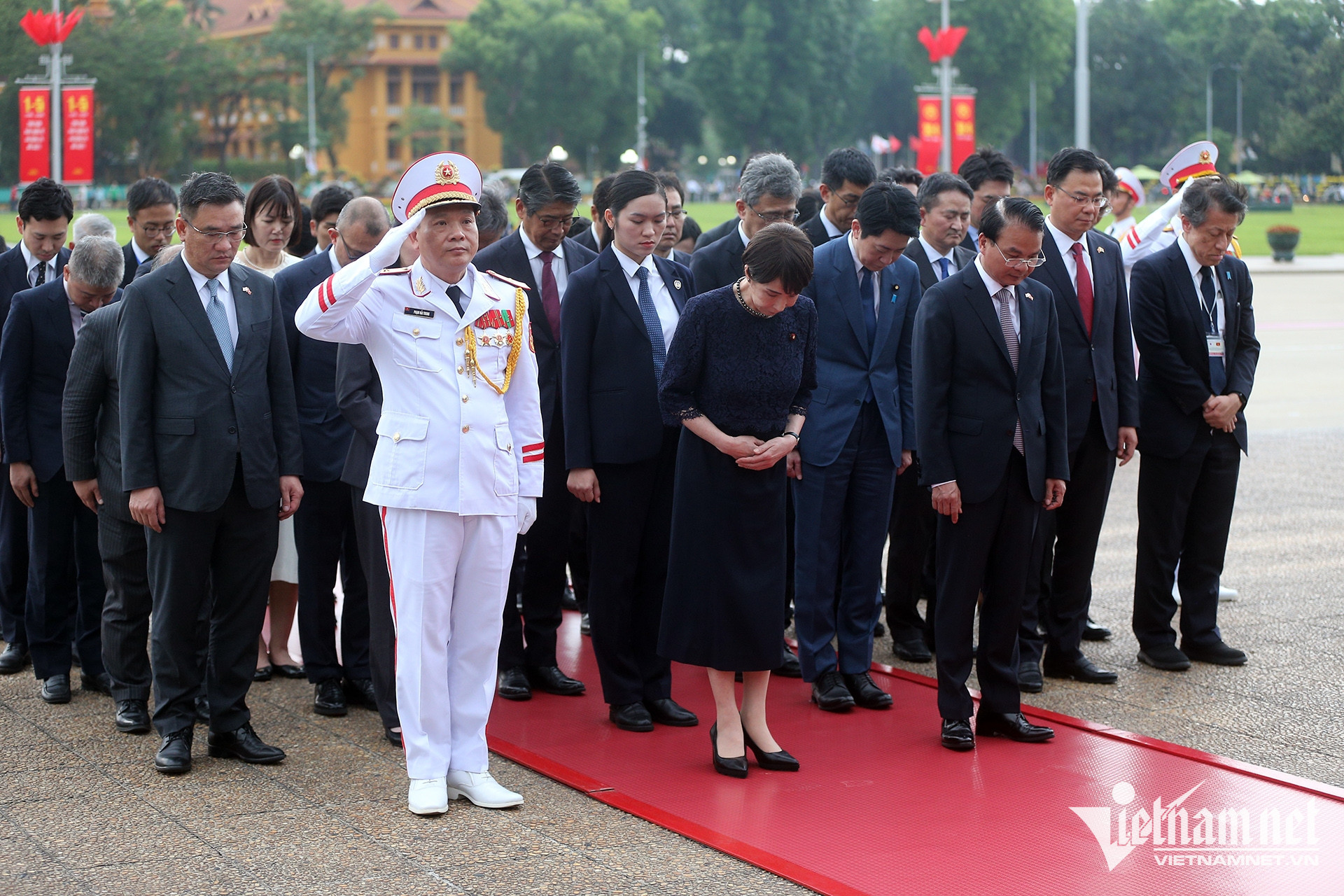
Prime Minister Sanae Takaichi pays tribute at the Mausoleum of President Ho Chi Minh.
Tran Thuong - Pham Hai
.svg)
