 Vietnamnet.vn

 Podcast



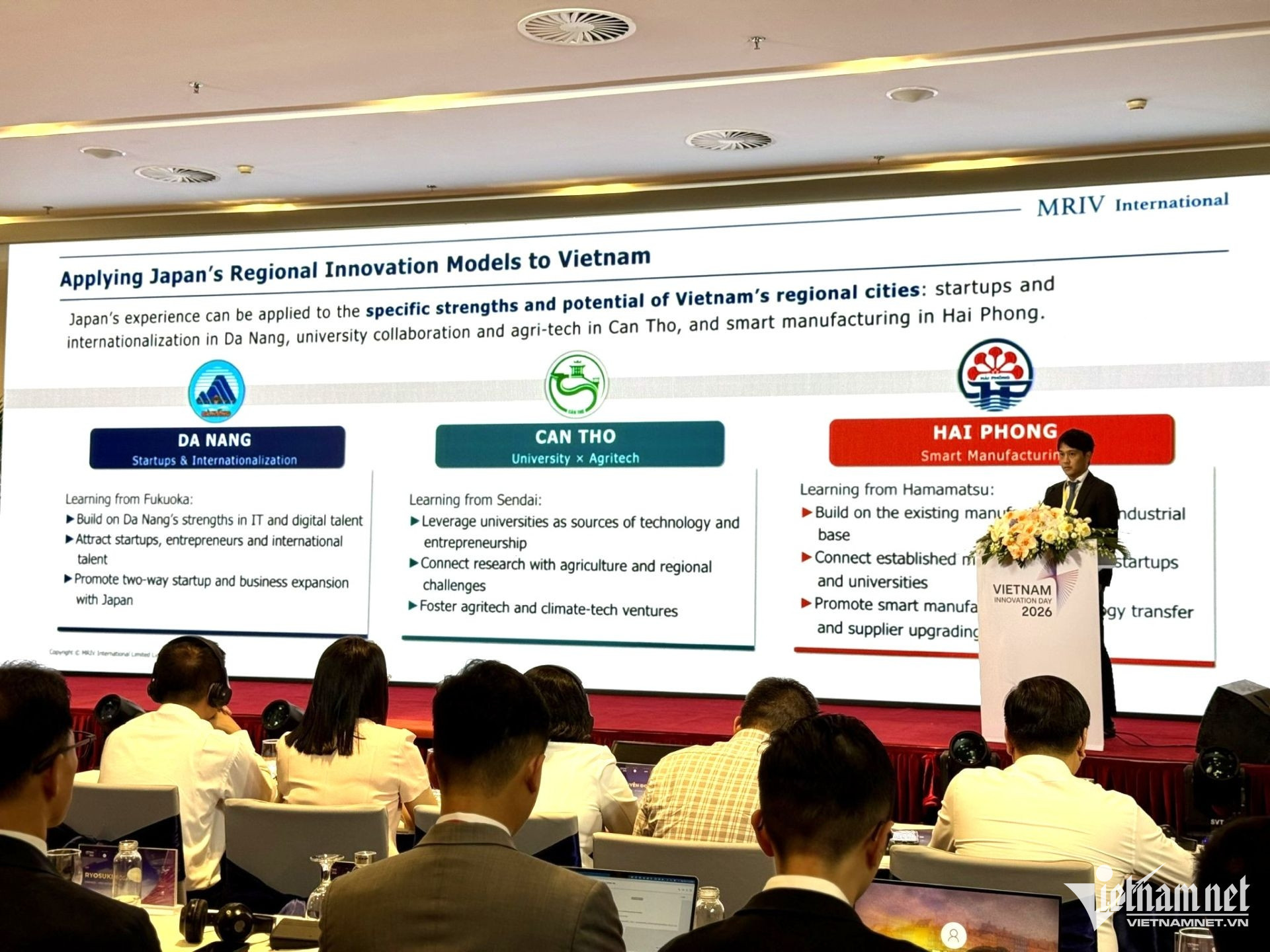
According to Ogata, Da Nang and Fukuoka share several similarities, including favorable geographic locations, convenient airport access, attractive living environments and strong culinary identities. These factors can help cities attract technology talent and businesses.
Ogata cited Fukuoka’s “Ramen Tech” as an example of how a regional city can build a recognizable brand around its innovation ecosystem.
Drawing on that model, he proposed direct cooperation between Da Nang and Fukuoka to develop “Mi Quang Tech.” He said the event could provide a platform for technology exchange while connecting the Vietnamese and Japanese startup communities.
The proposal was among a series of solutions Ogata presented for developing innovation ecosystems in Vietnam’s regional cities.
According to him, around 80 million people in Vietnam live in cities outside Hanoi and Ho Chi Minh City. Building innovation ecosystems in these localities is therefore important for nationwide growth.
Three models for three Vietnamese cities
Drawing on Japan’s experience, Ogata outlined three models for developing innovation ecosystems: Fukuoka’s government-led model, Sendai’s university-based approach and Hamamatsu’s industry-driven model.
Fukuoka has introduced policies including startup visas, tax incentives, business registration assistance and innovation spaces to attract startups, investors and talent.
Sendai has leveraged Tohoku University to build an open innovation ecosystem, developing its campus to attract the participation of more than 100 companies.
Hamamatsu, meanwhile, has built on its strengths in manufacturing and locally rooted companies such as Honda and Yamaha to promote innovation.
Based on these three models, Ogata suggested that Can Tho learn from Sendai by strengthening links between Can Tho University and Tohoku University in agriculture, artificial intelligence (AI) and data science.
Hai Phong, meanwhile, could cooperate with Hamamatsu by building on its manufacturing base and the presence of Japanese companies.
Ogata also proposed that Vietnam expand local innovation testing zones where projects could be implemented to address challenges such as climate change and air pollution.
Another recommendation was to prioritize incubation funding for regional universities, enabling them to develop their campuses into open spaces for startups, businesses and innovation activities.
According to Ogata, regional development is a shared challenge for Vietnam and Japan. Cooperation between the two countries could begin with exchanging experience and developing joint programs to foster innovation ecosystems in cities beyond their major urban centers.
Du Lam
.svg)
