 Vietnamnet.vn

 Podcast


Buddhist monk Phuc Dien and East Asia's cultural connections
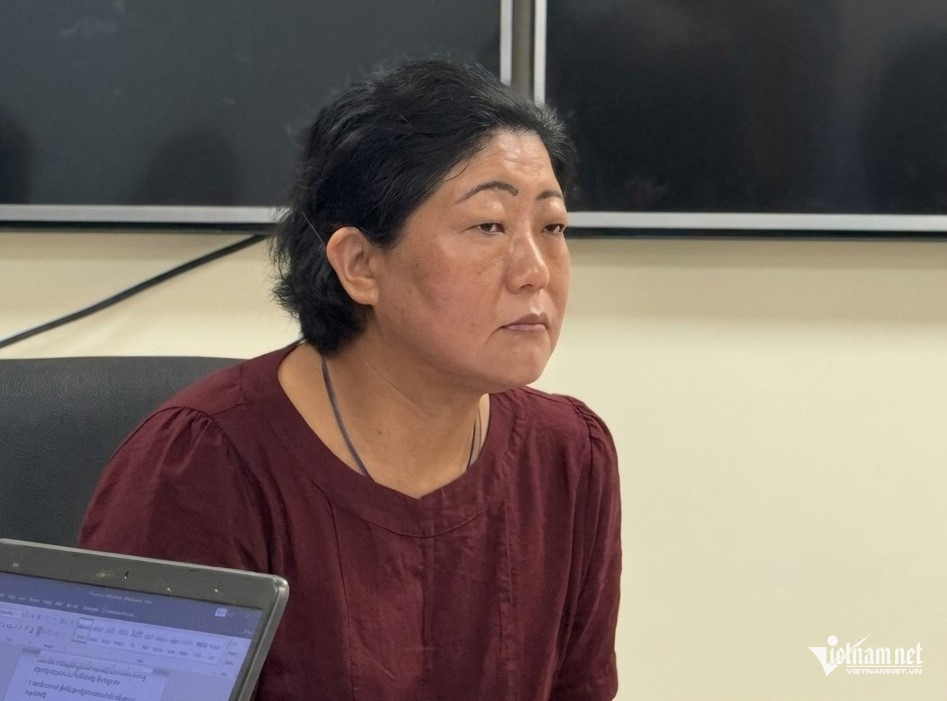
Japanese scholar Dr. Miyajima Junko, from the Institute of Oriental and Occidental Studies at Kansai University, has devoted extensive research to the history of Buddhist scripture printing, publishing and circulation in Vietnam, particularly in the north, following the Later Le Dynasty.
Specializing in the intellectual and religious history of East Asia, she has closely examined prefaces, postscripts and donor lists preserved in woodblock-printed Buddhist texts.
These materials have provided valuable clues about the distinctive characteristics of Vietnamese religious traditions and revealed previously overlooked aspects of the country's Buddhist history.
One figure who has attracted particular attention in her research is Venerable Phuc Dien (1784-1863), also known by his Buddhist name An Thien, a leading figure in northern Vietnam's Buddhist community during the early Nguyen Dynasty.
Beyond restoring and building pagodas and training monks, Phuc Dien devoted considerable effort to compiling, translating and publishing Buddhist scriptures.
According to Nguyen Dinh Hung, a researcher at Vietnam's Institute of Philosophy, Phuc Dien's scripture-printing activities were closely coordinated among seven major Buddhist monastic communities in northern Vietnam, creating a vibrant network of woodblock printing.
In addition to translating Buddhist texts from classical Chinese into Nom, Vietnam's traditional character-based writing system, Phuc Dien compiled and published numerous works on Buddhist history.
These included Thien uyen tap anh, a collection of biographies of Buddhist monks from the period of Chinese rule through the Ly Dynasty, and Thien uyen ke dang luc, which documented monastic biographies up to the early 18th century during the Later Le Dynasty.
He also produced Dai Nam Thien uyen truyen dang luc, his own account of Buddhism in his era, and published Phat to thong ky, a historical account tracing Buddhism from India to China's Song Dynasty.
"Through this body of work, Venerable Phuc Dien sought to construct a comprehensive and continuous picture of Buddhist history, tracing its transmission from India to China and from China to Vietnam, while connecting the past with the present," Miyajima observed.
Thich Thanh Hanh's independent approach to editing Buddhist scriptures
As Vietnam moved from the medieval period into the modern era, Buddhist scripture publishing entered another important stage of development, closely associated with Venerable Thich Thanh Hanh (1840-1936).
Born in Thanh Tri, Hanoi, Venerable Thich Thanh Hanh entered monastic life and later became closely associated with Vinh Nghiem Pagoda, located in what was formerly Bac Giang Province and is now part of Bac Ninh Province.
He eventually became the patriarch of Vinh Nghiem Pagoda and, from 1934, served as the supreme Buddhist leader of the Northern Vietnam Buddhist Association.
Driven by a commitment to revitalizing Buddhism, Venerable Thich Thanh Hanh focused particularly on printing Buddhist scriptures that had never previously been published in Vietnam, especially texts concerning monastic discipline.
One of Miyajima's most intriguing findings concerns Venerable Thich Thanh Hanh's use of a Japanese edition of the Buddhist Tripitaka, or Dai Tang Kinh, printed using movable metal type.
This edition had been brought to Hanoi in the early 20th century by the French School of the Far East (École française d'Extrême-Orient, EFEO).
The collection was exceptionally valuable, with very few copies surviving even in Japan today.
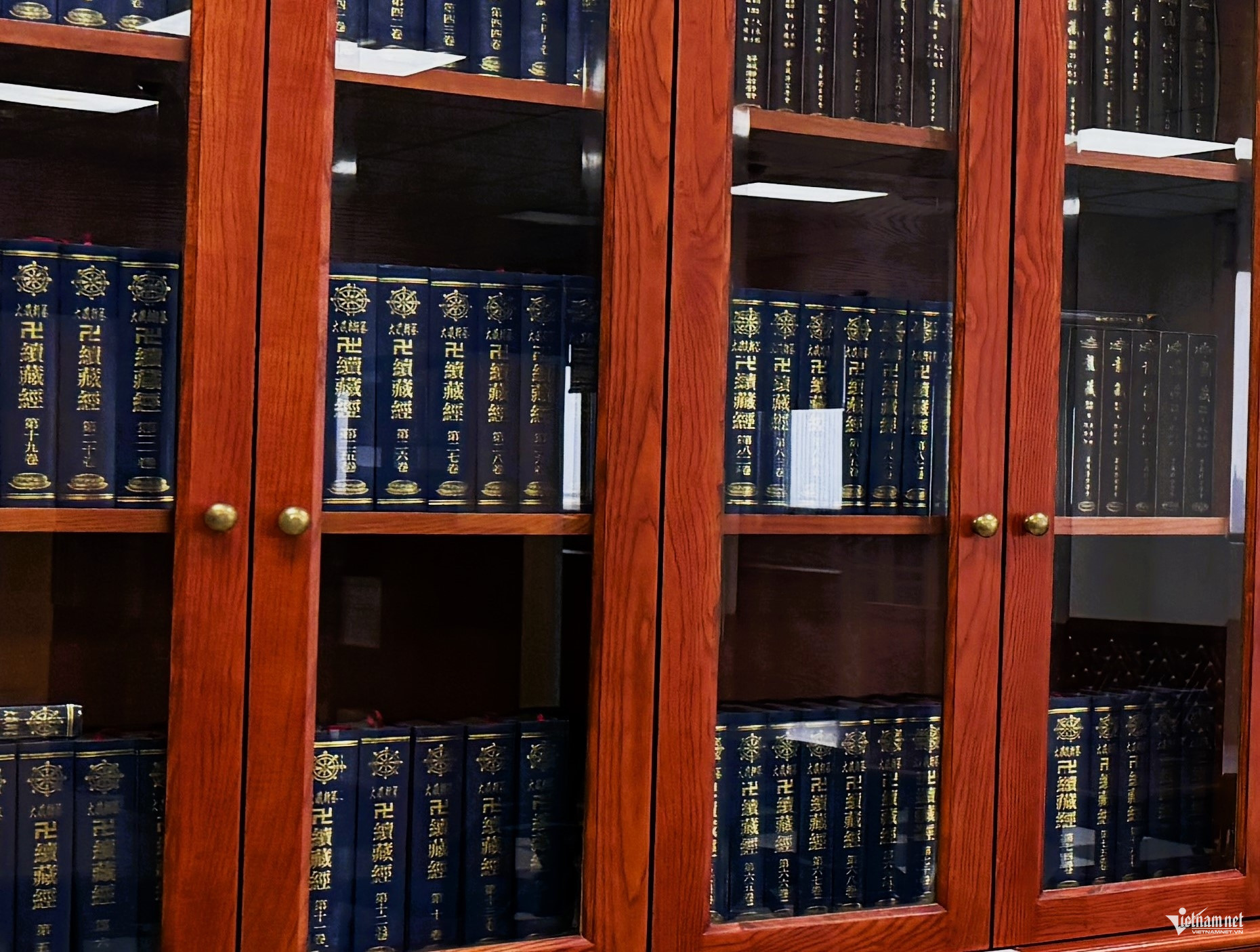
Recognizing its significance, Venerable Thich Thanh Hanh used the Japanese Tripitaka as a source text for publishing important Buddhist works, including Tuy co yet ma and Nam Hai ky quy noi phap truyen.
His approach demonstrated a sophisticated and independent method of textual editing, reflecting Vietnamese Buddhist scholars' active engagement with intellectual traditions from other countries.
Rather than simply reproducing the Japanese edition, Venerable Thich Thanh Hanh carefully compared its contents with Chinese Buddhist texts and carried out his own editorial revisions.
He also incorporated perspectives from contemporary Chinese Buddhist scholar Ouyang Jian (1871-1943) into his prefaces, demonstrating an awareness of wider intellectual debates within East Asian Buddhism.
Venerable Thich Thanh Hanh personally led efforts to print the Buddhist Tripitaka in Vietnam between 1920 and 1936.
His work was particularly notable because it took place during the Buddhist revival movement of the early 20th century, when religious publishing was increasingly shifting toward Quoc Ngu, the Romanized Vietnamese writing system.
Despite this broader transition, Venerable Thich Thanh Hanh continued to support the woodblock printing and circulation of Buddhist scriptures in classical Chinese.
His commitment reflected a desire to preserve knowledge in its original textual form while maintaining the shared classical Chinese literary and intellectual traditions that connected Buddhist communities across East Asia.
Miyajima's research highlights how prominent Vietnamese Buddhist figures such as Phuc Dien and Venerable Thich Thanh Hanh were far more than passive recipients of religious teachings from abroad.
They were independent thinkers and creative scholars who actively interpreted, edited and transmitted Buddhist knowledge, making important contributions to the preservation and development of Buddhism throughout East Asia.
Binh Minh

