 Vietnamnet.vn

 Podcast


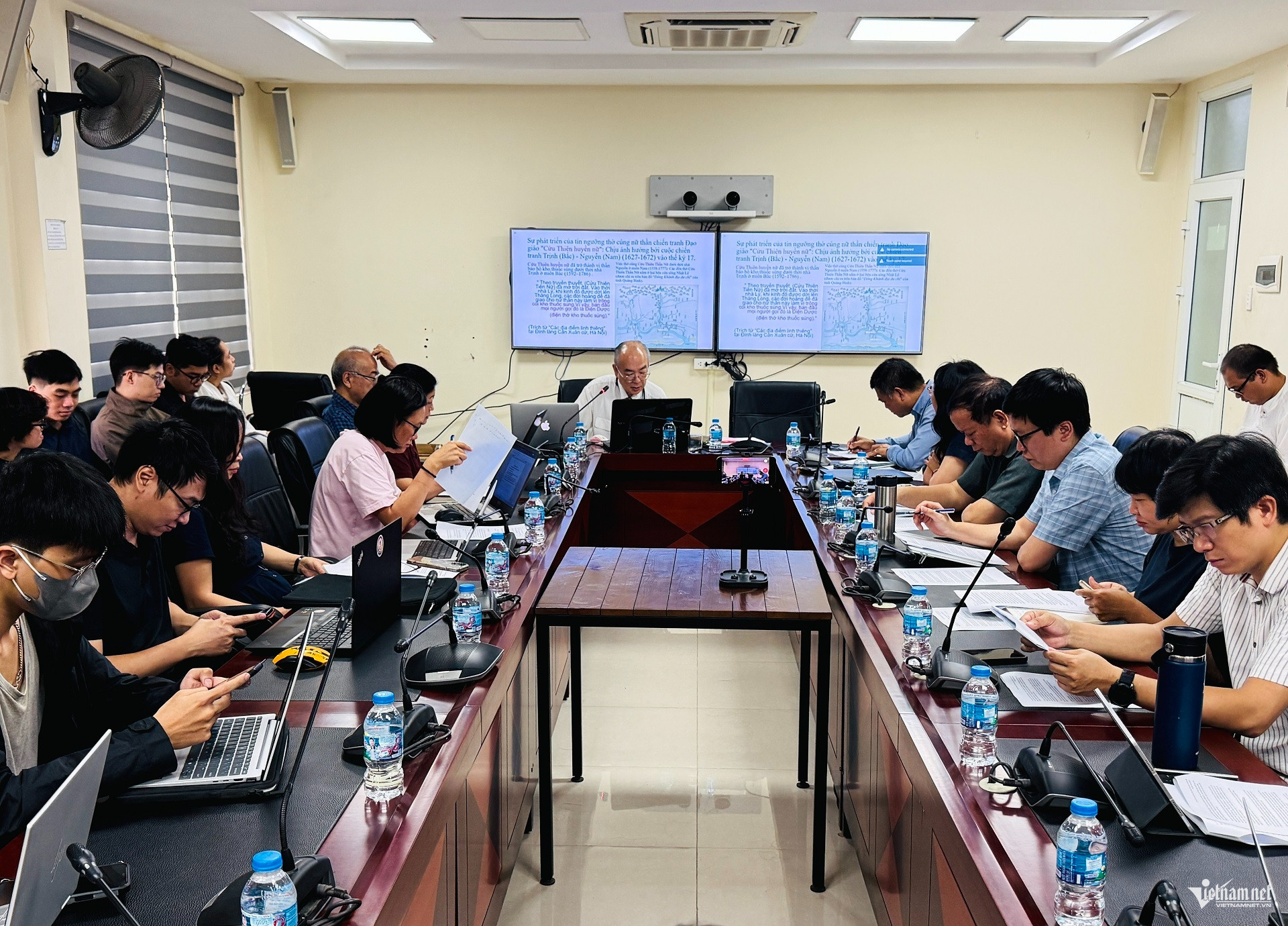
At a specialized academic conference organized by the Faculty of History and Culture at the University of Social Sciences and Humanities, Vietnam National University, Hanoi, in late September 2026, a presentation titled "Taoist Beliefs in Vietnam" by Professor Onishi Kazuhiko attracted particular attention.
Affiliated with the Asian International Exchange Scholarship Foundation in Japan, Onishi has spent nearly 30 years researching Vietnamese Taoism.
The Japanese scholar presented extensive historical materials and a multidimensional interpretation of a spiritual tradition that, although often overlooked, has remained deeply embedded in Vietnamese cultural consciousness.
Traces of alchemy and the search for immortality in Vietnam
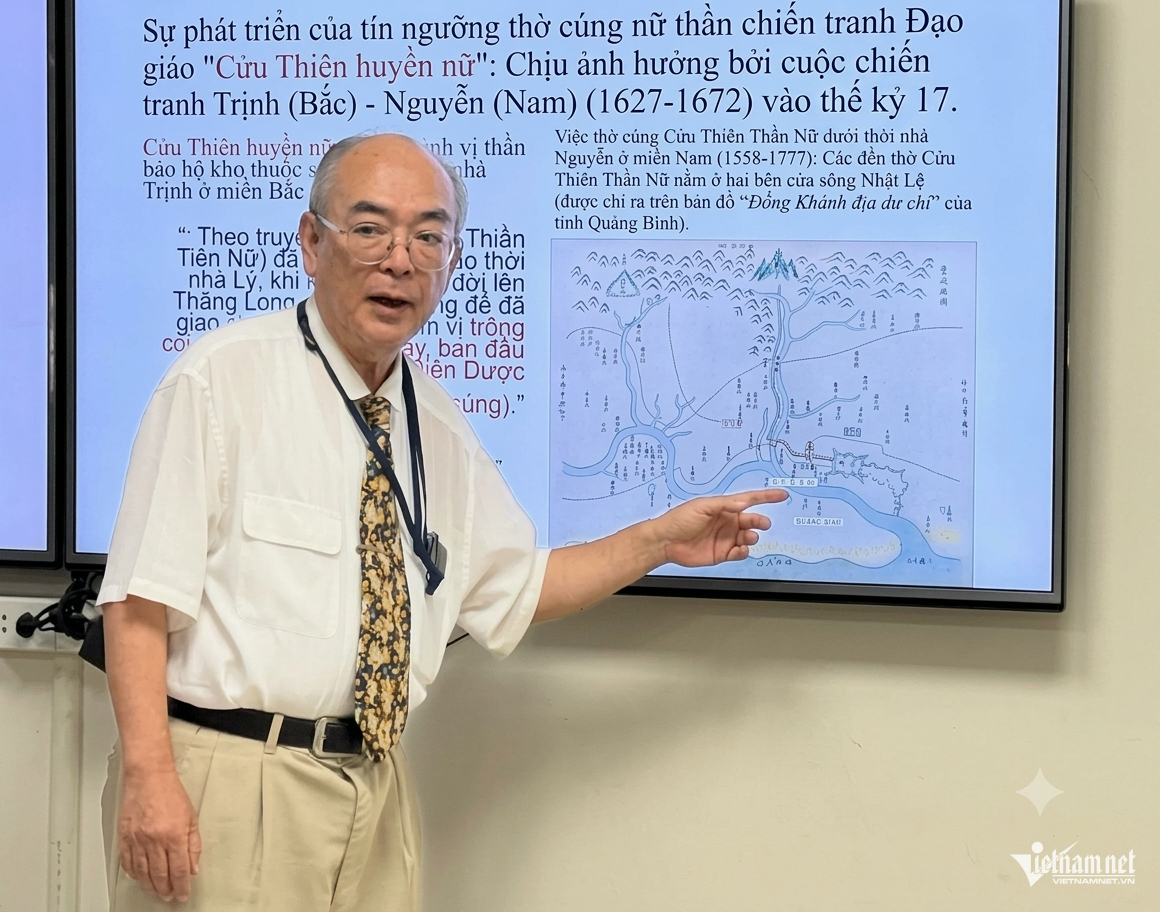
According to Professor Onishi, Taoism originated in China with an early emphasis on worldly benefits, including supernatural powers, healing, wealth accumulation and, ultimately, immortality.
Those believed to have attained an advanced spiritual state were known as immortals, while religious practitioners, called Taoist priests, performed rituals at Taoist temples.
In pursuit of eternal life, Taoist practitioners consumed elixirs made from gold and cinnabar, a mineral containing mercury sulfide (HgS), carried talismans and practiced various forms of mystical magic.
In the second century, Zhang Ling founded the Way of the Celestial Masters, a Taoist movement that worshipped three divine officials governing Heaven, Earth and Water, collectively known as the Three Officials.
Through active exchanges between China's Fujian region and ancient Jiaozhou, a territory encompassing parts of present-day northern Vietnam, the Celestial Masters tradition and the worship of the Three Officials spread into Vietnam relatively early.
Its influence was reinforced by successive migration waves, including people fleeing warfare in the second century, missionary activities during the fourth and fifth centuries, and groups of northern migrants dissatisfied with political conditions who arrived between the 10th and 12th centuries.
Beyond migration, another important factor behind Taoism's expansion into Vietnam was the search for ingredients used in alchemical preparations.
Professor Onishi paid particular attention to the changing geographical setting of legends surrounding the immortal An Qi Sheng, using these accounts to examine how Chinese Taoist practitioners perceived Vietnam.
In the second century BC, the Chinese alchemist Li Shaojun reportedly advised Emperor Wu of the Han dynasty to seek out An Qi Sheng, a legendary figure whom China's first emperor, Qin Shi Huang, had previously hoped to meet.
Initially, An Qi Sheng was believed to reside on Penglai, an imaginary island of immortals off China's Shandong Peninsula.
However, during the Tang dynasty in the seventh and eighth centuries, the legend shifted his retreat southward to the An Son mountain range, associated with the sacred Yen Tu mountains in present-day northeastern Vietnam.
"The idea that An Qi Sheng traveled south from northern China to Vietnam suggests that Chinese Taoist priests and followers believed the ingredients for the elixir of immortality could be found in Vietnam," Professor Onishi explained.
Researchers have also examined several Vietnamese historical sites associated with cinnabar in connection with Taoist cultivation and alchemical practices.
A recent archaeological survey at the Ngoc Thanh Taoist Temple site in Quang Ninh, for example, uncovered the foundation of an ancient well associated with cinnabar.
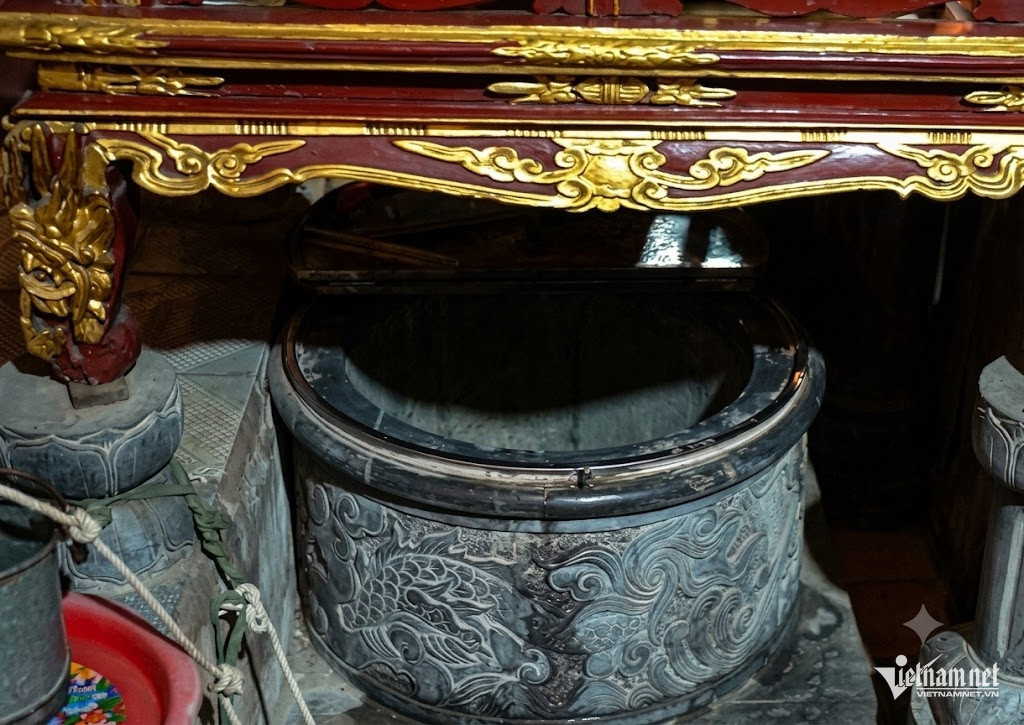
In Hanoi, traces of alchemical traditions can still be found at Linh Tien Taoist Temple, suggesting that Chinese Taoist practices were once conducted there.
The temple grounds still contain a well where, according to local legend, a valuable cinnabar deposit was discovered.
Minerals were not the only substances sought by Taoist practitioners. Vietnamese medicinal plants also attracted those pursuing longevity and immortality.
Ancient Chinese texts, including Lie Xian Zhuan (Biographies of Immortals) and the sixth-century Shui Jing Zhu (Commentary on the Water Classic), recount the story of an immortal named Gui Fu, believed to have originated in central Vietnam.
According to the accounts, Gui Fu attained immortality after consuming cinnamon harvested around Dien Xung, identified with Tra Kieu in present-day Quang Nam, then part of the ancient kingdom of Linyi.
At the time, cinnamon was praised as the "king of medicinal herbs" and was believed to possess extraordinary properties that promoted longevity.
The mystery of Taoism's transformation toward female deities
As Taoism spread into Vietnam, it underwent a remarkable process of localization, gradually acquiring characteristics deeply rooted in Vietnamese culture.
One notable example involves Cuu Thien Huyen Nu, known in Chinese Taoism as Jiutian Xuannu, a female deity associated with warfare and military strategy.
She appeared in Vietnamese historical records from the 12th century and became an especially important object of worship during the Trinh-Nguyen conflict between 1627 and 1672.
In northern Vietnam, the Trinh lords worshipped her as the protective deity of weapons and gunpowder arsenals, while the Nguyen lords in the south built a temple dedicated to her at the mouth of the Nhat Le River.
A stone incense pillar erected in 1695 at Kien So Pagoda in Hanoi contains an inscription praising the goddess as an embodiment of the "cosmic tree," connecting the heavenly realm with human aspirations.
According to Professor Onishi, one of the most distinctive developments in Vietnamese religious culture was the transformation of originally male Taoist deities into female divinities.
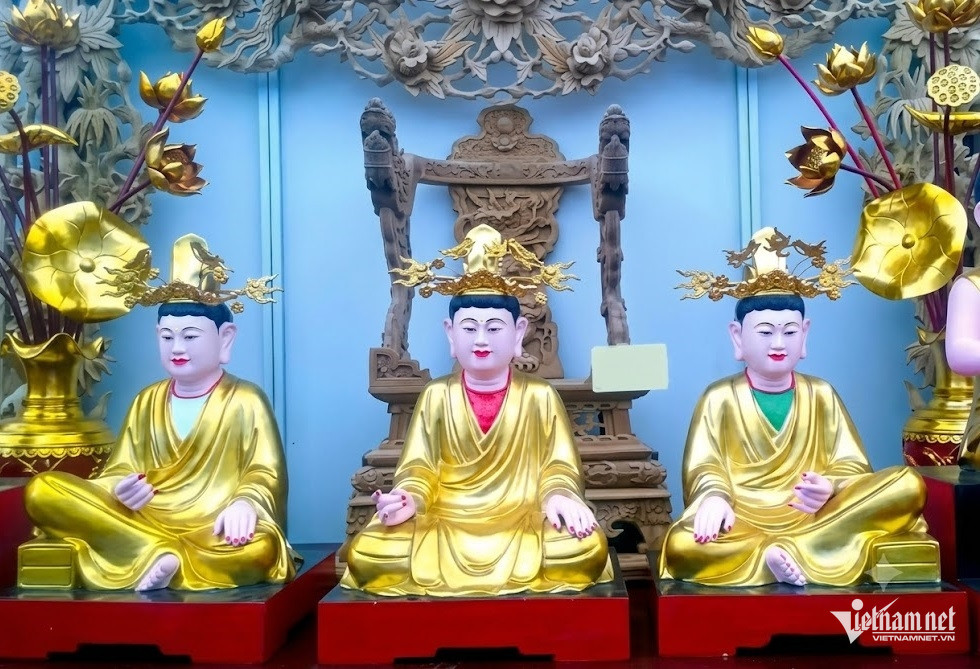
The Chinese concept of the Three Officials governing Heaven, Earth and Water was initially adopted in Vietnam through the worship of three male deities associated with the Three Realms, or Tam Phu.
Evidence of this early tradition survives at Tam Phu Linh Tu, a shrine within the Thay Pagoda complex in Hanoi, established around 1602, where statues of three imposing male officials remain preserved.
Between the 17th and 18th centuries, however, these male deities gradually gave way to the Three Holy Mothers and the Four Palaces Mother Goddesses of Vietnam's indigenous religious traditions.
Professor Onishi suggested that this shift may have been linked to the rapid expansion of international trade beginning in the 16th century.
"The feminization is thought to have originated from the strong development of international trade from the 16th century onward, which brought large amounts of foreign capital and goods into Vietnam," he said.
"These goods were traded by Vietnamese female merchants, and the growing wealth and power of Vietnamese women may have influenced the feminization of deities in Vietnamese Taoism."
He emphasized that this interpretation represented his own scholarly perspective.
Scholars debate the transformation of religious beliefs
At the conference, the transition from the Three Realms belief system to the Four Palaces tradition, particularly the addition of the Mountain and Forest Realm, became a subject of debate among researchers.
Professor Onishi proposed that the Vietnamese may have regarded the number three as lacking balance, citing folk customs such as avoiding photographs of three people.
He suggested that adding a fourth element might have been perceived as creating a more stable religious structure.
He also argued that the migration of ethnic Kinh communities from the lowlands into midland and foothill regions during the 18th century may have encouraged the incorporation of Mau Thuong Ngan, the Mother Goddess of Mountains and Forests, into the pantheon.
However, a Vietnamese researcher challenged this interpretation, arguing that an explanation based on a cultural dislike of the number three was superficial.
The researcher noted that river and water-related beliefs were closely connected to delta communities, while the emergence of Mau Thuong Ngan reflected broader spiritual developments, ethnic migration and religious interaction between mountainous and lowland regions.
The transformation, therefore, could not be understood simply as adding another deity to an existing group.
The researcher also emphasized the crucial role of indigenous shamans and ritual specialists in the adaptation of Taoism within Vietnamese religious culture.
Another researcher, drawing on fieldwork, also questioned the persuasiveness of Onishi's explanation involving the numbers three and four.
This scholar presented two observations from practical research.
First, in Vietnamese folk worship, the Three Holy Mothers are commonly worshipped together, while the Mountain and Forest Mother Goddess often has a separate place of worship.
From this perspective, the Four Palaces system can be understood as the Three Realms tradition with an additional realm.
Second, fieldwork conducted in 2017 near a volcano in Myanmar, in an area inhabited by the Shan people, an ethnic group of Tai origin, revealed a shrine dedicated to a female deity strikingly similar to Vietnam's Mau Thuong Ngan.
The similarities extended to the goddess's green clothing and head covering.
The researcher proposed that worship of mountain and forest deities may have originated in a shared ancient belief system among Tai-speaking populations stretching from Myanmar and northern Thailand to the mountains of northern Vietnam.
By the 17th and 18th centuries, expanding economic and geographical connections between mountainous and lowland communities may have enabled these beliefs to become more deeply integrated into Vietnamese spiritual life.
Despite their differing interpretations of how Taoism was adapted in Vietnam, the presentations and discussions demonstrated that its influence remains visible in folk culture and contemporary religious practices.
Professor Onishi highlighted Lunar New Year celebrations and early-year rituals intended to ward off misfortune as particularly vivid examples.
At pagodas such as Hoa Ma Pagoda in Hanoi, worshippers perform rituals involving incense sticks arranged in an interwoven lattice pattern.
According to Onishi, the arrangement resembles the esoteric Taoist talismanic formation known as Tu Tung Ngu Hoanh, or Four Verticals and Five Horizontals.
Participants drop coins through the gaps in the incense lattice into a basin of water, symbolically seeking to eliminate bad luck and misfortune.
Vietnamese Taoism thus presents a remarkably complex religious landscape, in which elements of ancient Chinese Taoism have survived alongside profound transformations shaped by Vietnam's cultural identity, social structures and spiritual traditions.
Rather than simply reproducing Chinese religious practices, Vietnamese communities have adapted, reinterpreted and integrated Taoist beliefs into their own religious world, creating a distinctive spiritual heritage that continues to attract scholarly interest.
Binh Minh

