 Vietnamnet.vn

 Podcast



When public trust becomes the most valuable asset a news organisation possesses, journalism must look inward and ask difficult questions about its future.
A flourishing landscape
Following Vietnam's accession to the WTO in 2006, the country's media sector entered a period of unprecedented expansion.
According to the former Ministry of Information and Communications, as of November 30, 2019, Vietnam had 850 media organisations, including 179 newspapers, 648 magazines and 23 independent online news outlets. The country also had 72 licensed radio and television organisations, comprising two national broadcasters, 64 local stations and five television channels. More than 41,000 people worked across the industry, including 20,407 accredited journalists.
For a lower-middle-income country with Vietnam's population size, the number of media organisations was considerable. Yet relatively few had developed the scale or competitiveness needed to stand out across Southeast Asia.
The most significant downsizing yet
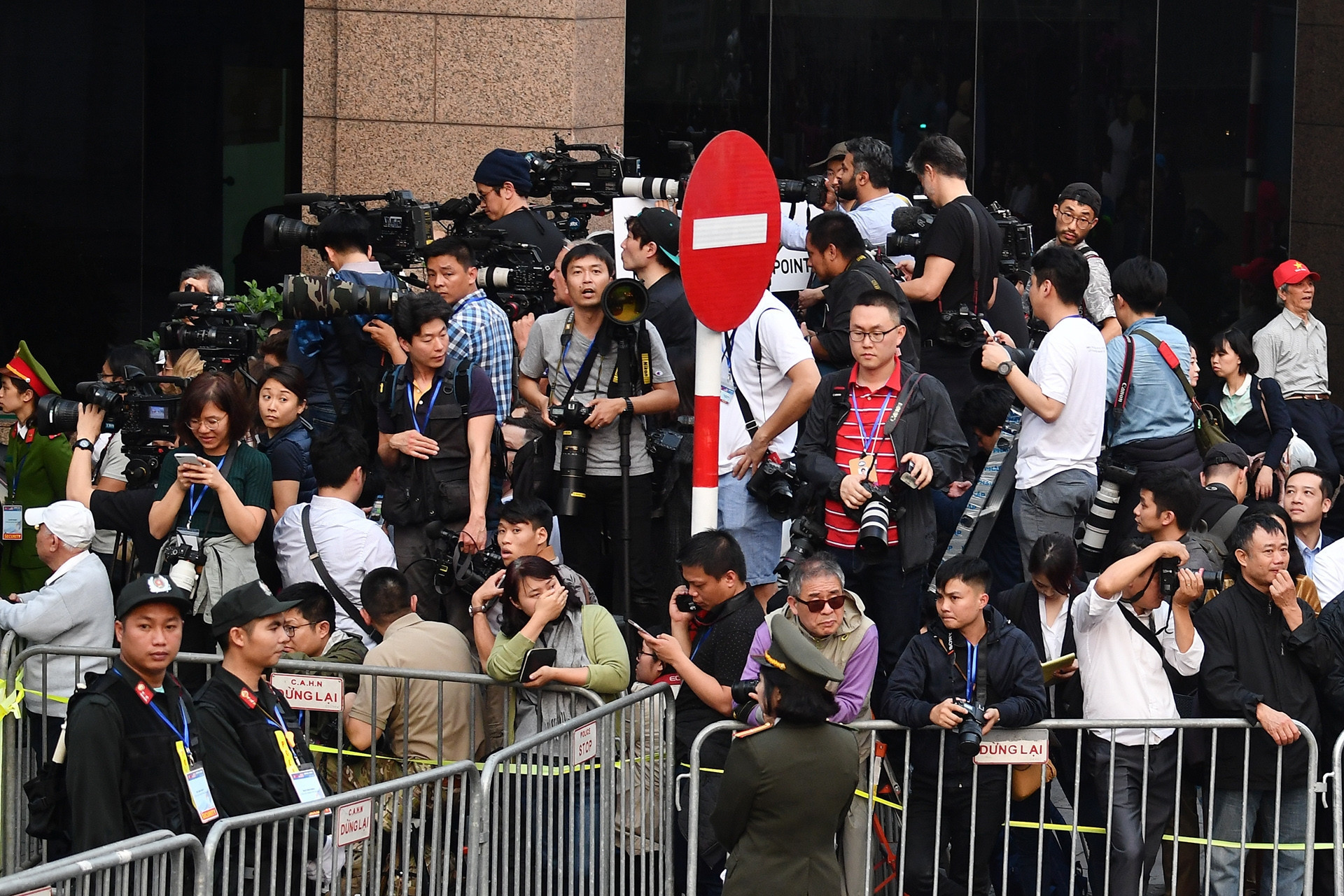
The current restructuring of Vietnam's media sector, taking place alongside broader government reforms at ministries, agencies and local administrations, carries far greater scale and impact than the 2019 press planning programme.
Notably, both Hanoi and Ho Chi Minh City are moving towards a model with only one local newspaper and one radio-television organisation, similar to arrangements being adopted elsewhere in the country.
According to the Ministry of Culture, Sports and Tourism, six years after the implementation of the national press planning strategy and Resolution 18 on organisational restructuring, Vietnam's media sector has undergone its most profound transformation since the Doi Moi reform era.
Hundreds of media organisations have been merged, restructured or dissolved. Media outlets operated by professional associations have largely disappeared.
By the end of 2025, Vietnam had 733 media organisations, down from 850 in 2019. The most significant changes occurred among newspapers and broadcasters. The number of newspapers fell from 179 to 98, while radio and television organisations dropped from 72 to 38. The number of magazines declined more modestly, from 648 to 597.
From a management perspective, the restructuring aims to concentrate resources, reduce fragmentation and improve efficiency. But it also raises a larger question: once the organisational streamlining is complete, how will the remaining media organisations survive and grow in a communications environment increasingly shaped by social media and artificial intelligence?
A quiet farewell
What has given me pause is how quietly society has reacted as long-established media brands, including many local publications with decades of history, have been merged or closed.
I will not attempt to answer that sensitive question directly.
Instead, I would ask another one: today, yesterday, last week or the week before, how many times did you deliberately visit a newspaper's website to read the news? Or did most of your information reach you through social media platforms, digital channels and, more recently, AI tools?
This is not a uniquely Vietnamese phenomenon.
Research by the Reuters Institute and the University of Oxford covering 51 countries in early 2026 found that the global news industry is approaching a major turning point. Artificial intelligence is advancing rapidly, digital platforms increasingly control public attention and traditional business models continue to weaken. Only 38% of media executives expressed confidence about the industry's prospects for the coming year, a sharp decline compared with four years earlier.
Yet it would be unfair to blame social media or AI alone.
For years, many newspapers and magazines have produced remarkably similar content, covering the same events in much the same way. At the same time, issues that genuinely matter to citizens have sometimes received insufficient attention or failed to appear prominently in the news agenda.
Viewed from this angle, journalism's challenge is not simply a business model problem. It is also an invitation for the profession to examine itself honestly and ask whether it has fulfilled the role and mission that society expects.
A new vision
What is particularly notable is that, after focusing primarily on reducing the number of media organisations, Vietnam's next development strategy is pursuing a different objective: building media organisations that are large and strong enough to compete in the digital era.
Under the Strategy for the Development and Management of the Press System to 2030, with a vision to 2045, Vietnam aims to develop eight major multimedia news organisations and eventually establish national flagship media groups.
The organisational model will also continue to be standardised, with each ministry and sector operating one newspaper and one magazine, while each locality will maintain one newspaper, one radio-television organisation and one literary and arts publication.
If fully implemented, the proposed integrated media group model could become the most significant transformation in Vietnamese journalism since the 2019 restructuring programme.
Rather than functioning solely as news producers, media organisations would have the opportunity to evolve into multi-platform ecosystems combining journalism, technology, data and digital content while generating revenue from multiple sources.
Importantly, policymakers have not chosen a path toward privatisation or commercial ownership of journalism.
The principle that the press remains outside private ownership remains unchanged. However, management tools commonly associated with business enterprises are gradually being introduced to help media organisations become more autonomous, adapt to digital realities and compete more effectively with global technology platforms.
In other words, if previous reforms focused primarily on reducing the number of media organisations, the next phase may concentrate on a much more difficult objective: creating media institutions with sufficient scale, strength and resources to survive in the age of AI.
Journalism will not disappear
Journalism is facing its greatest challenge in decades from social media, digital platforms and artificial intelligence.
Yet I do not believe journalism will disappear.
A newspaper is more than an information product. It is also a repository of collective memory.
Behind every article are field trips, conversations with businesses, visits to local communities and firsthand observations of economic and social change.
AI can aggregate information. Social media can distribute information. But no AI can independently visit a scene, pursue an investigation for months or serve as a witness to events unfolding in society.
Journalism remains a mirror reflecting society in ways that artificial intelligence cannot replace. A healthy society is reflected positively in its media, and the reverse is equally true.
The more important question is how journalism will examine itself in the years ahead to continue fulfilling its role as a bridge between the Party, the State and the people, and as a forum for public voices.
If there is one characteristic that distinguishes journalism and journalists, it is resilience. The profession has demonstrated an unusual capacity to adapt through periods of profound change.
For that reason, I am not overly concerned about journalists whose careers may be disrupted by the current restructuring.
Many will find new opportunities. Some will continue practising journalism in different forms. Others will bring their skills and experience into entirely new fields.
What concerns me more is the value journalism will create to remain relevant in the age of AI.
The greatest strength of journalism does not lie in technology, business models or the number of media organisations.
Its greatest strength lies in society's trust.
Tu Giang
.svg)
