 Vietnamnet.vn

 Podcast



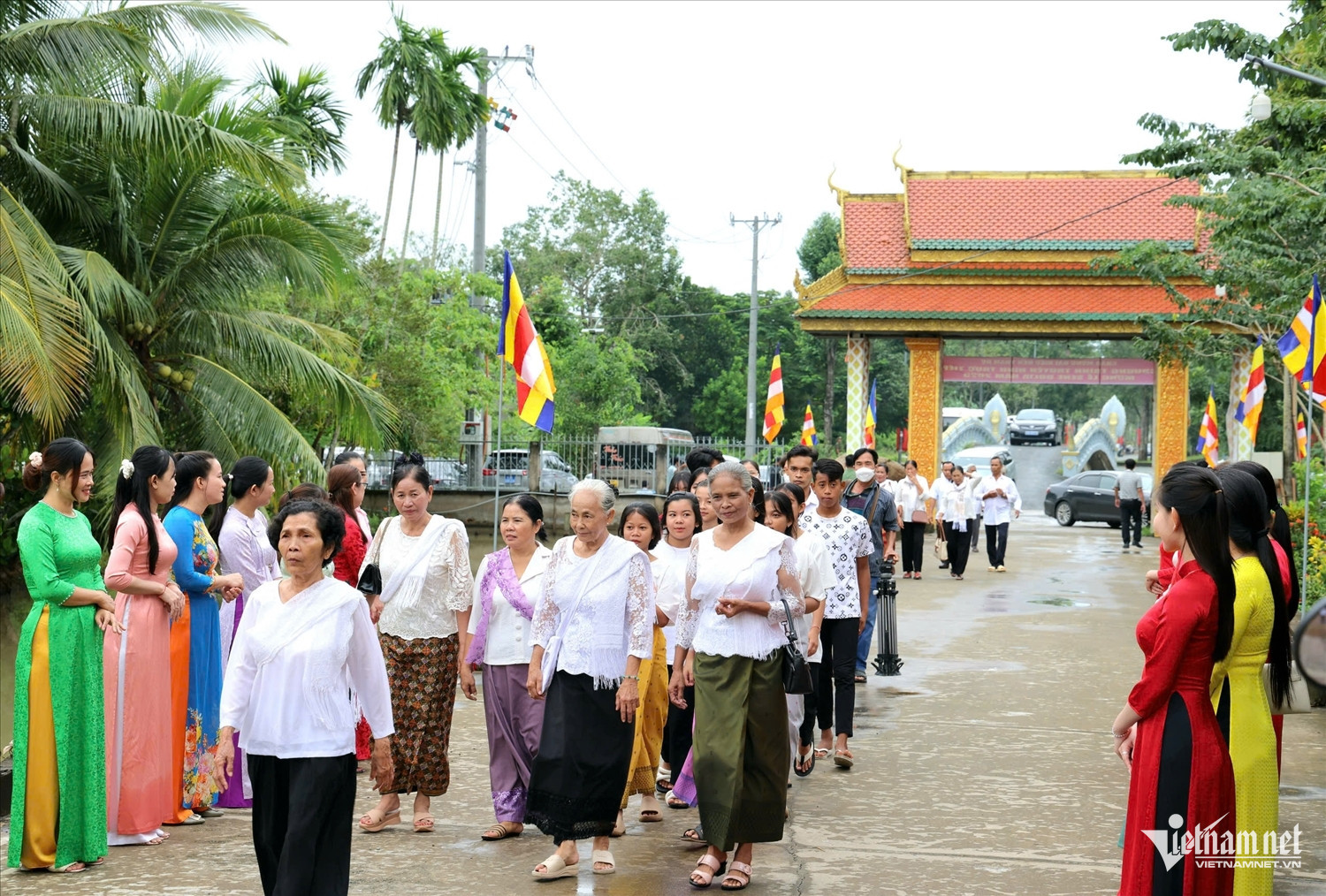
Danh Mai Dong, residing in Tram Chet hamlet, Giong Rieng commune in An Giang province, has witnessed local changes as ethnic policies were implemented, contributing to improved living standards.
“Just a few years ago, roads were still rough, dusty in the dry season and muddy in the rainy season. Now we have concrete roads, allowing small trucks to reach our yards. Socio-economic conditions have clearly improved,” he said.
Giong Rieng commune reported that by the end of 2025, average per capita income in the locality reached VND61 million per year, up nearly 34 percent; the poverty rate fell to 1.1 percent, just one-third of the 2020 level; and the commune no longer has temporary or dilapidated houses.
Le Huu Co, vice chair of the Giong Rieng commune People’s Committee, said that as ethnic policies were implemented, many essential infrastructure projects were developed, creating inter-regional connectivity, boosting production and goods circulation, and helping residents access basic social services, thereby improving quality of life.
In 2020 - 2025, An Giang Province allocated hundreds of billions of VND to invest in the development of ethnic minority areas. Thanks to this, infrastructure has been developed synchronously. Currently, 100 percent of ethnic minority communes have car-accessible roads to the center, more than 95 percent of especially difficult hamlets have transport roads, nearly 90 percent of households use hygienic water, and 99 percent of households have national grid electricity.
Meanwhile, the poverty rate of An Giang Province decreased from 1.9 percent in 2020 to 0.91 percent in 2025. With the support of the Party and State through programs, projects, and ethnic policies, many ethnic minority can escape poverty, and many have become well-off.
In Can Tho, besides the "revolutionary" changes in infrastructure when implementing the National Target Program for socio-economic development in ethnic minority and mountainous areas for 2021 - 2030, the effective deployment of preferential loan capital from the Vietnam Bank for Social Policies has helped thousands of Khmer households transition their crop and livestock structures. Previously inefficient rice fields have now been replaced by high-value fruit orchards or closed livestock models.
Lam Hoang Mau, Director of the Department of Ethnic and Religious Affairs of Can Tho, said: "Khmer people are closely attached to the Party because they see tangible care through each project and each direct support policy. We are not only supporting the ‘branches’ but nurturing from the ‘roots’.”
Culture plays central role
On January 7, 2026, on behalf of the Politburo, General Secretary To Lam signed and promulgated Resolution No80-NQ/TW of the Politburo on the development of Vietnamese Culture. The resolution conveys a very strong message: Culture does not stand outside, but plays a central, leading, and shaping role in the sustainable development of the nation. This is not only a recognition in terms of ideology but also a clear political line of the Party and State toward the cause of cultural development in the new period.
Implementing that viewpoint, in provinces and cities where Khmer people live, cultural and religious values that were once at risk of fading away are now being restored and promoted. Festivals such as Chol Chnam Thmay, Sene Dolta, and Ooc Om Boc - Ngo boat racing are not only preserved but have also become tourism products, contributing to local economic development.
Most Venerable Tang No, Deputy Patriarch of the Proofreading Council of the Vietnam Buddhist Sangha, said: "The attention of the Party and State toward Khmer people has built firm trust among the community. In particular, preserving the beautiful cultural features of the ethnic group will be the foundation to bring the country toward development in the new phase."
A strategic achievement reflecting the Party's long-term vision is the formation and development of a contingent of young Khmer intellectuals. If in the past, attending university was almost out of reach for children of poor ethnic families, now, thanks to tuition fee exemption and reduction policies, boarding support and ethnic scholarships, their dreams are being realized.
Tao Dat
.svg)
