 Vietnamnet.vn

 Podcast



Earlier, General Secretary and State President To Lam had submitted nominations for key leadership positions, including Prime Minister, Vice President, Chief Justice of the Supreme People’s Court, and Prosecutor General of the Supreme People’s Procuracy.
The National Assembly deliberated and approved the candidate list through an electronic voting system before proceeding to elect the Prime Minister by secret ballot.
Following the vote, the legislature officially adopted a resolution confirming Mr. Le Minh Hung, a member of the Politburo and Secretary of the Party Central Committee, as Prime Minister of Vietnam for the new term.
All 495 deputies present voted in favor of the resolution.
Shortly afterward, the newly elected Prime Minister took the oath of office.
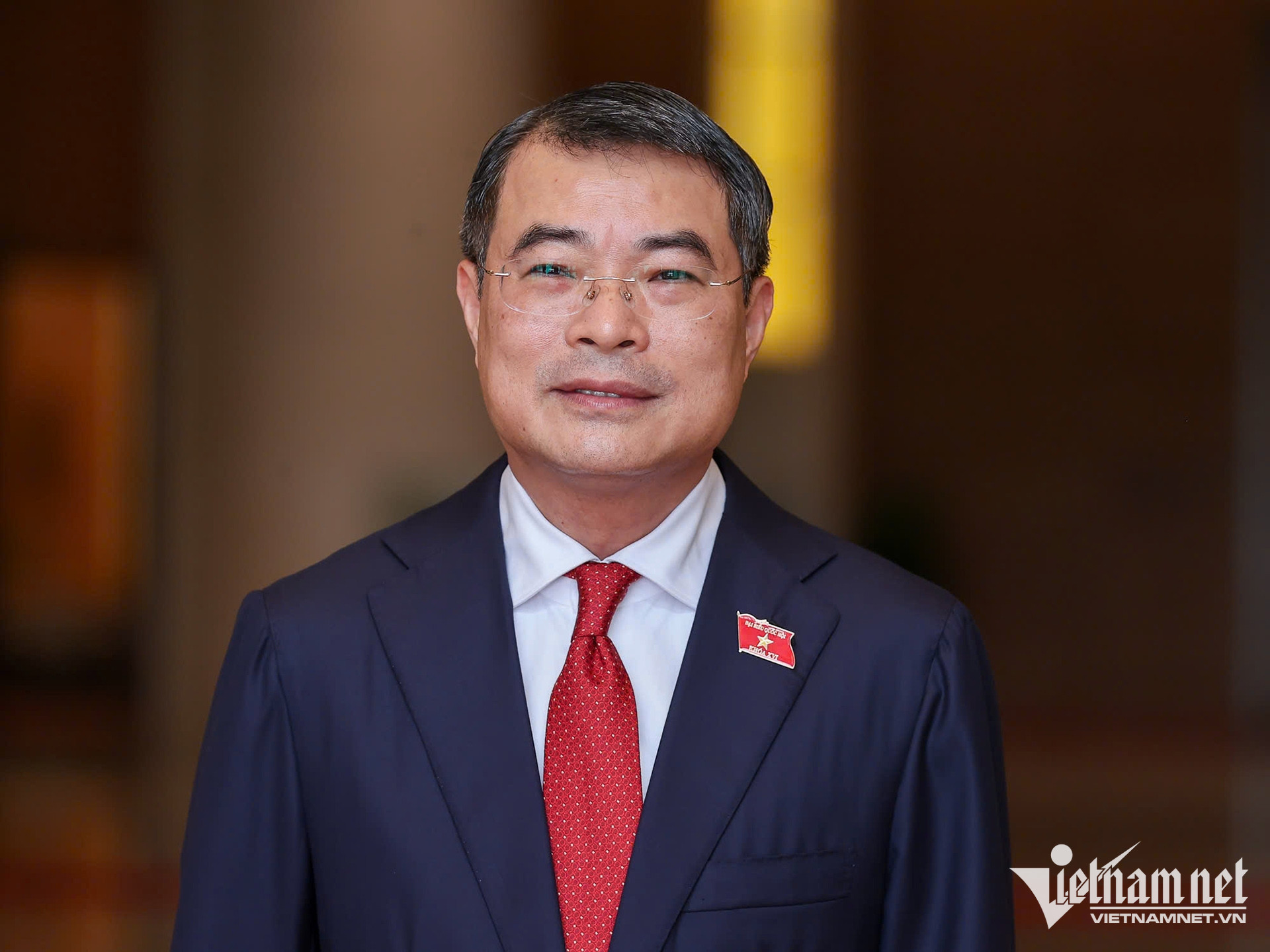
Mr. Le Minh Hung was born in 1970 in Ha Tinh province and holds a master’s degree in Public Policy.
He has served as a member of the Party Central Committee across the 12th, 13th, and 14th tenures, as well as a member of the Politburo in the 13th and 14th terms. He is also a deputy of the 15th and 16th National Assembly.
His career has been closely tied to the State Bank of Vietnam, where he began as an officer in the International Monetary Fund division under the International Cooperation Department. He later held various positions, including Deputy Head and Head of the Asian Development Bank division, Deputy Director General and Director General of the International Cooperation Department, and Director General of the Organization and Personnel Department.
In October 2011, he was appointed Deputy Governor of the State Bank of Vietnam.
In 2014, he became Deputy Chief of the Party Central Committee Office, and in April 2016, he was appointed Governor of the State Bank of Vietnam.
From October 2020, he served as Chief of the Party Central Committee Office. In May 2024, he was assigned by the Politburo to serve as Head of the Party Central Committee’s Organization Commission.
Under the Constitution, the Prime Minister is elected by the National Assembly from among its deputies and holds extensive responsibilities and powers.
The Prime Minister leads policy formulation and oversees the implementation of laws, directing and taking responsibility for the operation of the state administrative system from the central to local levels, ensuring unity and consistency across the national administration.
The Prime Minister also submits proposals to the National Assembly for the appointment, dismissal, or removal of Deputy Prime Ministers, ministers, and other government members, while approving decisions related to leadership positions in provincial and municipal People’s Committees.
In addition, the Prime Minister has the authority to suspend or annul decisions by ministers or local authorities that are inconsistent with the Constitution, laws, or higher-level directives, and to direct negotiations and the conclusion or accession to international treaties.
Tran Thuong
.svg)
