 Vietnamnet.vn

 Podcast



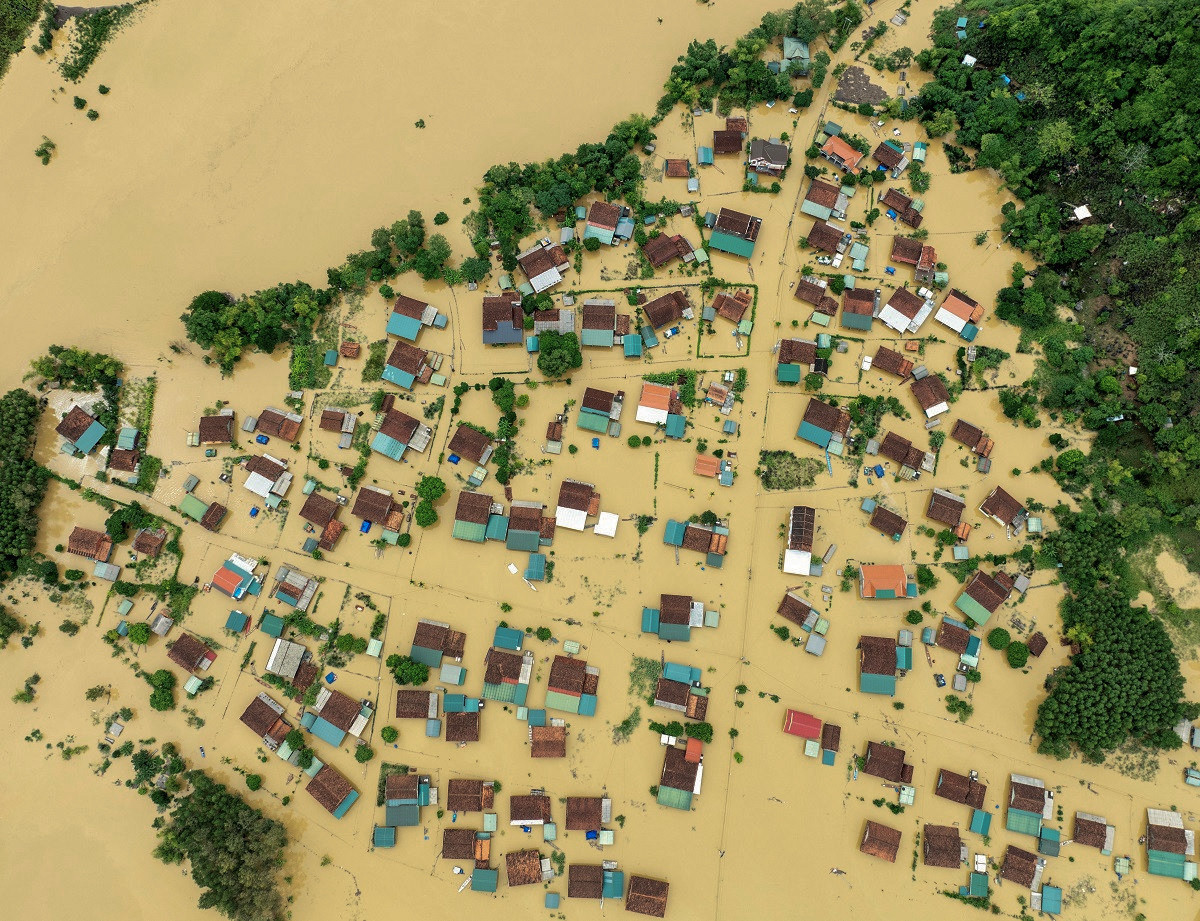
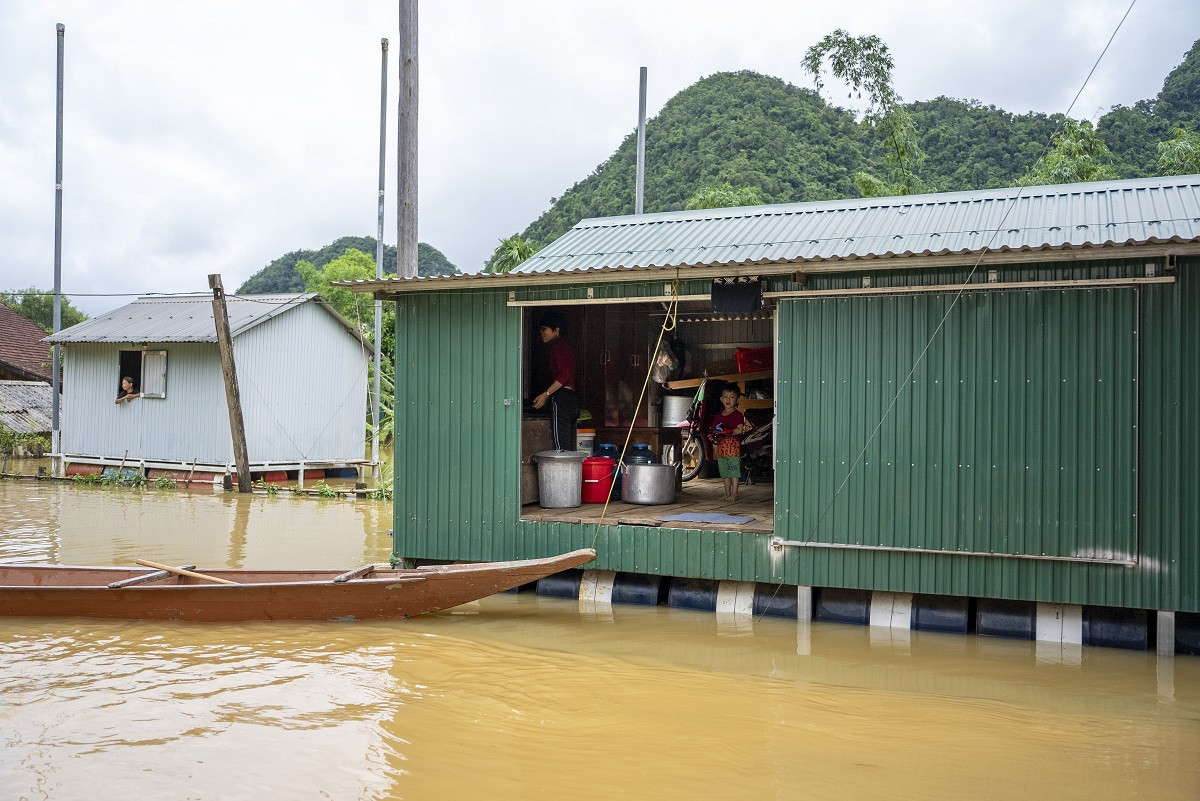
In Tan Hoa, a former commune in Minh Hoa District, Quang Binh province - now part of Kim Phu commune, Quang Tri - residents have adapted to annual flooding in an extraordinary way. Rather than fleeing when water levels rise, entire households float.
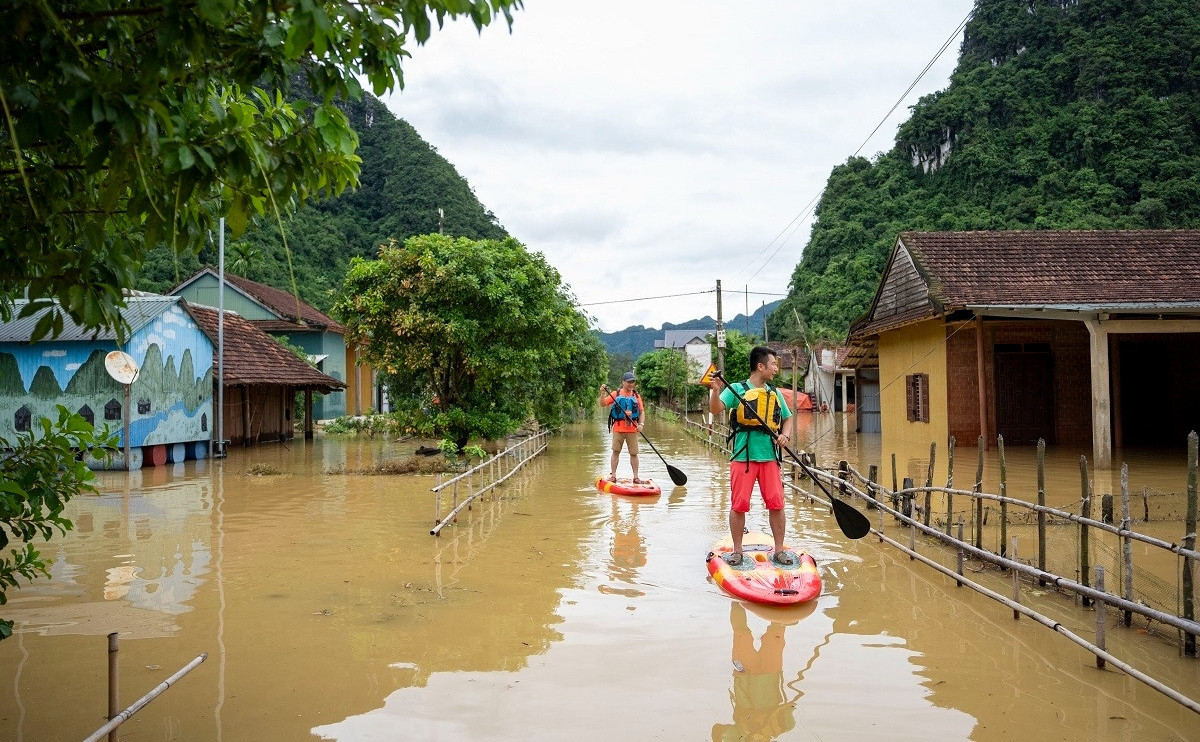
Often dubbed the “flood basin” of the region, Tan Hoa is shaped like a giant natural bowl. Surrounded by mountains on three sides and drained by only a narrow mountain pass, water has nowhere to go when it rains heavily. Each year, between September and November, the area is struck by repeated flooding. At its worst, floodwaters rise up to 12 meters.
In 2010, a historic flood submerged homes and power poles. “The water rose so fast,” recalls 75-year-old Truong Thi Anh Dao. “We barely had time to throw some belongings up on the shelf and escape to the hills in our raincoats. Our lives were spared, but we lost everything else.”
After that devastating flood, the people of Tân Hoa knew they had to find a way to live with the water. The solution came in 2011: floating houses.
From wooden rafts to engineered homes
The first floating homes were little more than rafts made of wood - fragile and risky. But in 2014, a community project called "Flood-Resistant Homes" began providing technical support and materials to standardize and improve the design.
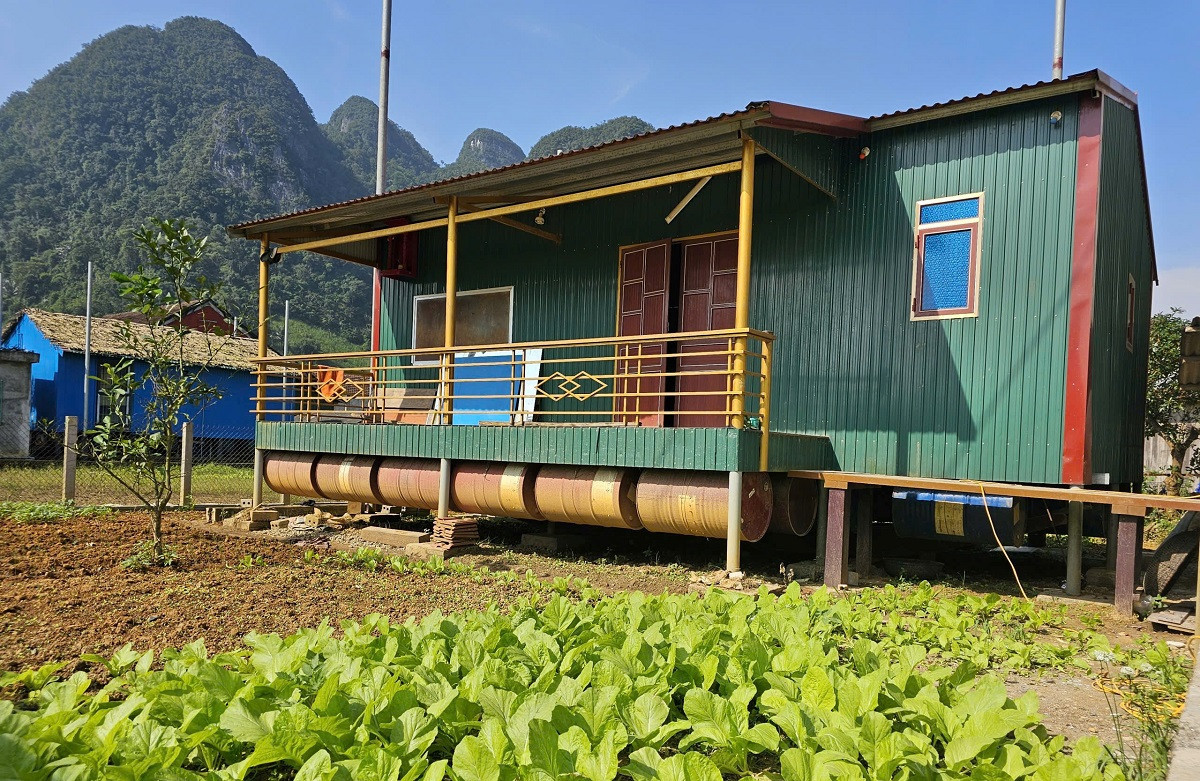
Today’s floating houses are sturdy, durable, and intelligently engineered. The structures are built with steel frames to reduce weight while maximizing strength. Floors and walls are made of wood panels, and roofs are covered with galvanized or insulated metal sheets.
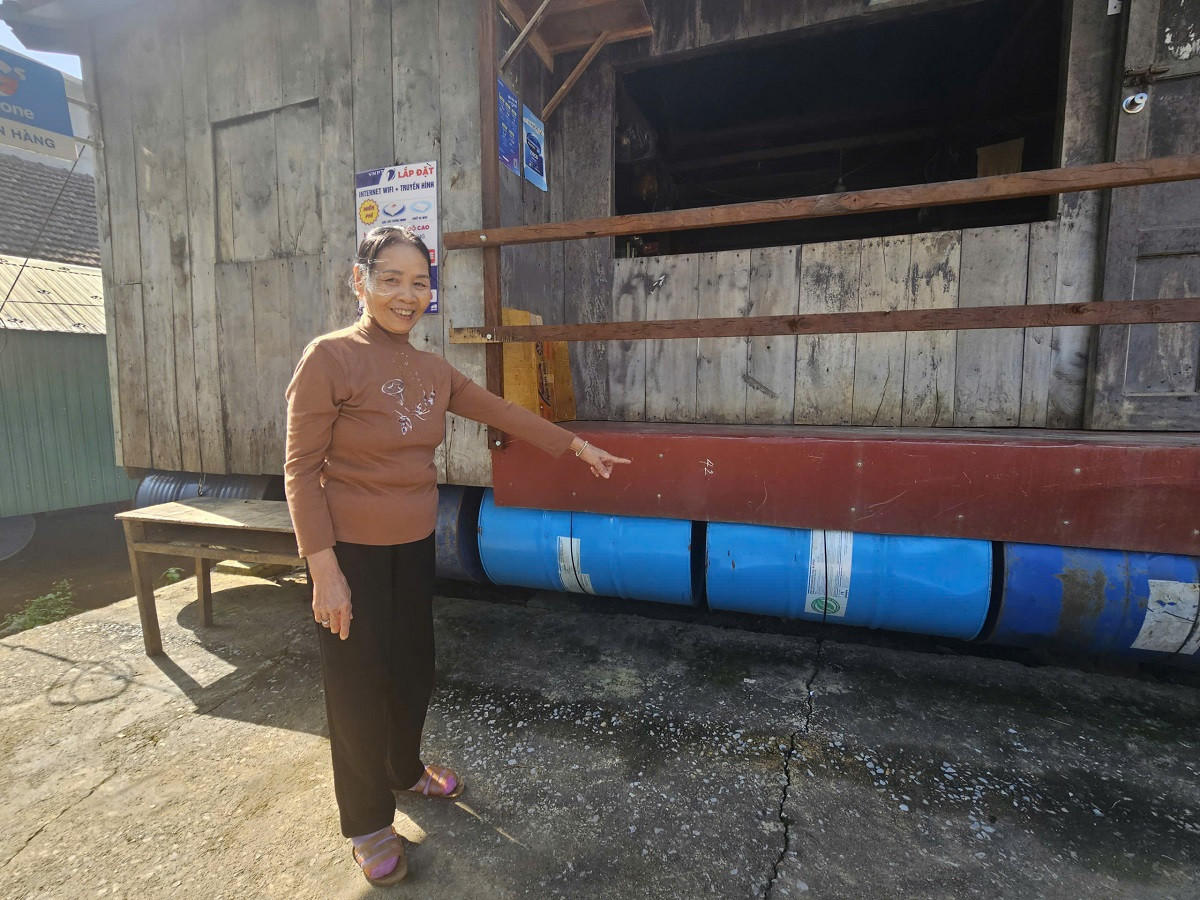
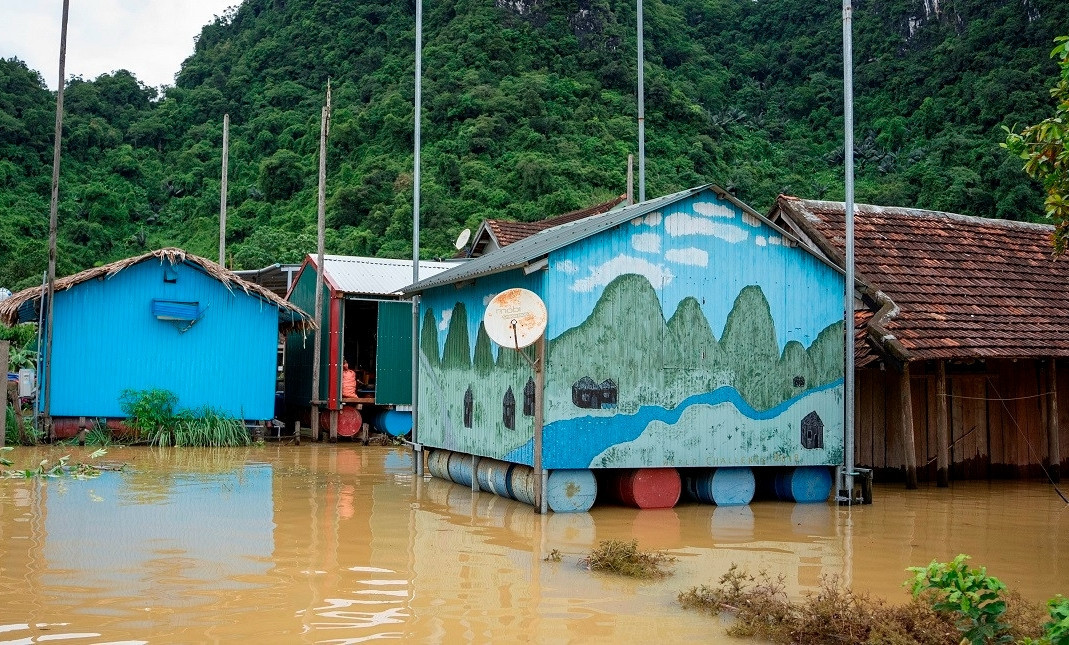
The real innovation lies beneath the house: rows of empty steel drums or plastic barrels are secured under the floor to provide buoyancy. These floatation tanks allow the entire house to rise and fall safely with the floodwaters.
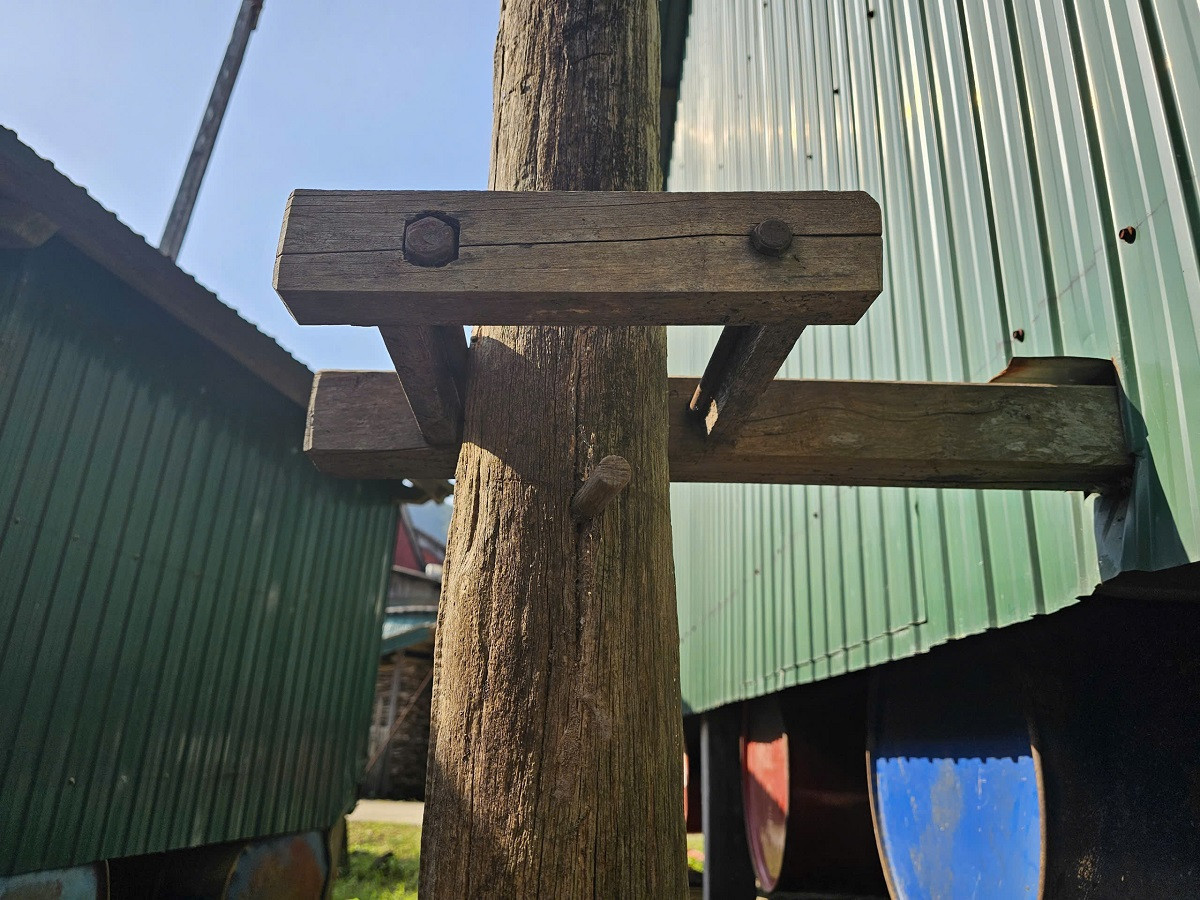
To prevent the homes from drifting away, each is secured with vertical guideposts or anchor ropes, which allow the houses to float up and down without moving sideways.
These houses have survived some of the region’s worst floods - in 2016, 2019, 2020, and 2024 - safeguarding lives and livelihoods.
Floating through the flood season
Madam Dao's family now runs a small convenience store inside one of the early floating houses. “Our house is held up by 50 steel drums and can carry about 5 tons,” she said. “When the water rises, it floats. When the water recedes, it slowly lowers. Sometimes, we stay inside for days and don’t even realize the water has changed.”
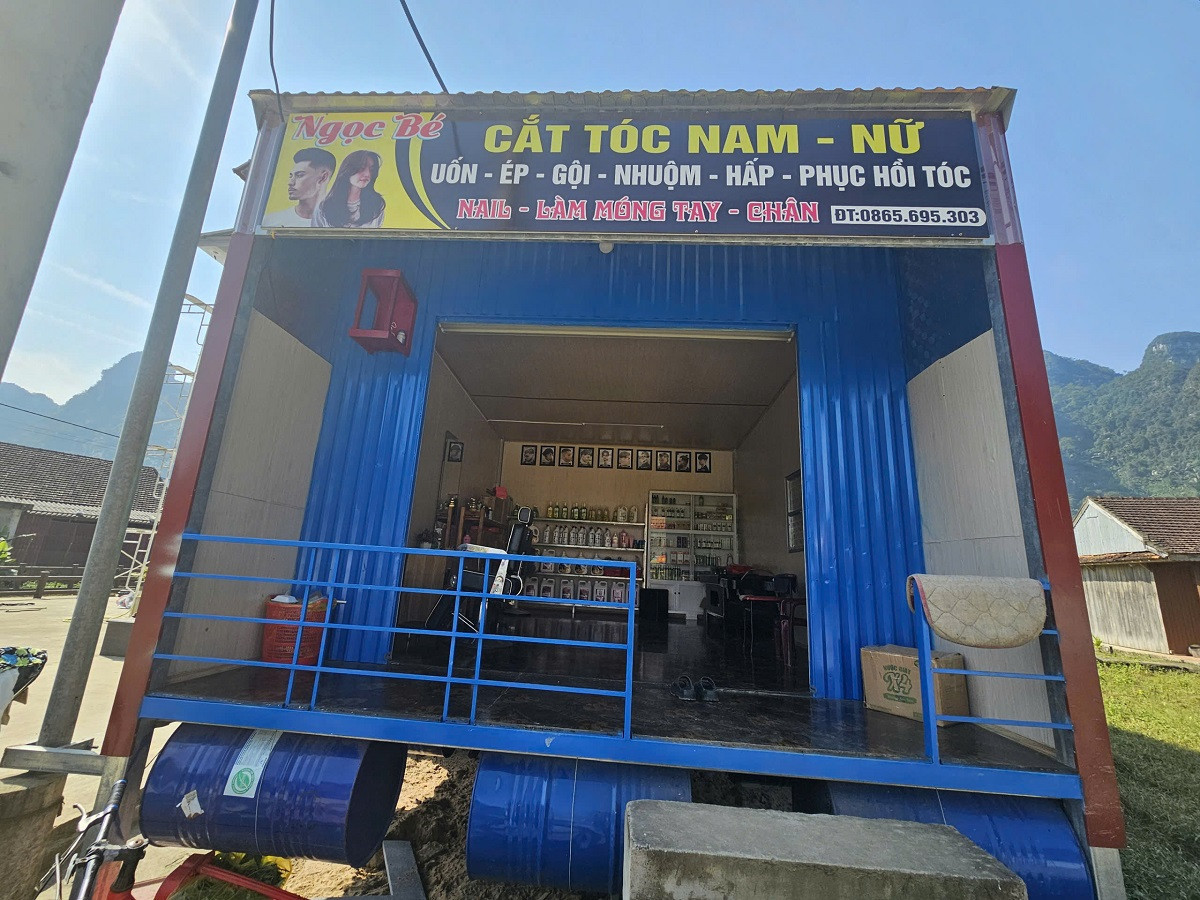
Next to her shop, Thai Thi Be operates a hair salon built on a 24-square-meter floating home that cost over 80 million VND (approx. $3,300) to construct. “Before, I had to evacuate and move all my equipment every time it flooded. Now I feel safe and worry-free,” she shared.
Over 620 floating homes in the commune
Today, Kim Phu commune has over 620 floating homes, most located in the former Tan Hoa area. The homes vary in size from compact 14-square-meter shelters to larger 60-square-meter family houses, complete with bedrooms, kitchens, and living rooms.
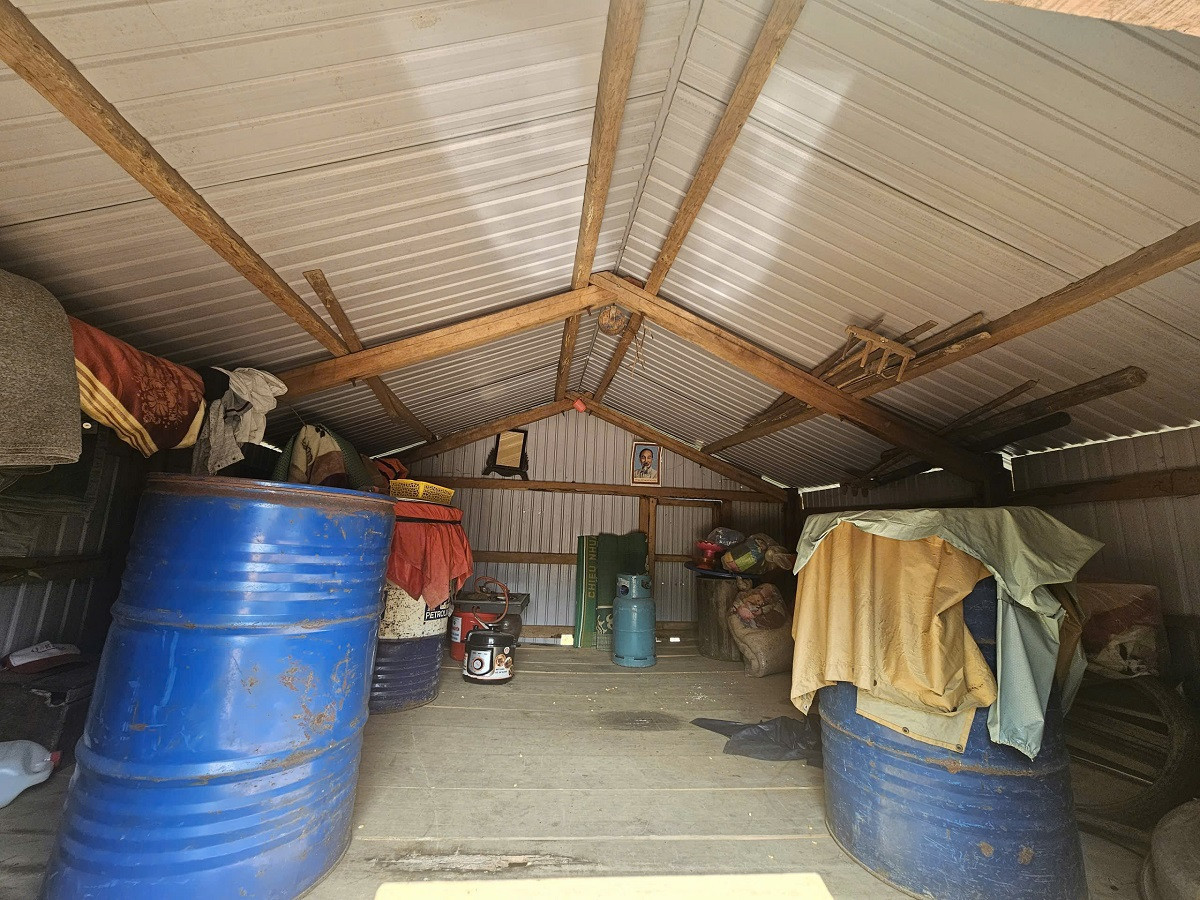
Some serve as warehouses or food storage areas. Others are designed to house livestock during flood season. A number of floating homes are now being converted into homestays for tourists, with attractive interiors and eco-tourism appeal.
Many homes are also equipped with solar panels and water filtration systems, ensuring residents have electricity and clean drinking water even when isolated during flood season.
“The water here is calm, not turbulent,” explained Truong Thanh Duan, former chairman of the commune. “So people can live comfortably on floating homes and move around safely by boat. These houses have become part of daily life.”
Duan added that each household often owns more than one floating structure - some for living, others for storage or livestock. “To outsiders, it looks like houses are everywhere,” he laughed.
A model of climate resilience
From once being a flood-ravaged village nestled between limestone cliffs, the floating homes of Tan Hoa have given residents not just shelter - but hope. The village is now attracting tourism, creating jobs and new income opportunities for the local population.
One long-time local official called the floating house design a “brilliant survival solution” that has saved both lives and property. Now, when floods arrive, the entire village rises with the water - and life goes on as usual.
.svg)
