 Vietnamnet.vn

 Podcast


Urbanization and economic development have made waste management an increasingly urgent issue across Vietnam's north-central provinces. As waste volumes increase, shortcomings in local treatment infrastructure and capacity have become increasingly apparent.
New regulations imposing stricter emission control requirements are placing additional pressure on local waste treatment systems.
Against this backdrop, what solutions can address infrastructure limitations, improve waste management efficiency and ensure sustainable development?
The series "Waste management in north-central Vietnam: The challenges of outdated infrastructure" examines the current situation, identifies investment and operational bottlenecks, and explores solutions to improve waste treatment capacity across the region.
Three decades without an enjoyable meal
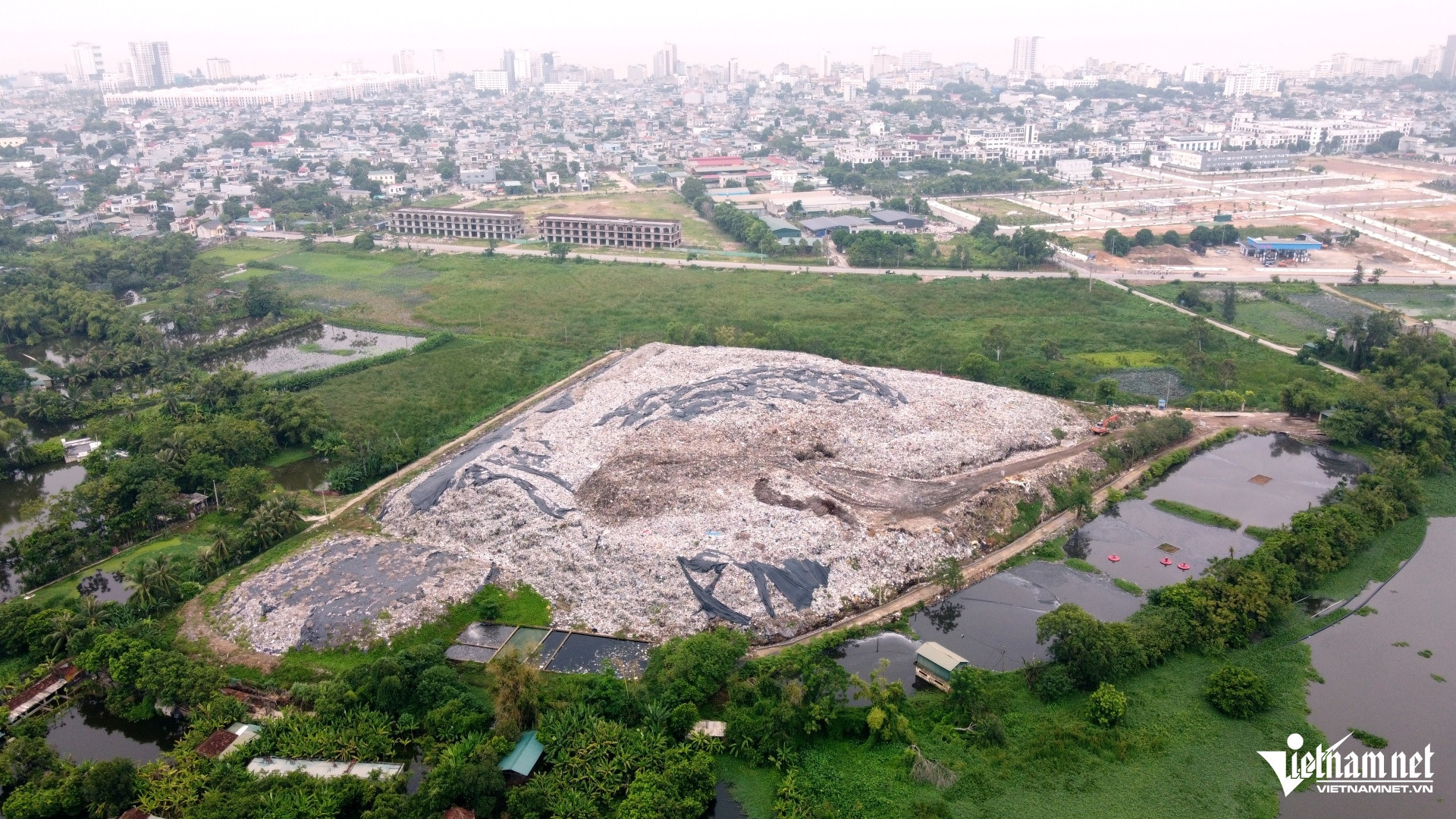
The landfill in Sam Son Ward had been overloaded for years before its closure on August 3. Photo: Le Duong
Covering approximately 2.7 hectares, the landfill in Sam Son Ward, Thanh Hoa Province, began operations in 1997.
Waste was treated primarily through landfilling, with a capacity of approximately 25 tons per day. After decades of operation, the landfill became overloaded, generating unpleasant odors and affecting surrounding residential communities.
On January 31, 2026, Thanh Hoa Province approved the closure of the landfill and the transfer of waste to the Dong Nam waste treatment plant in Dong Quang Ward, more than 25 kilometers away.
However, the Dong Nam facility also became overloaded and generated environmental pollution. Residents repeatedly erected makeshift shelters to prevent garbage trucks from entering the plant.
As a result, the Sam Son landfill was forced to resume receiving waste.
Nguyen Huu Hao, born in 1942, lives in Hop Thanh residential quarter near the landfill. His family had settled there before the landfill was established.
"Initially, local authorities allowed waste to be dumped into ponds and fields. Over time, the garbage piled up as high as a three-story building. The smell is present throughout the year, particularly during summer. For the past 30 years, we haven't had a single enjoyable meal. Even guests are reluctant to visit," Hao said.
His neighbor, Nguyen Thi Hoat, born in 1957, said many households in the surrounding area faced financial difficulties and could not afford to relocate.
During the 2026 Lunar New Year holiday, waste volumes surged. Meanwhile, the Ecotech waste treatment plant in the Dong Nam area faced complaints about unpleasant odors and swarms of flies affecting nearby residents, forcing it to temporarily suspend waste reception.
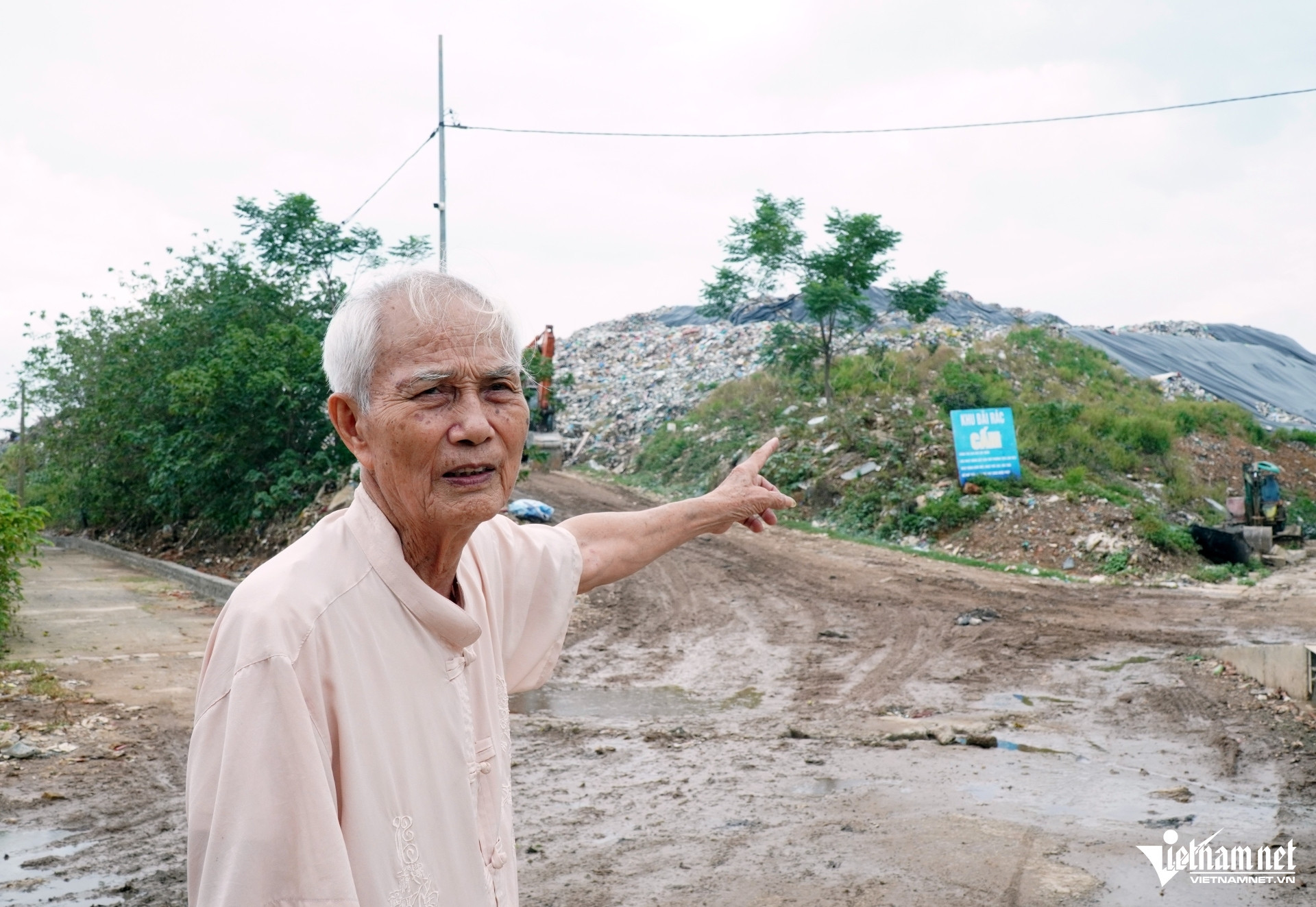
Nguyen Huu Hao's home is located just a few dozen meters from the landfill. Photo: Le Duong
This resulted in waste accumulating across several localities, including Sam Son.
On February 13, the provincial People's Committee authorized the temporary use of the Sam Son landfill until May 31, 2026, before extending its operation until the end of August.
However, amid persistent environmental pollution, provincial authorities decided to close the landfill on August 3.
According to Sam Son Ward officials, the landfill was officially closed on that date under instructions from the chairman of the provincial People's Committee.
The entire landfill has since been covered with tarpaulins, preventing odors from spreading and reducing its environmental impact.
As a long-term solution, provincial authorities and the Standing Board of the Provincial Party Committee have worked directly with local officials to study adjustments to the area's development plans.
Proposed measures include gradually reducing the height of part of the landfill, covering it with soil and planting trees, with the ultimate goal of transforming it into an ecological hill and public park.
Regarding waste treatment infrastructure, construction is underway on several components of the Quang Minh waste treatment plant, while progress on landfill cell No. 10 remains slow.
Local authorities hope these facilities will soon be completed and become operational, easing waste treatment pressure and reducing the considerable costs associated with transporting waste over long distances.
Designed for five years, operating for nearly three decades
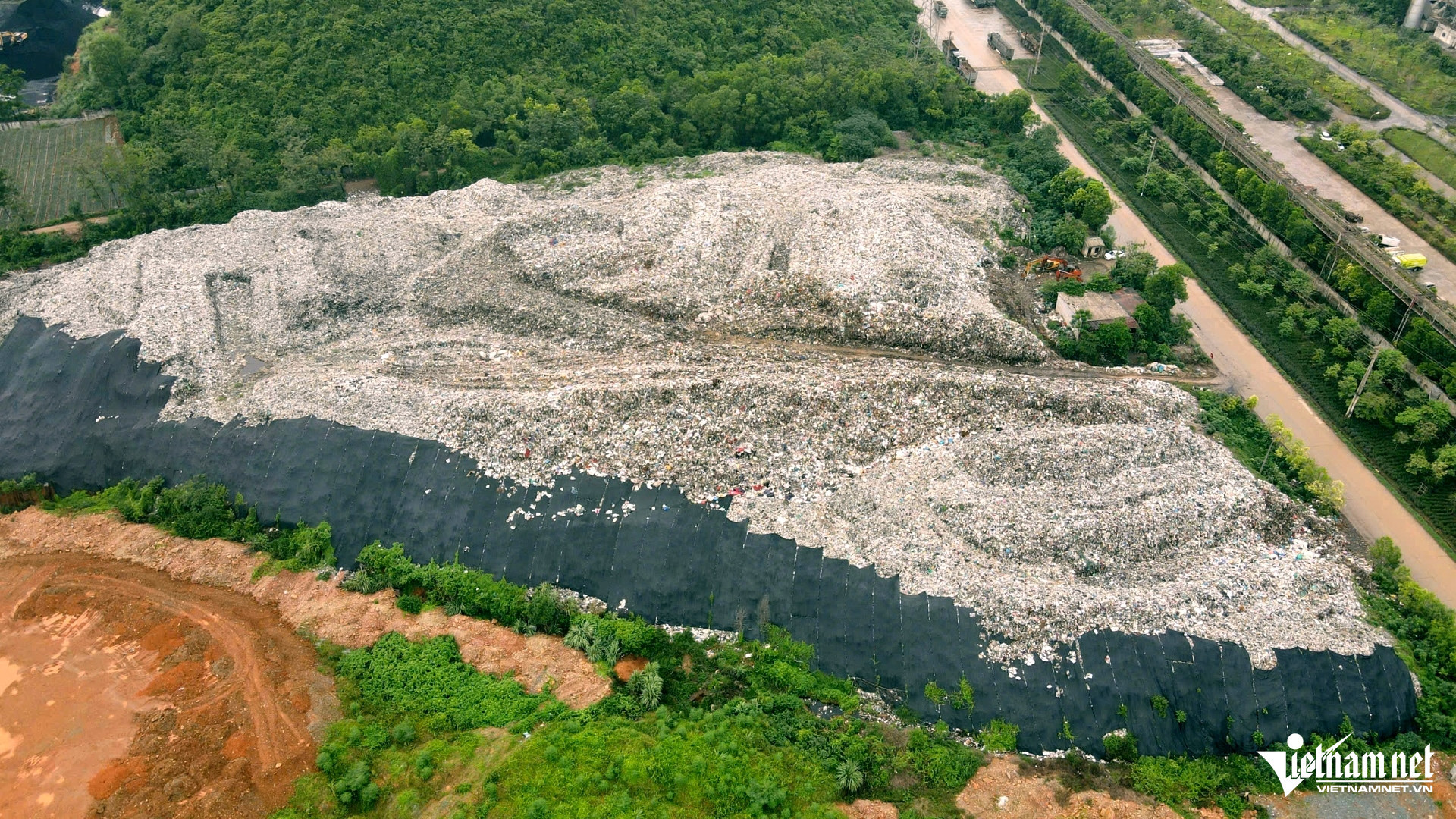
The Nui Voi landfill in Bim Son, originally designed for five years of operation, has remained in use for nearly three decades. Photo: Le Duong
In Bim Son Ward, Thanh Hoa Province, the Nui Voi landfill presents a similar challenge.
Residents of Son Tay residential quarter say the landfill has been persistently overloaded, with unpleasant odors and leachate causing environmental problems that have remained unresolved for years.
Nguyen Van Hung, a local resident, said the landfill had existed since around 1997.
"From morning until night, foul odors from the landfill drift into our homes. When it rains, pitch-black leachate flows into agricultural fields and local roads," Hung said.
Ha Duyen Hanh, chairman of the board of directors of Bim Son Urban Environment and Public Works Joint Stock Company, confirmed that the landfill was constructed in 1997 and designed to meet waste treatment needs for approximately five years.
The landfill was excavated to a depth of around three meters and lined with protective sheeting. It was intended as a temporary solution while waste incineration plants were being developed.
However, nearly three decades later, the incineration plants expected to replace the landfill have yet to become operational.
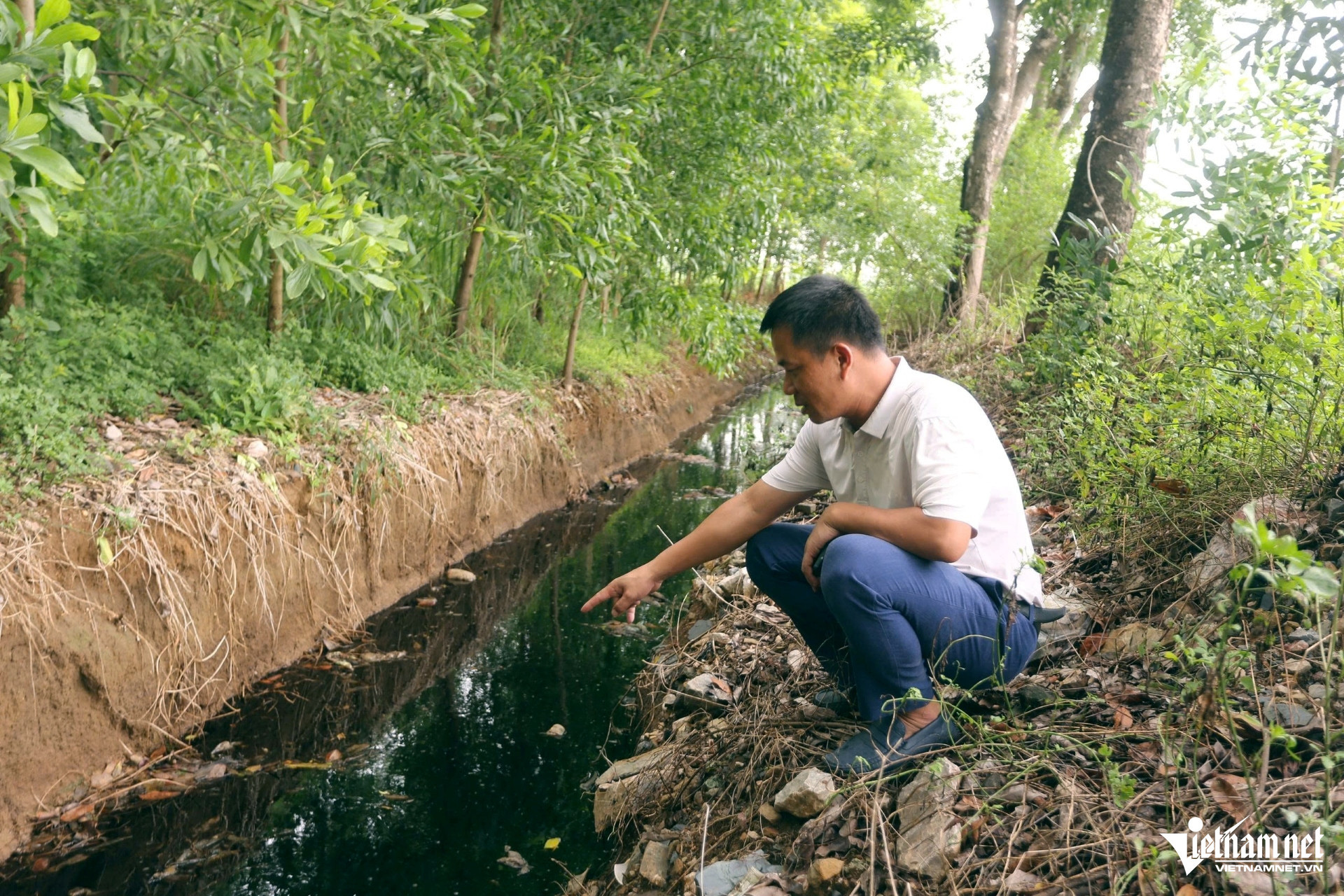
Black leachate flows from the landfill into the surrounding environment. Photo: Le Duong
"Initially, the landfill received only around 70-80 tons of waste per day from Bim Son and industrial parks. Waste volumes have since increased considerably, while the landfill covers only around 10 hectares, leaving it beyond capacity. The accumulated waste is currently estimated at approximately two million cubic meters," Hanh said.
The leachate treatment system can handle volumes generated during the dry season. During the rainy season, however, leachate volumes increase sharply, exceeding the system's treatment capacity.
To reduce odors and control insects, the operator has covered landfill areas with tarpaulins, sprayed deodorizing agents, applied lime and intensified sanitation measures.
According to Bim Son Ward authorities, the Nui Voi landfill has been overloaded for an extended period, with current measures primarily aimed at controlling odors and mitigating environmental impacts.
Local authorities hope the Bim Son household waste-to-energy plant will soon become operational, gradually addressing the enormous volume of accumulated waste.
Overloaded landfill catches fire near residential areas
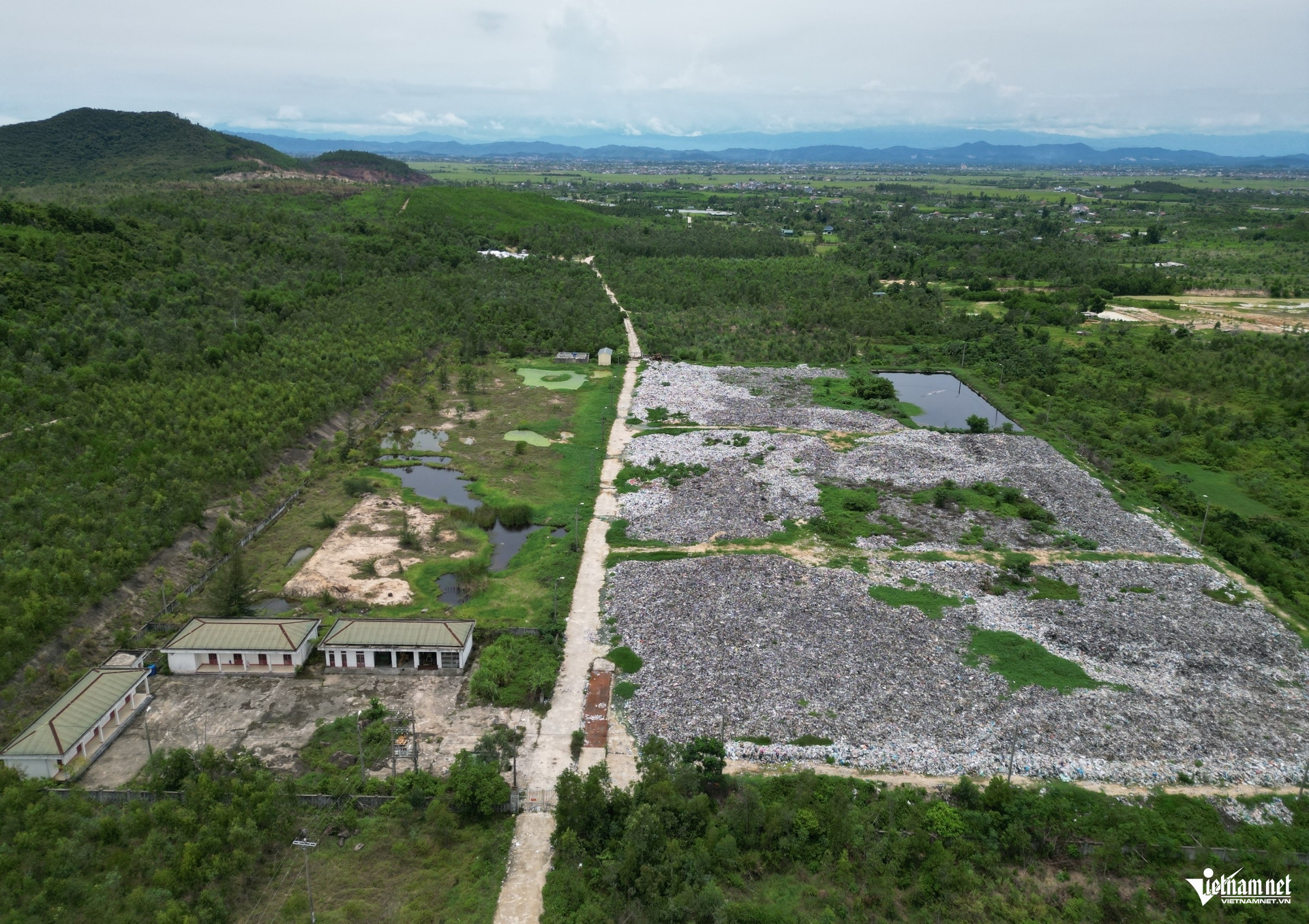
Hundreds of tons of waste remain untreated at the Hong Loc landfill. Photo: Thien Luong
In Ha Tinh Province, the Hong Loc centralized waste treatment facility in Thuong Phu Village, Hong Loc Commune, is also struggling with excessive waste volumes.
At the site, large piles of garbage emit overpowering odors. Several infrastructure components, including landfill areas, leachate reservoirs and biological treatment ponds, are no longer operational.
Waste treatment machinery and vehicles have deteriorated and remain idle.
Outside the facility, the perimeter fence has deteriorated, with numerous metal bars bent out of shape. A notice at the entrance announces that the facility stopped receiving waste on January 25, 2026.
A resident identified as H., who lives in Thuong Phu Village approximately 300 meters from the facility, said that on hot or windy days, unpleasant odors from the landfill drift into nearby homes, accompanied by large numbers of flies.
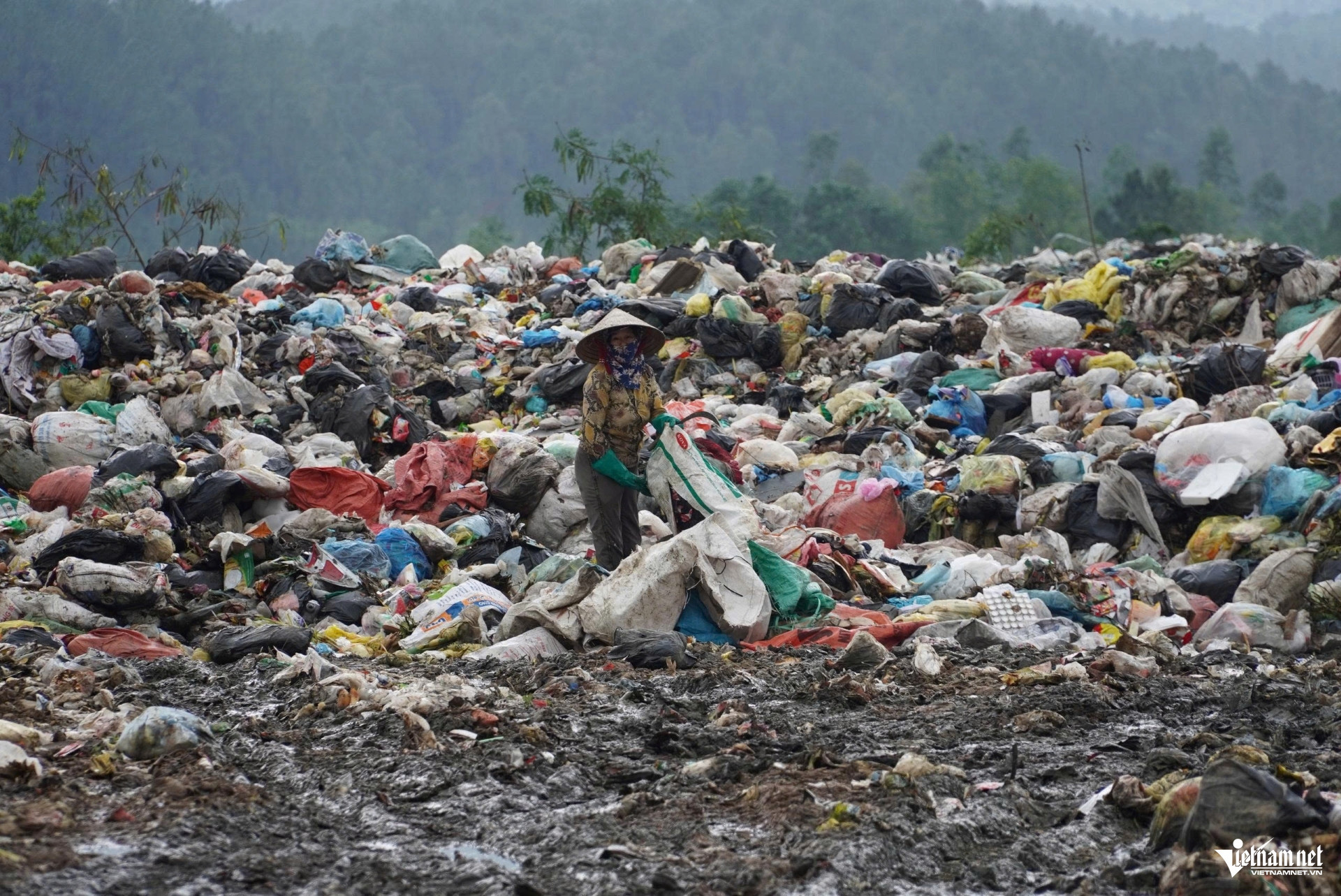
Residents enter the landfill to collect recyclable materials. Photo: Thien Luong
"There have been times when we had to eat our meals under mosquito nets because there were so many flies and mosquitoes," she said.
Another resident, identified as D.V.T. from Hong Loc Commune, recalled that garbage trucks continued delivering waste daily even after the facility had exceeded its capacity.
Residents repeatedly raised concerns and called for an end to waste reception because of the potential environmental impacts.
In late May, a major fire broke out at the waste collection area, sending smoke tens of meters into the air.
"Although the facility has stopped receiving waste, we remain concerned because the enormous amount of accumulated garbage is still exposed outdoors, with no definitive treatment solution in place," he said.
The Hong Loc centralized waste treatment facility was developed with an investment exceeding VND50 billion ($1.9 million).
Construction began in 2014, and the facility became operational in 2015, receiving and treating household waste from 12 communes and townships in the former Loc Ha District.
After years of operation, the facility reached the end of its intended operational lifespan.
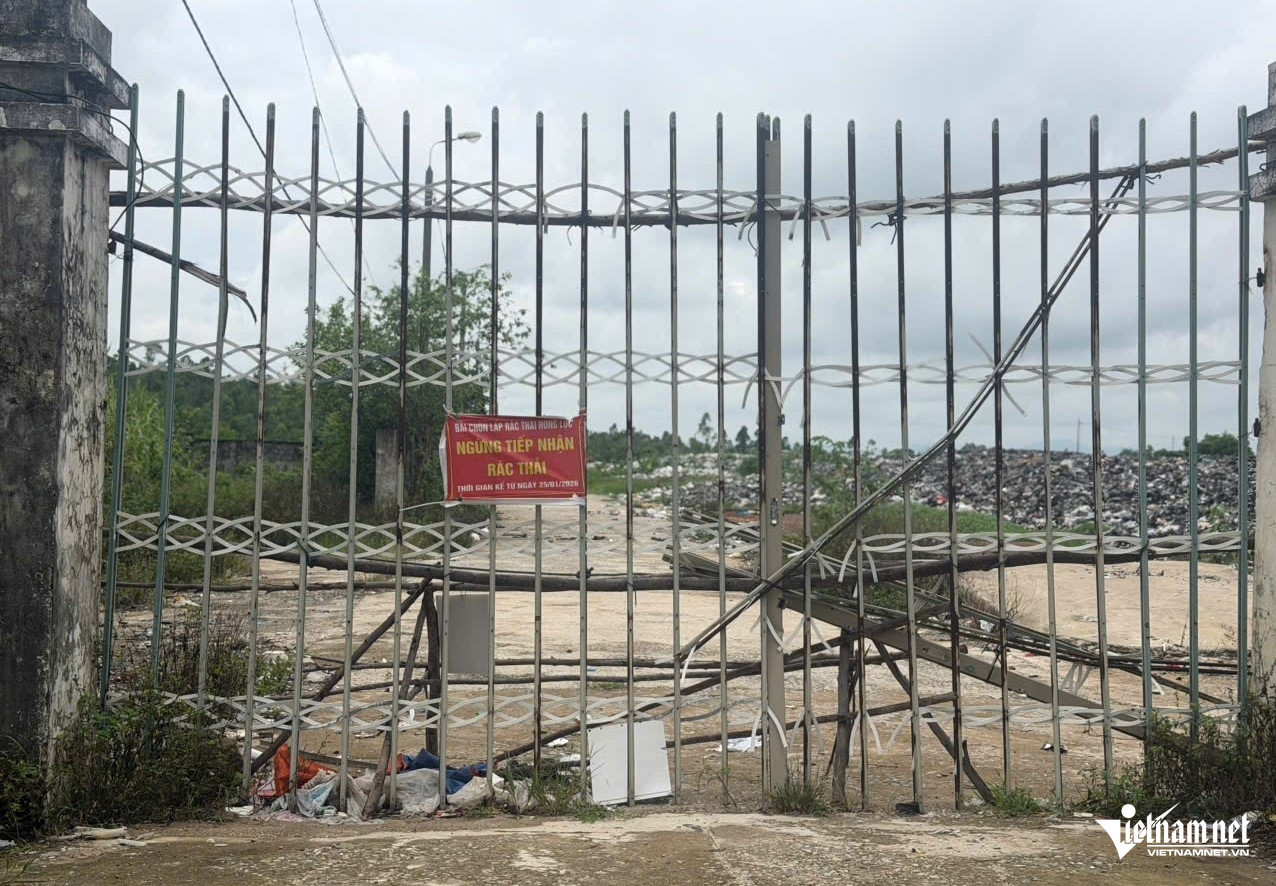
A notice at the Hong Loc landfill announces the suspension of waste reception. Photo: Thien Luong
Despite this, household waste continued to be delivered to the facility from June 2025 because no alternative treatment facility was available, resulting in severe overloading.
In January 2026, the Ha Tinh People's Committee ordered the suspension of waste reception at Hong Loc and instructed relevant authorities to address accumulated waste, control odors and insects, level and compact landfill cells, operate wastewater treatment systems and treat water remaining in biological ponds.
A representative of the commune People's Committee said the accumulated waste had yet to be fully addressed.
While awaiting a comprehensive solution, chemicals have been sprayed in several areas to reduce unpleasant odors.
Regarding the proposed Hong Loc solid waste treatment plant, Loc Ha Commune officials said meetings had been held with residents to provide information about the project.
Although residents hope a replacement facility will help resolve existing waste treatment problems, concerns remain over the proposed plant's location, treatment technology and potential impacts on the environment and water resources.
Le Duong - Thien Luong - Khoi Nguyen

