 Vietnamnet.vn

 Podcast



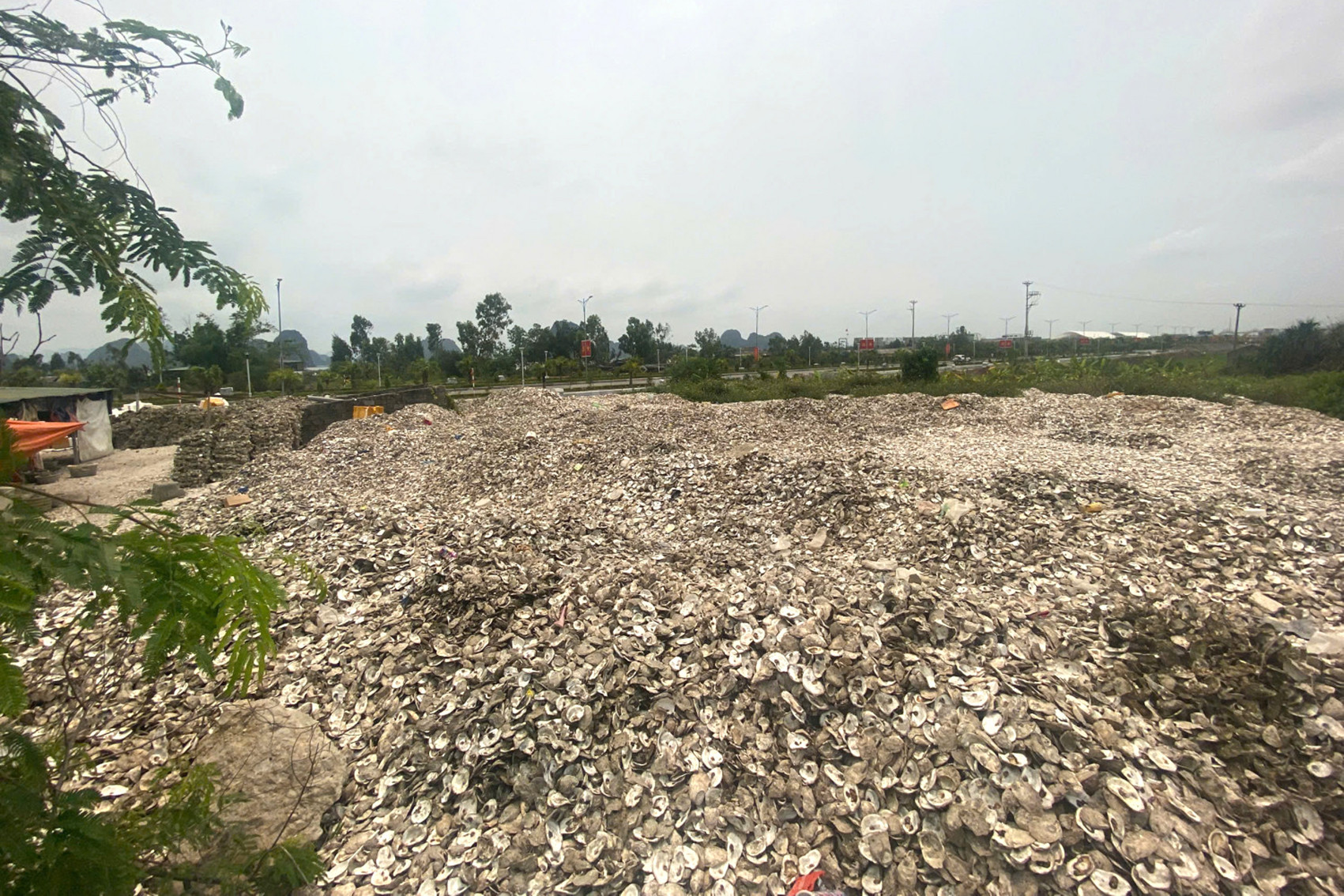
Investigators determined that from 2021 until the inspection, Tham had independently established and operated the oyster processing facility in a corrugated metal-roofed workshop without registering the business as required by law.
The facility employed approximately 10 regular workers and specialized in purchasing and processing oysters.
According to investigators, Tham instructed employees to dump all discarded oyster shells along the banks of the two ponds next to the workshop in an effort to reduce waste treatment expenses.
Authorities noted that although the facility had previously signed a waste collection and treatment contract with Van Don Environment and Urban Services Co., Ltd., the agreement was never implemented.
The investigation found that the area used to stockpile the oyster shells had not been designated or approved for waste treatment activities.
Environmental pollution investigation continues
A forensic assessment issued on April 20 by the Criminal Science Institute under the Ministry of Public Security concluded that the accumulated oyster shells constituted ordinary solid waste.
Based on the findings, authorities determined there were sufficient grounds to pursue criminal proceedings for environmental pollution violations.
The case remains under investigation as police continue to expand inquiries into related activities and potential additional violations.
Recent years have seen increased enforcement efforts across Vietnam against businesses and individuals accused of illegally disposing of industrial and agricultural waste, amid growing concerns about environmental protection and public health.
Pham Cong
.svg)
