 Vietnamnet.vn

 Podcast



Major shifts in artificial intelligence (AI), semiconductors, big data, biotechnology, quantum technology, and smart manufacturing are profoundly changing traditional development models and the global economic structure.
The institutional and policy framework in Vietnam continues to be strengthened, with 10 laws and one resolution enacted, along with 35 decrees, 60 Prime Minister decisions, and 78 circulars aimed at removing barriers to research, testing, and commercialization of new technologies.
Scientific research activities continue to grow in both scale and quality. In 2025, Vietnam’s number of international scientific publications reached more than 25,000 papers, up 13.48 percent compared to 2024.
Vietnam’s Global Innovation Index (GII) ranked 44th out of 139 countries and economies; and Vietnam ranked 55th globally for its startup and innovation ecosystem.
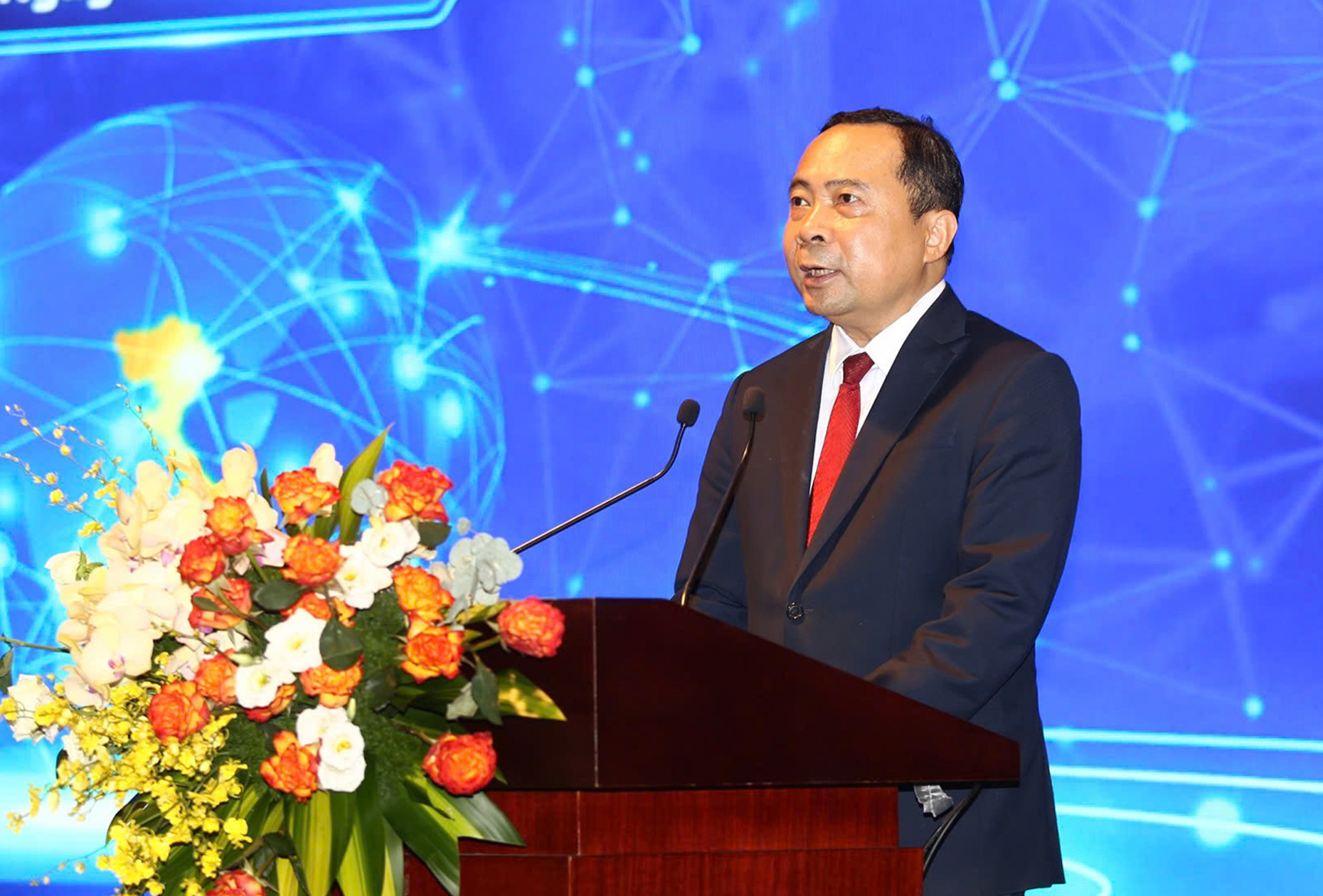
Speaking at a recent event, Minister of Science and Technology Vu Hai Quan emphasized that international experience shows that a country cannot be a strong innovator without building an open, transparent ecosystem that encourages creativity.
“If scientists are not empowered and do not have a favorable environment to innovate, technological breakthroughs will be difficult. If businesses do not invest in research and development, the economy will remain in a processing and dependent position.
"If universities and research institutes are not connected to practical realities and market demand, knowledge will struggle to be transformed into national competitiveness. If the State does not use existing financial resources effectively, no new breakthroughs will be created. And if society does not value knowledge and encourage creativity, it will be very hard to form a truly innovative nation,” Quan said.
According to the Minister, for the State, unlocking resources first means perfecting a modern, transparent, stable institutional system that encourages creativity. Science and technology is a unique field. Innovation is always tied to experimentation, uncertainty, and the possibility of failure. If management follows a mindset of absolute safety, breakthroughs cannot be created.
“The Ministry of Science and Technology is committed to continuing to improve institutions toward accepting controlled risks, promoting autonomy for science and technology organizations, reforming financial mechanisms, developing the science and technology market, protecting intellectual property rights, and creating a more favorable environment for innovative enterprises, tech companies, and tech startups,” he said.
Digital infrastructure
National digital infrastructure continues to develop as 5G expands rapidly; and data centers, cloud computing platforms, and shared digital infrastructure continue to receive heavy investment.
National digital transformation has shown clear progress, with the rate of end-to-end public service applications rising sharply. Many national databases have been put into operation, and the proportion of citizens using electronic identification, digital signatures, and digital payments is increasing.
The digital economy now accounts for about 14.02 percent of GDP. In AI, Vietnam ranks 45th globally, up 10 places from 2022. The digital technology industry posted revenue of about $198 billion, with hardware and electronics exports reaching about $178 billion.
Under the new development orientation, science, technology, and innovation are no longer just supporting areas for development but are becoming the foundation for rapid and sustainable growth, and a condition to ensure autonomy and self-reliance amid increasingly fierce global technology competition.
National strategic technologies
A conference on implementing strategic technologies to concretize a Politburo Resolution and a Prime Minister Decision dated April 30, 2026 on the List of Strategic Technologies and the List of National Strategic Technology Products was held several days ago.
Vietnam has prioritized core technologies, foundational technologies, and strategic products capable of creating breakthroughs in growth, competitiveness, and national autonomy.
Priority areas include AI, big data, cloud computing, Internet of Things, semiconductor technology, blockchain, next-generation biotechnology, quantum technology, UAVs, and Make in Vietnam platforms.
The new approach is to shift strongly from fragmented research thinking to a “national big-problem” approach. Accordingly, strategic technology tasks will have clear output goals, technical targets, specific products, application addresses, and participating enterprises identified from the outset, while linking research with commercialization potential and practical deployment.
Under the restructuring of the national science and technology program system, 42 programs will be reorganized toward streamlining and functional layering into six major programs.
Currently, the Ministry of Science and Technology is focusing on finalizing implementation mechanisms; building key research centers, testing centers, and laboratories; and removing obstacles related to finance, standards, testing, conformity assessment, and commercialization to accelerate bringing technologies and research products into practice.
Thai Khang
.svg)
