 Vietnamnet.vn

 Podcast


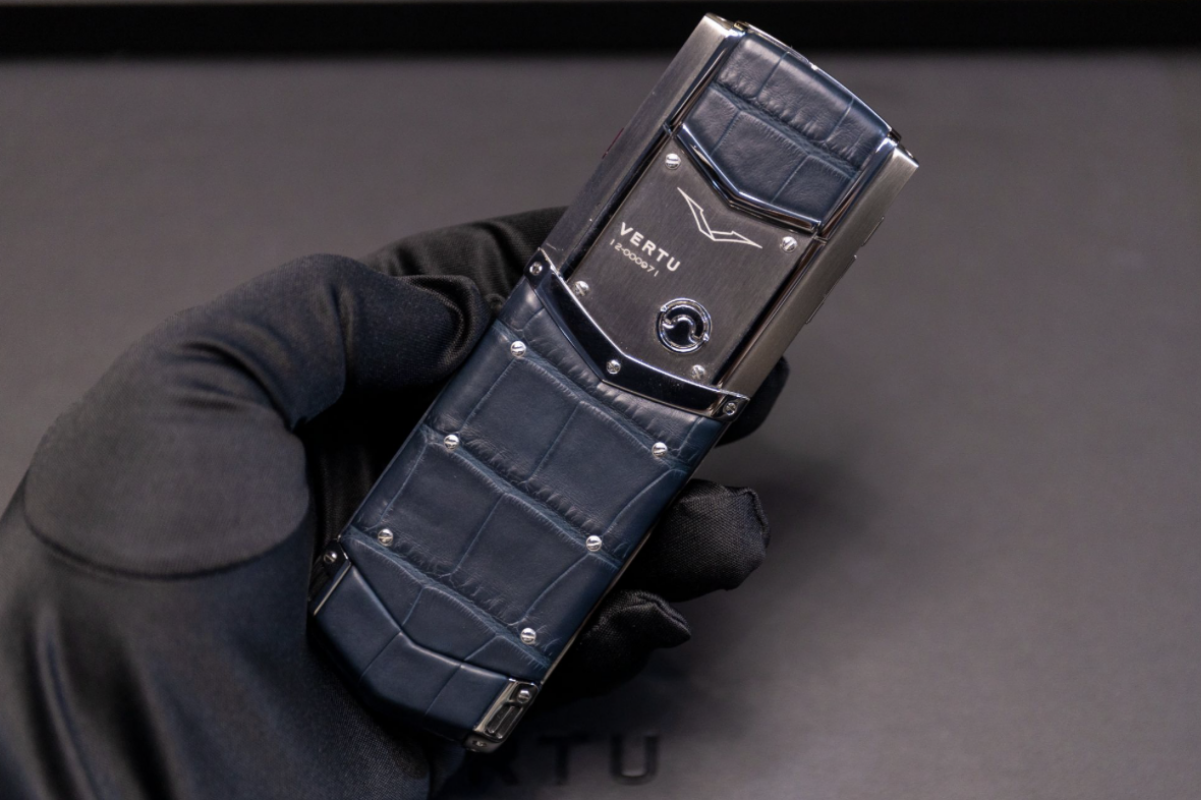
Vertu Vietnam has seen numerous owners of keypad phones seek technical checks and support in recent days after their devices abruptly lost calling capability following the Sept. 15 shutdown of 2G services by domestic telecom operators.
One customer bought a used Vertu Signature S Stainless Steel for VND34 million ($1,290) in a private transaction. Aware of the planned 2G shutdown, the buyer had asked the seller about compatibility and was told that the phone's mainboard had been upgraded to 4G, meaning it would continue to work normally after 2G was discontinued.
However, once the 2G network was switched off, the phone suddenly could no longer make or receive calls.
A technical inspection found that the device had been assembled using third-party components, including the mainboard, keypad, screen and casing. Although the mainboard supported Voice over Long-Term Evolution (VoLTE), it lacked a network configuration compatible with Viettel. As a result, the phone continued to display a mobile data signal but could not make calls.
Another user said he had bought a used Vertu Ascent White, a model manufactured in 2005, for VND25 million ($950) more than three years ago.
During that time, the phone occasionally experienced unstable reception and signal loss but remained usable. Once 2G was officially shut down, however, it suddenly displayed "No Service" and could no longer connect to the network or make calls.
The most costly case involved a customer in Can Tho, southern Vietnam, who spent more than VND120 million ($4,550) in early 2026 on a Vertu Signature S advertised by an individual on social media.
At the time of purchase, the phone looked almost new and could make and receive calls normally, so the buyer did not suspect a problem. The seller also did not disclose or warn that the device supported only 2G.
It was only after the phone stopped making calls and the customer took it in for inspection that the limitation was discovered.
According to Nguyen Minh Cuong, sales director of Vertu Vietnam, such cases are far from rare. Most customers currently experiencing problems are using Signature S models or other classic keypad variants developed many years ago and discontinued long ago.
More concerning, some devices advertised as 4G phones are actually older models that have been modified or upgraded. They may support only 2G or 3G, lack certification information and come without an official warranty.
Most are used devices of unclear origin traded on the secondary market.
Adding to the difficulty for buyers, the classic Signature S and its successor, the 4G-capable Signature V, have similar designs and materials. Buyers looking only at a phone's appearance or exterior materials may struggle to distinguish between the two generations.
Some devices, meanwhile, continue to display a 4G icon even though they cannot make calls.
Cuong explained that the ability to make voice calls over a 4G network depends not only on 4G connectivity but also on whether a device supports VoLTE and is compatible with each carrier's network configuration.
"Many older Vertu models, including hand-carried devices from Europe and the US or models that were not officially distributed in Vietnam, may have 4G chips but are not fully compatible with the network configurations of local carriers such as Viettel, VinaPhone and MobiFone, particularly when it comes to VoLTE support," Cuong said.
"In the past, when 2G was still available, these phones could fall back to the 2G network to make calls. Now that 2G service has been discontinued, the devices can effectively become 'deaf' even when their data signal bars remain full," he added.
For customers whose older devices are no longer compatible with Vietnam's network infrastructure or who have purchased phones of unclear origin, Vertu Vietnam said it is offering support for switching to official products better suited to current usage needs.
Le My

