 Vietnamnet.vn

 Podcast



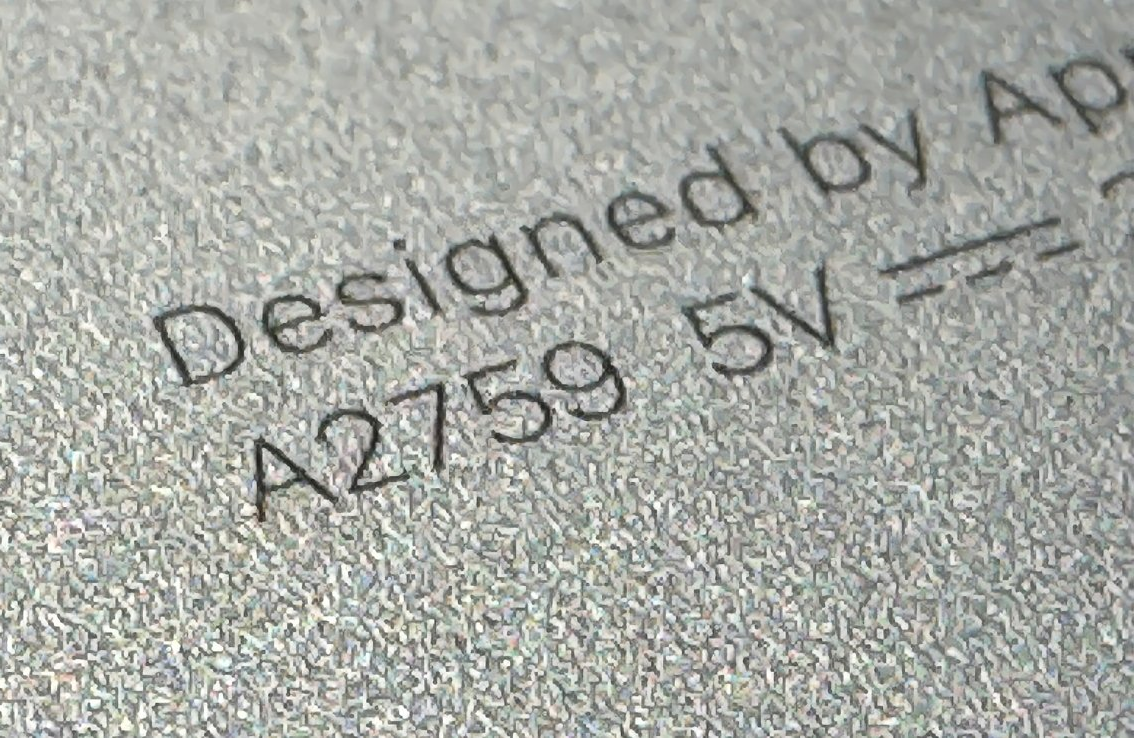
The macOS Tahoe 26.7 release has become a treasure trove for those hunting for clues about Apple’s future products. Its code contains numerous references to product identifiers, including devices that have previously surfaced in rumors.
For example, J490 and J491 are believed to represent versions of the Home Hub Apple is developing. B525 is likely associated with the next-generation HomePod mini, while J229 could be linked to a new security camera.
Identifiers associated with AirPods, iPhones and Macs have also been discovered. More notably, the list includes codes that could correspond to an iPad mini with an OLED display and the next generation of Apple Vision Pro.
However, alongside products that are already somewhat familiar to technology watchers, the new macOS release also contains a series of completely mysterious identifiers.
One particularly unusual entry, Device1,8241, appears in the system but offers almost no useful indication of what future Apple product it might represent.
More intriguing is a group of identifiers that follow the structure of Apple’s product codes and appear to be tied to actual hardware, yet there is currently no clear information about which devices they belong to.
The unidentified codes include A3436, A3437, A3438, A3439, A3440 and A3441; A3456 and A3457; A3465; A3529, A3530, A3531, A3532 and A3533; A3543; and A3577.
Looking at the numbers alone makes it virtually impossible to determine what Apple may be preparing.
But comparing them with identifiers immediately above and below them in Apple’s numbering system begins to reveal a few clues.
Putting the codes side by side may reveal part of the mystery
Apple tends to use relatively close ranges of numbers for related products or variants. Different versions of the same device family may therefore appear next to one another in a list.
That does not mean, however, that successive generations of a product are always assigned sequential numbers. The identifier for the iPhone 17, for example, cannot simply be expected to follow that of the iPhone 16.
Based on this pattern, examining the codes immediately before and after the mysterious identifiers could provide some clues. In the case of A3465, for instance, A3464 and A3466 can be checked against products that have already been identified.
It remains something of a fishing expedition built around rather ambiguous numbers. Still, cross-referencing information from Google, retailers and databases that specialize in tracking Apple products, such as AppleDB, has helped identify several noteworthy cases.
Among them, A3464 provides a relatively compelling clue. The identifier is used for the 13-inch iPad Air with the M4 chip, supporting both Wi-Fi and cellular connectivity.
The model is intended specifically for the mainland Chinese market and has been confirmed by Apple as an iPad Air variant.
A3442, meanwhile, appears to be associated with a 15-inch MacBook Air powered by the M5 chip, with information about the product previously appearing on JD.com.
A3466 belongs to a product already on the market: the MagSafe Battery for iPhone Air.
A3534 appears to be used for an iPhone 17e variant in certain countries. Three other identifiers - A3455, A3458 and A3528 - belong to different versions of the World Travel Adapter Kit. One has yet to be specifically identified, while the other two are associated with the Chinese and Australian markets.
The remaining codes currently leave too little of a trail to connect them with any specific Apple product.
Apple may be preparing multiple new product variants
Tracing the identifiers does not reveal a great deal in this case. Even so, some assumptions can be made based on the way Apple has assigned product codes in the past.
A3456 and A3457, for example, sit between A3455 and A3458, both of which are associated with the World Travel Adapter Kit. It is therefore possible that the two unidentified codes belong to an accessory or to unannounced variants of the travel adapter kit.
Long sequences of identifiers could also indicate that Apple is preparing multiple variants of the same product.
This is a pattern Apple has commonly used when a device comes in several versions designed for different markets or configurations.
The group of identifiers running from A3436 through A3441 is one example. One end of this range is associated with the 15-inch MacBook Air, while the other remains completely mysterious.
The key takeaway is that Apple does not necessarily assign product numbers in chronological sequence.
Codes for a particular model and its variants may be grouped relatively close together, but they do not necessarily reflect the launch order of an entire product line.
The identifiers exposed in macOS Tahoe 26.7 may confirm that multiple new devices are in development, but they are still not enough to reveal exactly what Apple has in store.
Hai Phong
.svg)
