 Vietnamnet.vn

 Podcast



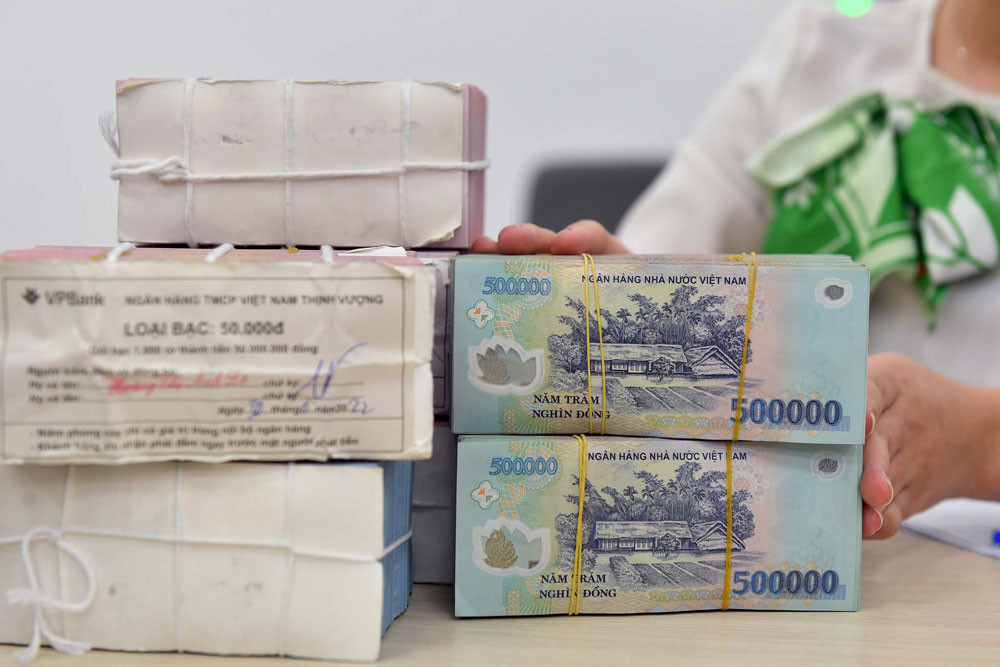
After nearly a month of sharp declines, Vietnam's stock market posted a notable recovery in the final trading sessions of July and early August. The VN-Index climbed from below 1,660 points on July 28 to nearly 1,763 points on August 3, as dip-buying emerged across the market and lifted many large-cap stocks.
FPT shares rose nearly 16 percent in about one week, from VND62,000 to VND71,700 per share. Many banking, steel, real estate, and securities stocks also recorded double-digit gains after a period of aggressive sell-offs.
Another positive sign came from foreign investors, who unexpectedly returned as net buyers of around VND1 trillion on the HoSE on August 3, following several months of continuous net selling.
During the first seven months of the year alone, foreign investors withdrew $3.4 billion from the market.
Several factors have fueled the rebound. Following the sharp decline, market valuations fell to their 5-year lowest levels, while many listed companies still reported solid second-quarter earnings with double-digit profit growth across multiple sectors.
At the same time, forced margin selling left many stocks in oversold territory based on technical indicators, creating opportunities for bargain hunters to step in.
Investor confidence was also supported by a wave of insider buying announcements from corporate executives taking advantage of depressed share prices. Executives at VCI, SMC, PDR, and MWG were among those announcing plans to increase their holdings.
Macroeconomic developments also supported market sentiment. A new regulation issued by the State Bank of Vietnam allows banks to count only 50 percent of the State Treasury's term deposits when calculating their loan-to-deposit ratio (LDR), easing liquidity pressure and creating additional room for credit growth.
Meanwhile, overnight interbank interest rates fell sharply to around 0.7 percent per year, indicating a significant improvement in short-term liquidity after a period of tight funding conditions.
July inflation eased slightly due to cooling fuel and food prices, while global oil prices plunged as US–Iran tensions temporarily quieted, helping reduce pressure on monetary policy and corporate input costs.
On August 3, WTI crude fell 6 percent to $79.60 per barrel, while Brent crude dropped 5.1 percent to $83.40 per barrel after touching $100 per barrel the previous week.
The market also expects to benefit from an extraordinary session of the National Assembly featuring several key draft laws concerning land and real estate, alongside the potential inclusion of select Vietnamese equities into the FTSE Global Equity Index Series during its September review.
Multiple obstacles remain
Despite substantial sentiment improvements, market prospects still face considerable hurdles.
The initial risk stems from the energy market. Although oil prices dropped sharply, tensions between the US and Iran have merely paused. Core issues, including Iran's nuclear program, economic sanctions, proxy military operations, and security in the Strait of Hormuz, remain unresolved. Any sudden turn of events could trigger a sharp rebound in oil prices.
Meanwhile, overall interest rate levels have not meaningfully cooled. Decreasing interbank rates primarily reflect short-term liquidity among credit institutions, whereas 6-to-12-month deposit rates remain widely anchored 9-10 percent per year. This indicates that capital costs for enterprises and investors have yet to drop significantly.
An additional source of pressure is the Federal Reserve's upcoming meeting in September. Should the Fed resume rate hikes, pressure on exchange rates and domestic interest rate benchmarks could escalate, subsequently impacting capital flows into the equity market.
In addition to macro factors, the market is also approaching a strong resistance zone of 1,770-1,800 points after a recovery of more than 100 points. This is considered an area where profit-taking pressure may appear when bottom-fishing stocks gradually become profitable.
According to MBS Securities, favorable factors persist in August, and the VN-Index could head toward 1,800 points, or even 1,850 points under an optimistic scenario.
However, BSC Securities noted that liquidity has not kept pace with price gains and the index has yet to convincingly breach resistance barriers, suggesting investors should exercise caution rather than chase rallies.
Meanwhile, VPBankS observed that the VN-Index regained momentum by surpassing its 20-day moving average as foreign investors returned to net-buying. Nevertheless, a sideways pattern or mild correction around 1,770–1,800 points would allow the market to establish a sturdier foundation for fresh capital inflows.
Manh Ha
.svg)
