 Vietnamnet.vn

 Podcast



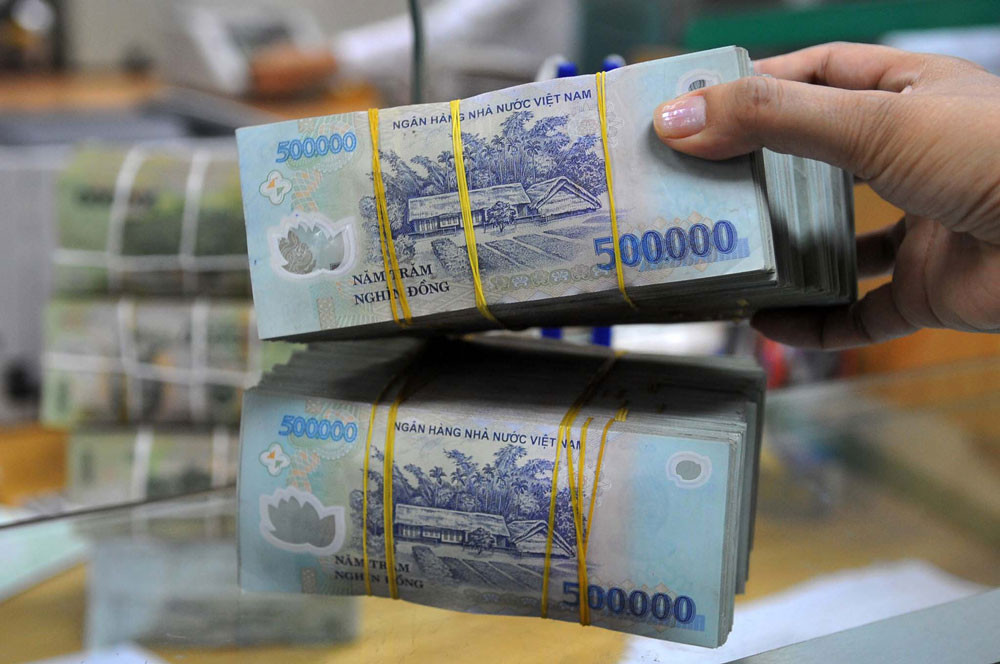
At the close of trading on July 20, the VN-Index fell nearly 44 points (-2.46%) to 1,743.51. The HNX-Index dropped 2.5% to 284.41, while the UPCoM-Index slipped 0.82% to 126.34. Matched trading value on the Ho Chi Minh Stock Exchange (HoSE) reached nearly VND19.6 trillion (US$748 million).
Declines swept across almost every sector, with many stocks closing at their daily lower limit.
Within the VN30 basket, only four stocks posted modest gains while the remaining 26 ended lower.
The biggest drag was Saigon-Hanoi Commercial Joint Stock Bank (SHB), whose shares hit the daily limit-down, falling VND850 to VND11,800 (US$0.45) per share - their lowest level in more than a year. By the end of the session, nearly 1.2 million shares remained unsold at the floor price, while foreign investors were also net sellers.
SHB has now extended a correction that has lasted roughly three months. Some investors believe the stock continues to face pressure over concerns about its real estate loan exposure, as the bank is among those with a relatively high proportion of property lending.
As the State Bank of Vietnam tightens oversight of real estate credit growth amid concerns over bad debts, banking system liquidity and a still-fragile property market recovery, banking shares have come under considerable pressure.
Not only SHB but several other banking stocks also posted steep declines, including Vietcombank (VCB), VPBank (VPB), TPBank (TPB) and MBBank (MBB).
Brokerage stocks were also heavily sold. SSI Securities (SSI) almost hit its daily trading limit, dropping VND1,550 to VND22,700 (US$0.87) per share.
Among property developers, Vinhomes (VHM) fell VND3,600 to VND136,900 (US$5.23) per share, while Vincom Retail (VRE) lost VND1,300. Vingroup (VIC) managed to close unchanged.
Notably, Hoa Phat Group (HPG) fell VND1,250 to VND20,600 (US$0.79) per share, marking its lowest level in one year.
Meanwhile, FPT edged up VND100 but continued trading near its lowest price in more than two years.
Selling pressure also spread beyond banks and real estate. MSN fell 4.7%, PNJ lost 4.65%, MWG dropped nearly 2%, while GEX, CII, VCG and VSC all declined by more than 6%.
Foreign investors took advantage of the correction to buy several large-cap stocks, including MWG, VIC, VNM and VND, with purchases worth hundreds of billions of dong.
However, across the market as a whole, overseas investors remained net sellers, offloading about VND86 billion (US$3.3 million).
The market's negative performance came as deposit interest rates remained elevated and continued to trend higher.
Liquidity within the banking system has come under pressure as demand for capital from the broader economy and major investment projects has increased, prompting many banks to raise deposit rates to retain funding.
Higher deposit rates have made bank savings and bonds more attractive, directly competing with capital flows into equities.
Meanwhile, Brent crude continued climbing to around US$88.3 per barrel, while expectations that the U.S. Federal Reserve may keep interest rates higher for longer - or raise them further - also added pressure to global financial markets.
Heavyweight stocks weaken as liquidity and interest rates weigh on the market
The sharp decline on July 20 reflected broad weakness among heavyweight stocks, which traditionally provide the main support for the VN-Index.
With banking, brokerage, steel and property stocks all retreating simultaneously, the benchmark index struggled to avoid a significant correction.
Hoa Phat Group provided a clear example. In a single session, the steelmaker's market capitalization declined by more than VND10.5 trillion (US$401 million).
For Chairman Tran Dinh Long, who directly owns more than 2.18 billion shares, the decline reduced the value of his holdings by around VND2.7 trillion (US$103 million), while the combined wealth of his family fell by nearly VND3.8 trillion (US$145 million).
Pressure on HPG came from several factors.
In addition to the broader market downturn, nearly 768 million dividend shares officially began trading on July 15, increasing short-term supply.
According to market sources, Hoa Phat also reduced the selling price of hot-rolled coil (HRC) for August deliveries amid competitive pressure from imported steel. Even so, the company's business performance has remained solid.
Crude steel production in the second quarter of 2026 rose 48% year-on-year, while steel sales increased 35%, suggesting that the recent decline in HPG's share price reflects supply-demand dynamics and investor sentiment more than any deterioration in the company's fundamentals.
From a broader macroeconomic perspective, the stock market's performance contrasts with Vietnam's economic outlook.
The country recorded GDP growth of more than 8% in the first half of the year.
Meanwhile, Standard Chartered recently raised its forecast for Vietnam's GDP growth to 9.5% in 2026 and 11% in 2027, while lowering its inflation forecast.
According to MB Securities (MBS), Vietnam's macroeconomic fundamentals remain broadly positive, and inflationary pressures have likely peaked.
However, the market is facing a conflict between ambitious economic growth targets and limited domestic financial resources.
Tight banking system liquidity has kept deposit interest rates elevated, pushing up funding costs and creating additional pressure on the economy.
MBS believes high interest rates are not only affecting corporate profitability - particularly in highly leveraged sectors - but are also weakening capital flows into the stock market.
Although valuations have become increasingly attractive, the brokerage expects market volatility to remain elevated in the short term until interest rates ease and liquidity improves.
Manh Ha
.svg)
