 Vietnamnet.vn

 Podcast


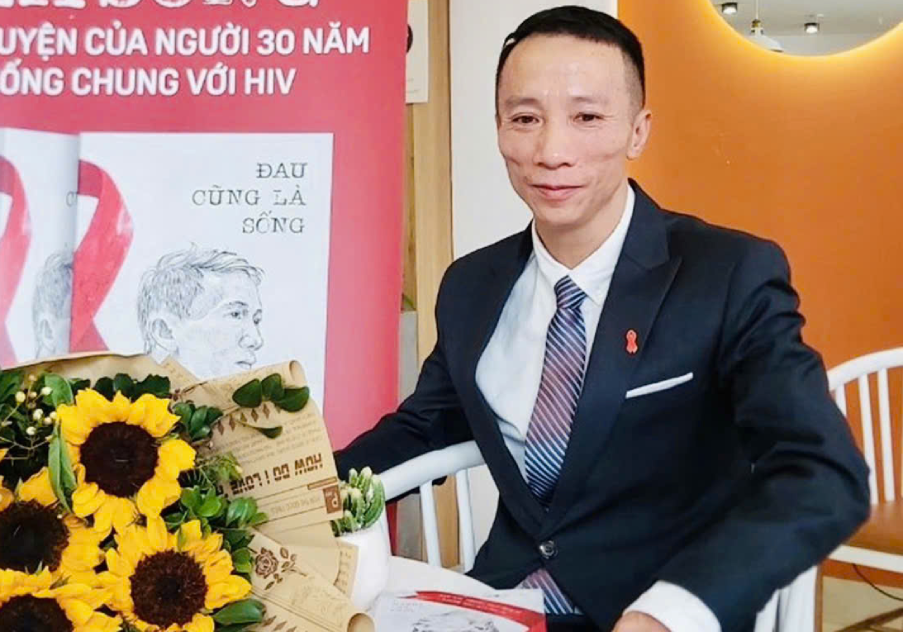
Once shunned by friends and feared by relatives, and even seeing funeral wreaths intended for him while he was still alive, man living with HIV Dong Duc Thanh has overcome years of despair after being diagnosed with HIV.
After graduating from the College of Mining and Geology, Dong Duc Thanh, now 50 and living in Quang Ninh Province, was hired by a coal mining company in the province in 1998. With a promising future ahead, the young man was preparing for his first trip abroad when a medical examination turned his life upside down: he tested positive for HIV.
Before he could recover from the shock, a company representative “suggested” that he quit his job, citing the need to protect his health and seek treatment. From a young man with plenty of opportunities for advancement, he suddenly felt that his future had closed off.
“I thought I was going to die, so all the savings I had accumulated from work were squandered on overnight partying,” Thanh recalled.
But losing his job was not what hurt him most. When his family learned of his condition, Thanh had to confront the fear of the very people he loved. His relatives were afraid to share bowls and chopsticks with him and did not want his son to sit on his bed.
Limited understanding of HIV at the time had turned the disease into a source of fear, causing people around Thanh to look at him with apprehension. The house that had once been a place of refuge suddenly felt unfamiliar, and he felt he was no longer treated as he had been before.
The pain grew worse when friends gossiped that he was about to die of AIDS. Some even bought a white funeral wreath and brought it to his home.
“Looking into the bushes, I saw my friends hiding a wreath bearing the words ‘In respectful memory of the deceased.’ I was stunned. I truly wanted to die to escape the humiliation,” he said, his voice breaking as he recalled the memory.
That wreath became a painful memory. He was still alive, with dreams yet to fulfill, but in the eyes of some people, his life seemed to have already ended.
Whenever he visited relatives, Thanh noticed their wary looks as soon as he entered the house. Family meals, once occasions for gathering together, became tense and uncomfortable.
His friends gradually distanced themselves, too. Once, when he stopped by his usual coffee shop, a group of friends who had been chatting suddenly fell silent, then quietly got up and left.
He realized he was being pushed out of everyday life. To make ends meet, he took on all kinds of jobs, from working as a motorbike taxi driver to wading into streams to collect washed-away coal and gathering sand. However, these jobs did not last long either, as he continued to face discrimination.
Stepping into light
In 2003, through an acquaintance's introduction, Thanh was hired by CARE Vietnam in Hanoi. The opportunity opened up a new path for him, although the early days were full of unfamiliar challenges.
“On my first day at work, I didn't know how to turn a computer on or off. When I attended a workshop in Thailand, all I could say in English was ‘OK,’” he recalled.
Unafraid to ask questions, he began learning to type, communicate, prepare documents, develop plans, write reports and summarize policy papers. He worked hard to learn English because he believed it was a way to change his life.
Day by day, he rebuilt his confidence. His job provided an income, broadened his knowledge and allowed him to meet people who judged him by his abilities rather than his HIV test result.
Along the way, he realized that his painful experiences could be of help to others. He did not want people newly diagnosed with HIV to suffer alone as he once had, so he decided to publicly disclose his HIV status.
Standing before hundreds of people with a microphone in his hand, he nervously spoke for the first time: “I am a person living with HIV.”
That was a turning point in his life. He chose to speak out rather than allow HIV to remain something that had to be concealed or a subject of silence that allowed prejudice to persist.
Having stepped out of the shadow of stigma, Thanh began writing awareness-raising articles, sharing knowledge and telling the stories of the community.
He spoke not only about HIV/AIDS prevention but also shared his own story so that others living with the same condition could speak out and share their experiences.
Phuong Thuy

