 Vietnamnet.vn

 Podcast



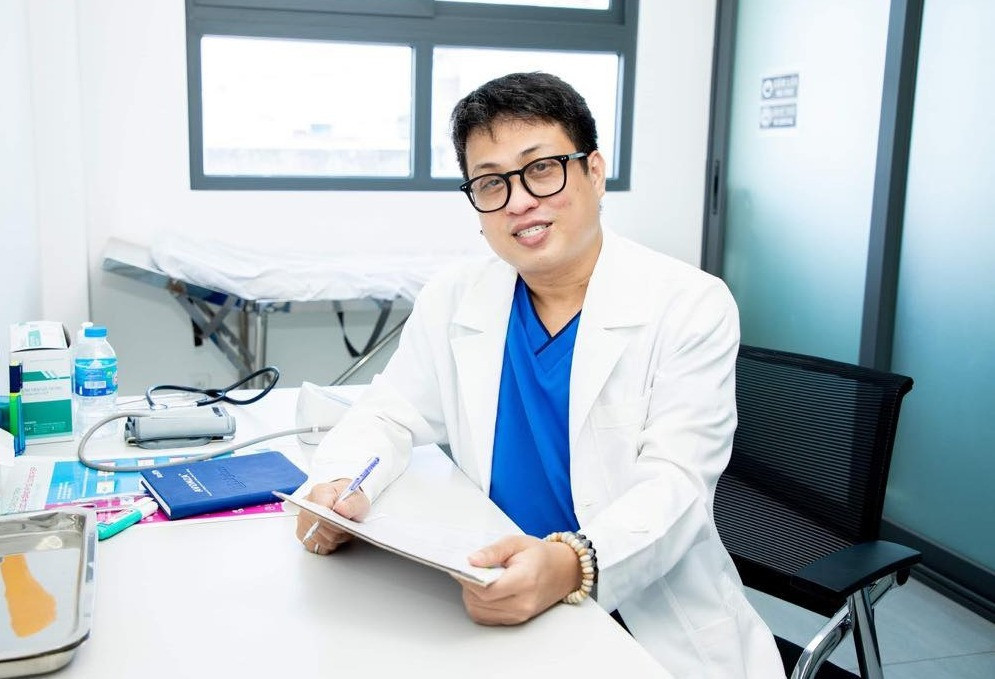
While he was a fifth-year student at University of Medicine and Pharmacy at HCMC, Thu (born in 1986) was doing an internship at the Hospital for Tropical Diseases when he discovered he was infected with HIV after a blood test.
Looking at the positive result, he felt empty. As a medical student, he clearly understood the disease, so he did not panic, but everything seemed to fall into an endless void.
Holding the test paper, the student went to see his lecturer. The teacher asked: “Is this really your result?” When he nodded and anxiously asked: “Can I still become a doctor?”, the lecturer gently encouraged him: “Nothing is impossible. You can still study and still become a doctor.”
At that time, Thu had not told his family, but later he confided in his older sister. Having family members accompany him made him feel more reassured. In late 2008, he began ARV treatment and suffered a severe allergic reaction, requiring emergency care at Gia Dinh People's Hospital.
From then on, his entire family knew the story. Instead of distancing themselves, they cared for and looked after him even more. He compared himself to “a weak child who receives more love.”
At that time, HIV was still a major concern in society. In addition, during the late 2000s, ARV treatment in Vietnam was not as common as it is today.
In Thu’s memory, HIV treatment wards at that time were always covered by a gray atmosphere of despair.
“Everywhere I went, I saw weak patients. Some were still very young but had almost no vitality left. I chose to face it,” he said.
After discovering he had HIV, what worried him was not only his health but also his studies.
“I still did night shifts, examined patients and handled paperwork as usual, but tasks involving possible blood exposure were supported by friends. They covered my shifts. Back then, the sentence I heard most often was: ‘We feel so sorry for you,’” Thu recalled.
That acceptance became the emotional foundation that helped him stay strong enough to continue through nearly two decades afterward.
After graduation, Thu chose preventive medicine, a specialty that at the time carried almost no glamour. He set aside his long-held dream of pursuing obstetrics.
After many years, he realized the work gave him the opportunity to do what mattered most: helping others fight disease. His regret about not entering obstetrics was later expressed through sex education classes and reproductive health counseling for adolescents, allowing him to connect with the field from a preventive perspective.
Troubling questions
What troubled Thu for many years was the way society viewed people living with HIV. He said that when the first article about him was published, many people were not interested in his treatment journey or current life, but only focused on asking: “Where did he get infected?”; “Was he living recklessly?”; “He must have been promiscuous?”
Such questions reflect a common form of stigma: attaching moral judgment to illness, he said.
Later, he disclosed the cause of his infection himself: “I contracted HIV when I was young and had unsafe sex. I did not want to create a ‘better’ story to gain pity. I also did not want to claim it was an occupational accident if that was not true.”
But what he always wanted to emphasize is: no one deserves disease. HIV is a medical condition that requires treatment, not a moral sentence. Society should focus on fighting the virus instead of fighting patients.
He believes that for many years, society divided people living with HIV into two groups: “pitiful” and “blameworthy.” But from a medical perspective, they are all patients alike.
When publicly identifying himself as a person living with HIV, Thu chose to face prejudice with calmness and compassion instead of reacting harshly.
In 2009, at the Hospital for Tropical Diseases, HIV patients filled treatment rooms and even hallways. Beds were packed tightly together. Many patients were skin and bones, completely exhausted. Some would speak with him for a few moments, then suddenly pass away.
But after nearly 20 years, HIV treatment has changed completely and saved lives. What makes Dr Thu happiest is seeing once-despairing patients return to life.
Phuong Thuy
.svg)
