 Vietnamnet.vn

 Podcast


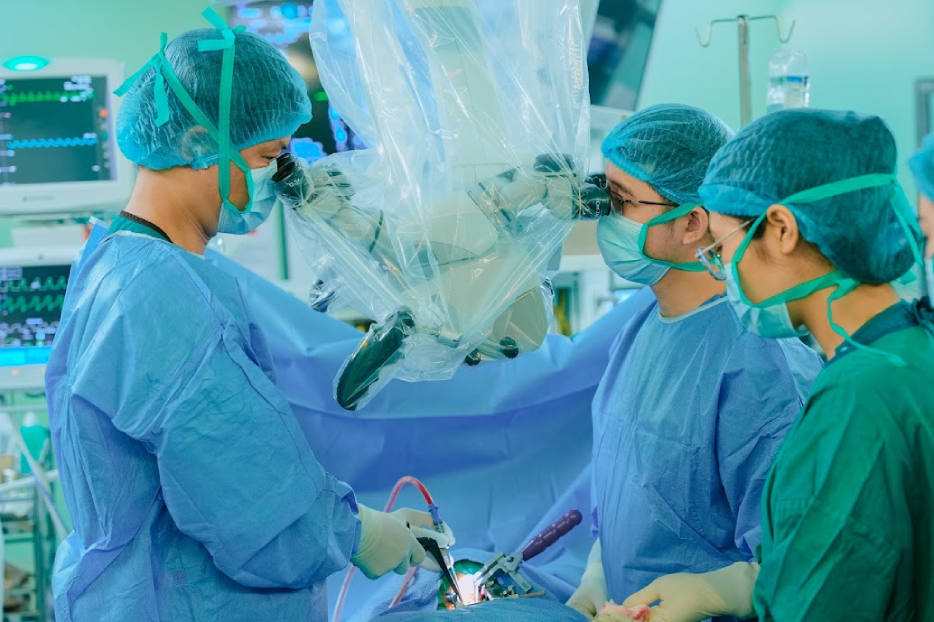
Dr. Nguyen Van Trung, Head of the Department of Orthopedics and Spine Surgery at Bach Mai Hospital (Hanoi), said that the patient was admitted with complex cervical spine lesions. Multi-level spinal stenosis caused spinal cord compression accompanied by spinal edema, severely impairing his mobility. Advanced age alongside underlying conditions such as hypertension and diabetes made treatment decisions exceptionally cautious.
For a man who had spent nearly a year in a wheelchair, his greatest wish was simply to stand up and walk independently. However, Trung noted that cervical spine surgery is never a decision that could be made hastily.
The cervical spine contains numerous vital anatomical structures. Damage to the spinal cord or blood vessels during surgery could have serious consequences. In this case, the surgical team needed to carefully assess the degree of compression, the condition of the spinal cord and the associated risks before deciding on the appropriate surgical approach.
The operation lasted approximately five hours and involved procedures from both the front and back of the cervical spine to relieve compression and stabilize the spine. After surgery, the patient continued to receive monitoring, treatment and rehabilitation.
Recovery did not come immediately after he left the operating room. It required time, coordination among healthcare professionals and the patient's own commitment to rehabilitation exercises. After about three months, he was able to stand and walk.
“What I remember most is not an impressive postoperative scan, but the first steps the patient took. His recovery reminds me that the ultimate outcome of treatment is the patient's function and quality of life, not the complexity of the techniques we have performed,” Dr. Trung said.
Meticulous preparation
Achieving that outcome required important work beyond the operating room. According to Dr. Trung, before every spinal surgery, the team must thoroughly understand the patient's condition, carefully review imaging results and clearly define the goals of the intervention. In complex cases, anticipating possible complications and preparing appropriate responses are essential steps that cannot be overlooked.
“Spinal surgery leaves no room for haste. To operate well, you must first examine the patient properly, interpret imaging accurately, understand the condition and know what the surgery is intended to achieve. Techniques can be learned over a few years, but making the right decision to operate, recognizing your own limitations, knowing when to seek help from colleagues and knowing when not to operate are skills that take a long time to develop,” he said.
In this case, Dr. Trung determined that the surgery needed not only to address the site of spinal cord compression but also to ensure the patient's safety throughout the procedure and recovery.
In clinical practice, technology helps surgeons identify target areas and perform procedures more precisely, but it cannot replace patient assessment, the choice of surgical method or careful evaluation of risks.
That is why meticulousness is reflected not only in each movement in the operating room. It begins with determining whether a patient genuinely needs surgery, choosing the appropriate approach and preparing carefully to minimize risks.
Surgical techniques must serve patients
In spinal surgery, Dr. Trung has implemented a range of treatments, from decompression and spinal fixation to minimally invasive techniques suited to individual cases. He is also interested in applying technological advances to improve the precision and safety of surgical interventions.
His professional contributions have been recognized through scientific research, including first prize at the 27th Postgraduate Scientific Conference organized by Hanoi Medical University.
However, when discussing his profession, Dr. Trung places neither surgical techniques nor professional achievements above the goal of treatment.
This philosophy also shapes his approach to training young doctors. He said surgical trainees must not only master technical skills but also accurately assess patients' conditions, choose appropriate indications and recognize their own limitations.
“A teacher does not need students to become just like him. The greatest joy is to see them one day become better than he is,” he said.
For Dr. Trung, training goes beyond passing on techniques that have been mastered. More importantly, it means helping young doctors develop clinical judgment, a strong commitment to safety, and a sense of responsibility for every decision involving a patient.
Phuong Thuy

