 Vietnamnet.vn

 Podcast



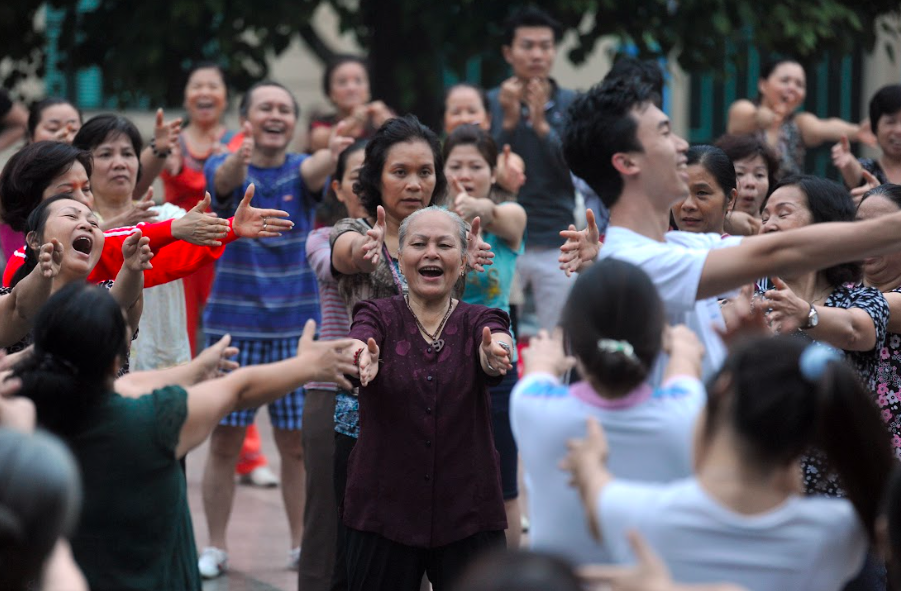
Some people barely have time to rest after receiving their pension book before ending up confined to a hospital bed.
L.T.H, 65, in Ha Tinh, has been a familiar patient of Dr Ha Thi Van Anh, Head of Outpatient Department, Central Geriatric Hospital (Hanoi), for many years.
His first visit was seven years ago for hypertension. Later, he was diagnosed with diabetes and lipid metabolism disorders. As years passed, his health declined, and now he suffers from five chronic diseases.
“I didn’t even have time to enjoy retirement before ending up stuck in a hospital bed,” he said. At first, he could still go to the hospital on his own and did not need constant care. Now, his children have to hire an extra caregiver to look after him.
Cases like his are common at the National Geriatric Hospital, especially since Vietnam entered the aging population phase in 2011. As the elderly population grows, the demand for geriatric healthcare has risen sharply, forcing the hospital to expand its outpatient facilities.
Each doctor in the Outpatient Department sees around 50 patients per day across 12 consultation rooms. The departments for hypertension, cardiology, and diabetes handle the highest numbers. Doctors examine 150-200 patients suffering the diseases daily, and in total, the department receives about 500 patients each day.
Anh recently conducted a study on common diseases among the elderly. “Rarely any elderly person comes to the hospital with only one disease; typically, they have three to five, and in some cases, eight or nine,” she said.
According to the Ministry of Health (MOH), Vietnamese now live longer, a welcome sign of development. In 2024, the average life expectancy of Vietnamese reached 74.7 years, highest in history. However, the number of healthy living years was only 65.4.
Dr Truong Hong Son, General Secretary of Vietnam Medical Association, said Vietnamese from 64 years old upward suffer multiple diseases at the same time, especially non-communicable diseases. Therefore, although life expectancy increases, the number of years living with diseases of elderly is also high: 10 years.
Common illnesses among older adults include hypertension, osteoarthritis, and cataracts. Diseases like diabetes, lipid metabolism disorders, depression, and cognitive impairment have risen rapidly in recent years. Unfortunately, these are often overlooked, as many elderly, even middle-aged, people assume that forgetfulness or sleep problems are natural signs of aging.
According to MOH, although the elderly make up just over 14 percent of the population, they account for more than 50 percent of total annual healthcare spending. The cost of medical care for older adults is nearly 10 times higher than for younger people.
Anh said treatment costs for older adults are “very high” due to direct expenses (consultations, medications, hospital stays), indirect ones (transportation, accommodation for caregivers), and the cost of assistive devices or rehabilitation equipment.
Because elderly patients often have multiple conditions, comprehensive geriatric assessments are required for accurate diagnosis. Extensive diagnostic testing raises medical costs. Furthermore, elderly patients take many medications, and frequent lab tests, imaging, and function evaluations are needed to monitor disease progression, further increasing healthcare expenses.
For inpatients, recovery time is typically longer than for younger adults, adding even more to the cost.
How fast is Vietnam aging?
Matt Jackson, UNFPA Representative in Vietnam, said the country’s population is aging faster than most others. Minister of Health Dao Hong Lan confirmed that Vietnam’s aging rate is among the fastest in Asia.
In 2024, Vietnam had about 14.2 million people aged 60 and older, an increase of 2.8 million from 2019 and 4.7 million from 2014. By 2030, this figure is projected to reach nearly 18 million, higher than previous forecasts of 17.2 million. The country has nearly 2 million people aged 80 and above.
Le Thanh Dung, Director of the General Office for Population and Family Planning, noted that in 2009, one in 11 people was over 60, but by 2029, it will be one in six, and by 2036-2038, one in five. This means that for every five Vietnamese, one will be over 60 years old.
The aging index (the number of elderly people per 100 children under 15) is rising rapidly, from 53.1 percent in 2021 to 60.2 percent in 2024. This means that for every 100 children, there are more than 60 elderly people. By 2032, the index is expected to exceed 100, marking the point when Vietnam will have more elderly than children.
.svg)
