 Vietnamnet.vn

 Podcast



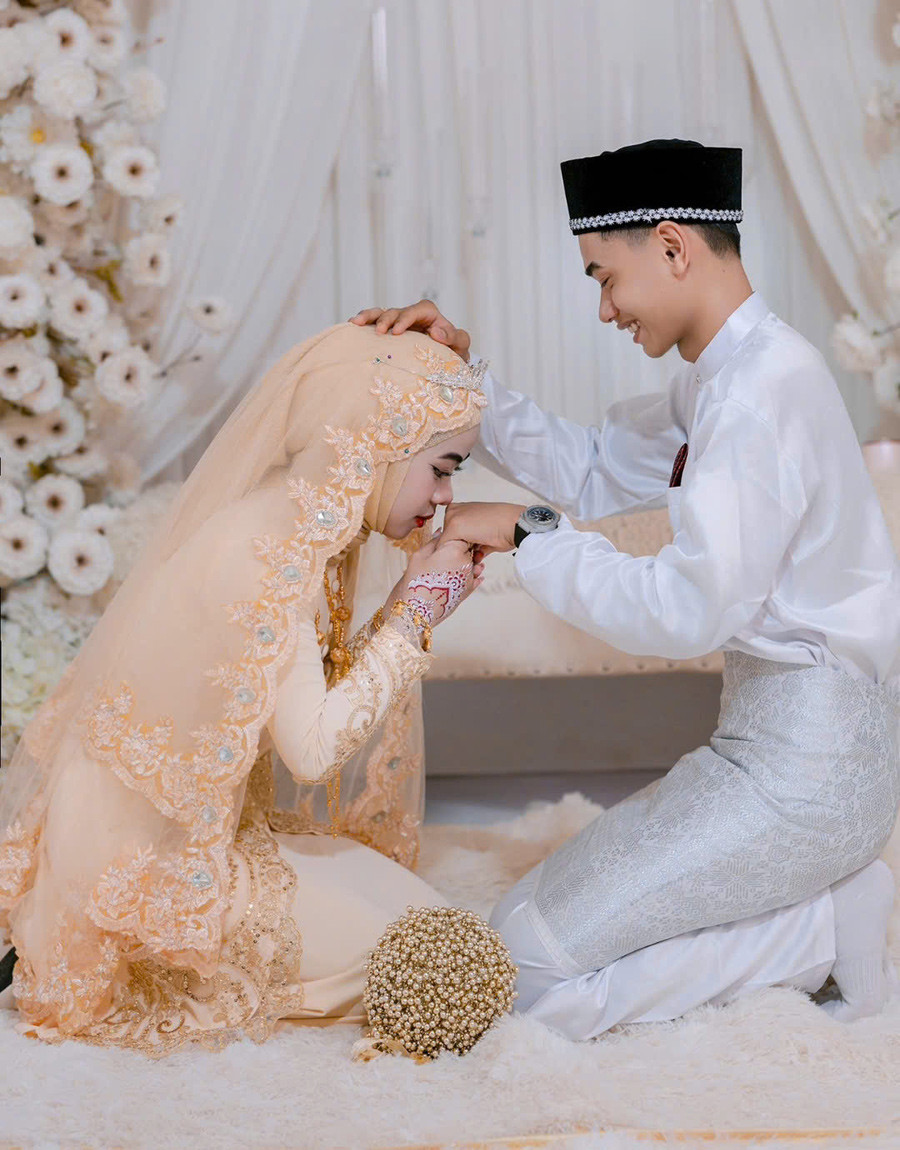
Love story
Sa Ri Phah (born 2004) and A Mach (born 2003) both were born and raised in Cham hamlet, Tan Thanh commune, Tay Ninh province. The two houses were only 500 meters apart, but throughout childhood, they did not know each other at all.
Only when introduced by a friend in 2024, they began a beautiful love story and entered marriage with a wedding rich in Cham cultural identity, where the groom voluntarily goes to live with wife's family according to custom of his ethnicity.
"Everything with us is like arranged by heaven," Ri Phah said.
When A Mach proactively texted to get acquainted, Ri Phah was a bit surprised but then knowing he is friend in the same hamlet, she opened her heart. From simple daily conversations, distance between two people gradually narrowed.
For Ri Phah, what made her fall for A Mach was not flowery words but a rare sense of peace.
"For the first time, I met someone who was compatible with me in personality, lifestyle and way of thinking. He made me feel safe in a way I had never experienced before. Just 10 days after we met, we officially started dating," Ri Phah said.
During their relationship, they sometimes had disagreements, but A Mach was always the one to give in, choosing gentleness over winning an argument.
He willingly did everything he could for his girlfriend and always tried to give her the best. Their relationship grew through simple acts of care, such as sending each other snacks, looking after each other when they were sick, and sharing both happy and difficult moments.
Although they lived close to each other, their shift work meant they could only meet on weekends. This made them cherish the time they had together even more.
"The memory I remember most vividly is the first birthday party A Mach organized for me.
"He secretly bought a birthday cake, decorated the party and prepared a gift for me. His thoughtfulness surprised me and made me appreciate his love even more," Ri Phah recalled.
About four months into their relationship, A Mach took Ri Phah home to meet his family. Since the two families already knew each other well from living in the same neighborhood, both sets of parents supported their relationship.
Ri Phah vividly remembers what her mother told her: "I'm happy that you're marrying someone who lives nearby. I don't need anything else. I just want you two to love each other and be together."
Living with in-laws
After a year of dating, the couple held their engagement ceremony in September 2025. Seven months later, they officially married in a traditional Cham wedding ceremony, marking the beginning of a new chapter in their lives.
The most important part of Ri Phah and A Mach's wedding was the ceremony formally recognizing them as husband and wife.
During the ceremony, the groom and his family brought offerings, including cash and gold, to the bride's family. The groom presented the bride with wedding gold according to the agreement between the two families. The bride's father then took the groom's hand and declared in the Cham language that he was giving his daughter in marriage to the young man.
The groom then responded, formally accepting the bride as his wife and confirming that the wedding gifts had been given. Finally, a religious officiant recited prayers and blessed the newlyweds.
"After that ceremony, both families held a wedding feast. In the evening, the groom's family took him to the bride's home so he could move in with her family.
"Because we live in the same neighborhood, some of the rituals were omitted. If the groom lived far away, the two families would beat drums and bang pots that night as they escorted him to the bride's home. It would be incredibly lively," Ri Phah said.
Even so, Ri Phah was happy to have a complete wedding. What moved her most was not the rituals or wedding gifts, but the heartfelt blessings from relatives and friends.
The Cham people have preserved many aspects of a matrilineal cultural tradition. After marriage, the groom traditionally moves into his wife's family home rather than the bride moving in with her husband's family. However, according to Ri Phah, the custom is no longer rigidly followed and depends on each family's circumstances and the agreement between both sides.
Thanh Minh
.svg)
