 Vietnamnet.vn

 Podcast


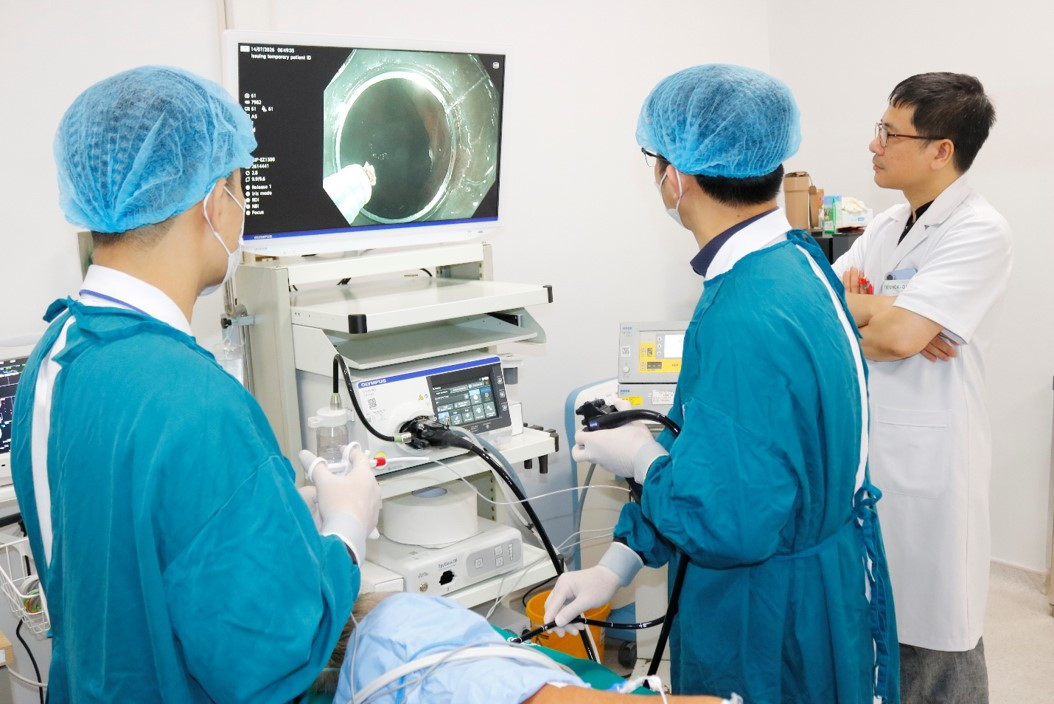
It will take at least 10 years to qualify as a medical specialist, and longer for those pursuing deep specialization.
The Ministry of Health (MOH) is finalizing a draft circular guiding the training of medical residents and specialist doctors, with implementation expected in 2027 under the amended Law on Higher Education.
The circular aims to standardize medical residency and specialist training programs to meet professional requirements and international standards. The programs will be competency-based, covering everything from basic to advanced practice, with a unified training framework applied nationwide.
Level I and Level II specialist training to be phased out
In Vietnam, after completing six years of medical school, doctors can immediately pursue specialist training at Level I or Level II, or enter a medical residency program. However, not everyone chooses this path. Only around 10 percent choose to continue their studies immediately.
The rest typically complete a three-month practical training period before taking the examination for a medical practice license. Some doctors pursue Level I and Level II specialist qualifications later, after obtaining a license and working for several years. Each level takes about two years to complete.
In the draft circular on medical residency and specialist training currently being developed and finalized by the Ministry of Health, the drafting team proposes replacing the Level I and Level II specialist training system with specialist and advanced specialist programs.
Dr. Nguyen Ngo Quang, head of the Department of Science, Training and Technology at MOH, which is leading the drafting process, said the new specialist training programs would have flexible durations tailored to the characteristics of each specialty and aligned with international training models.
“The biggest change is that specialist training programs must clearly define the specific competencies doctors are expected to achieve upon graduation. Training institutions are responsible for developing curricula and organizing training to ensure learners meet these requirements,” Quang told the press on October 9.
For example, the Ministry of Health has already issued competency standards for specialists in surgery, internal medicine, obstetrics and pediatrics. Training institutions must ensure their programs meet these standards.
Advanced specialization means that after graduating from medical school, a doctor can pursue general surgery and then receive further training in a subspecialty such as cardiovascular surgery, gastrointestinal surgery or neurosurgery.
“Specialist training must last at least three years. The regulatory authority will not prescribe a fixed duration for each specialty; instead, training requirements will be based on practical needs, job requirements and competency standards,” Quang said.
At least 10 years to qualify as a practicing medical specialist
Quang also said the minimum time required for a doctor to qualify to practice as a specialist would be 10 years, calculated as six years of medical school, one year of practical training and three years of specialist training.
According to Quang, after graduating from medical school, doctors must complete 12 months of practical training and pass an examination to obtain a medical practice license. They can then choose whether to sit for a specialist training program or not.
However, doctors who have not completed specialist training can only perform procedures and technical services within the scope permitted for general medical doctors. These are generally services provided at basic-level healthcare facilities. To work at higher-level facilities, doctors must complete specialist training.
The choice between specialist and advanced specialist training will also depend on a doctor's needs and job requirements. For example, a doctor working at a provincial hospital may only need a basic specialization in surgery to meet the technical requirements of that hospital.
But if the doctor moves to a higher-level facility, such as Viet Duc Friendship Hospital, and joins its trauma surgery department, further training in orthopedic trauma surgery would be required to meet the demands of the job.
Under the draft circular, specialist training will be open to doctors in general medicine, traditional medicine, dentistry and preventive medicine. Eligible candidates include those whose degrees were awarded by foreign educational institutions and whose qualifications have been recognized by the Ministry of Education and Training as equivalent to a relevant university degree under the applicable regulations. They must also hold a valid certificate or license to practice medical examination and treatment.
Advanced specialist training will be available to those who have graduated from medical residency or specialist programs at Level I or Level II, as well as holders of master's or doctoral degrees, provided they hold a valid certificate or license to practice medical examination and treatment.
Vo Thu

