 Vietnamnet.vn

 Podcast



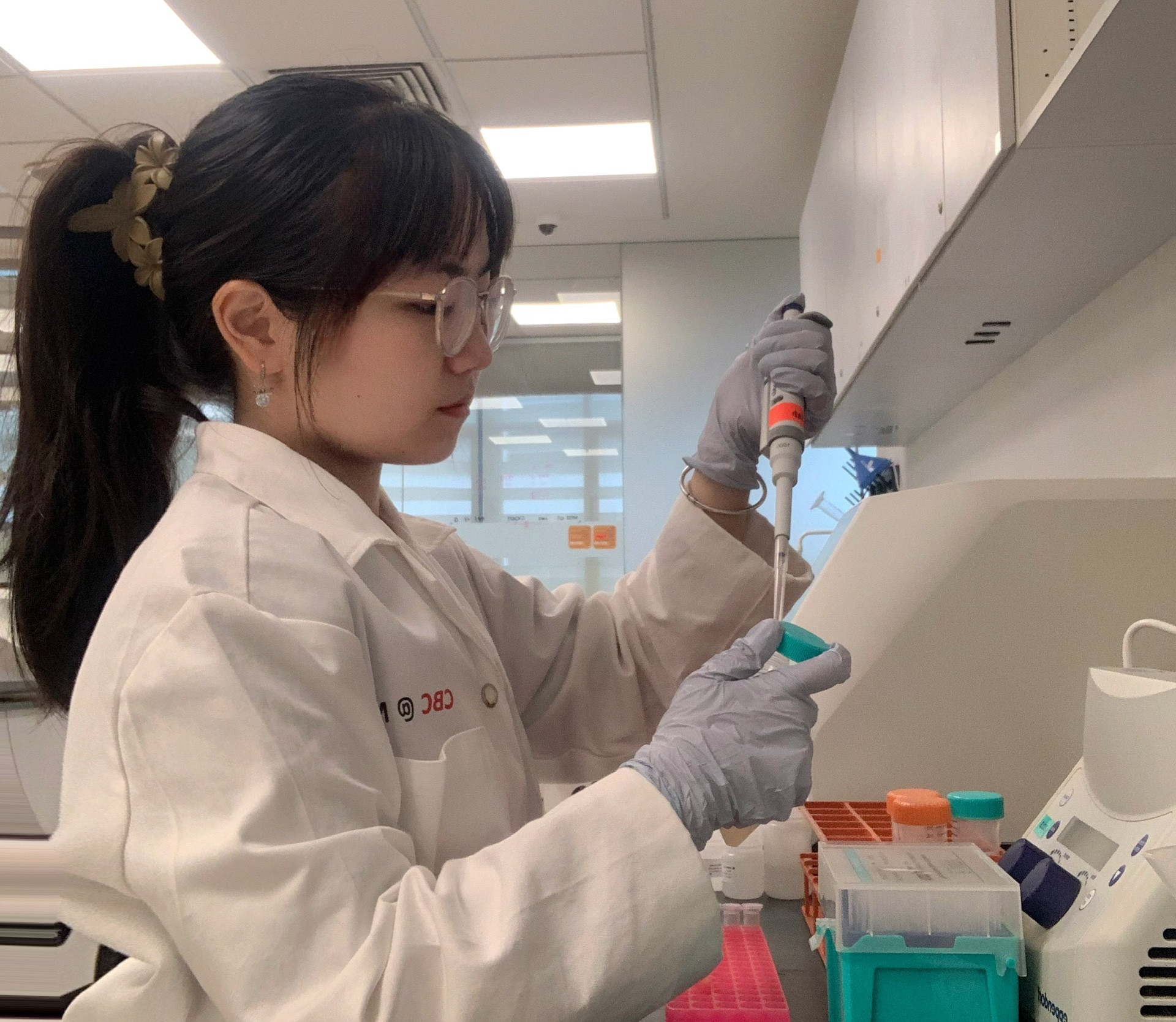
Four years later, she has secured a PhD scholarship at one of Asia's leading universities before graduating.
Although she earned enough points to enter the Doctor of Medicine program at Hanoi Medical University, Nguyen Vu Thao Tram chose instead to study biology, inspired by her late mother. Four years later, she has secured a PhD scholarship at one of Asia's leading universities before graduating.
Tram (born in 2004), a student in the Honors Bachelor of Science in Biology program, recently graduated with Highest Distinction in Biology from the University of Natural Sciences under Vietnam National University, Hanoi, ranking second in her major.
Tram's mother had studied biology at the same university before becoming a lecturer at the University of Sciences under Thai Nguyen University. As a child, Tram often accompanied her mother to campus, where she became fascinated by laboratory equipment. Those early memories sparked her passion for biology.
"My mother has always been my idol," Tram said.
When Tram was eight, her mother became the youngest woman associate professor in biology in 2012. Watching her mother's dedication to scientific research inspired Tram to dream of becoming a scientist herself.
In high school, Tram joined the specialized biology class at Thai Nguyen High School for the Gifted, where she won third prize in Vietnam's National Excellent Student Competition. Although she qualified for Hanoi Medical University's Doctor of Medicine program, she chose to enroll in the Biology program at the University of Natural Sciences instead.
University life proved very different from high school. The heavy workload, advanced courses, and emphasis on independent learning left her struggling at first, and her first-semester grades fell short of expectations.
Realizing that hard work alone was not enough, Tram developed self-study habits, searched for academic resources independently, learned to ask questions, and actively connected ideas across subjects. She also formed a study group with classmates who had different strengths, allowing them to share materials, discuss difficult topics, and help one another.
"We all shared the same goal, so we encouraged each other and progressed together," she said.
Alongside her coursework, Tram joined a research laboratory. However, because the honors program required a heavy academic workload, she had limited time for laboratory practice and scored the lowest in her cohort on the laboratory's initial technical skills assessment.
"I was shocked by the result and became determined to improve," she recalled.
From then on, she spent nearly all of her free time in the laboratory, practicing research techniques and experimental skills.
Winning a PhD scholarship before graduation
A turning point came in her third year when Tram joined a two-month research exchange program at the Nanyang Technological University (NTU) in Singapore There, she took part in research on biosynthesis and genome-editing technology under the supervision of a professor.
At the end of the program, her supervisor encouraged her to return to NTU to continue her studies and research.
Tram said the two months in Singapore completely changed her perspective on scientific research.
"I worked in a highly professional and efficient academic environment and had the opportunity to connect with leading professors. When I returned to Vietnam, I knew I wanted to pursue research more seriously," she said.
After the exchange program, Tram focused on applying genome-editing technology to cancer research. From the beginning of her third year, she spent nearly every weekend in the laboratory, rapidly improving her research skills.
Her research project later won first prize in her university's student scientific research competition. She also became the primary author of a scientific paper published in Vietnam.
In October 2025, Tram began preparing her application for overseas study. In addition to an outstanding GPA, her application included recommendation letters from respected professors and associate professors with whom she had worked.
She said the most important stage was the 15-minute interview.
"The admissions committee didn't spend much time asking about my achievements. They mainly wanted to know how well I understood my research topic, where the knowledge gaps were, and what research direction I planned to pursue in the future," she said.
To prepare for that brief interview, Tram spent two weeks developing her presentation, reviewing her entire research journey, and anticipating technical and research-related questions.
In May 2026, during her final semester, she received notification that she had been admitted to NTU's PhD program. She plans to continue researching genome-editing applications related to cancer resistance in Singapore.
Thuy Nga
.svg)
