 Vietnamnet.vn

 Podcast



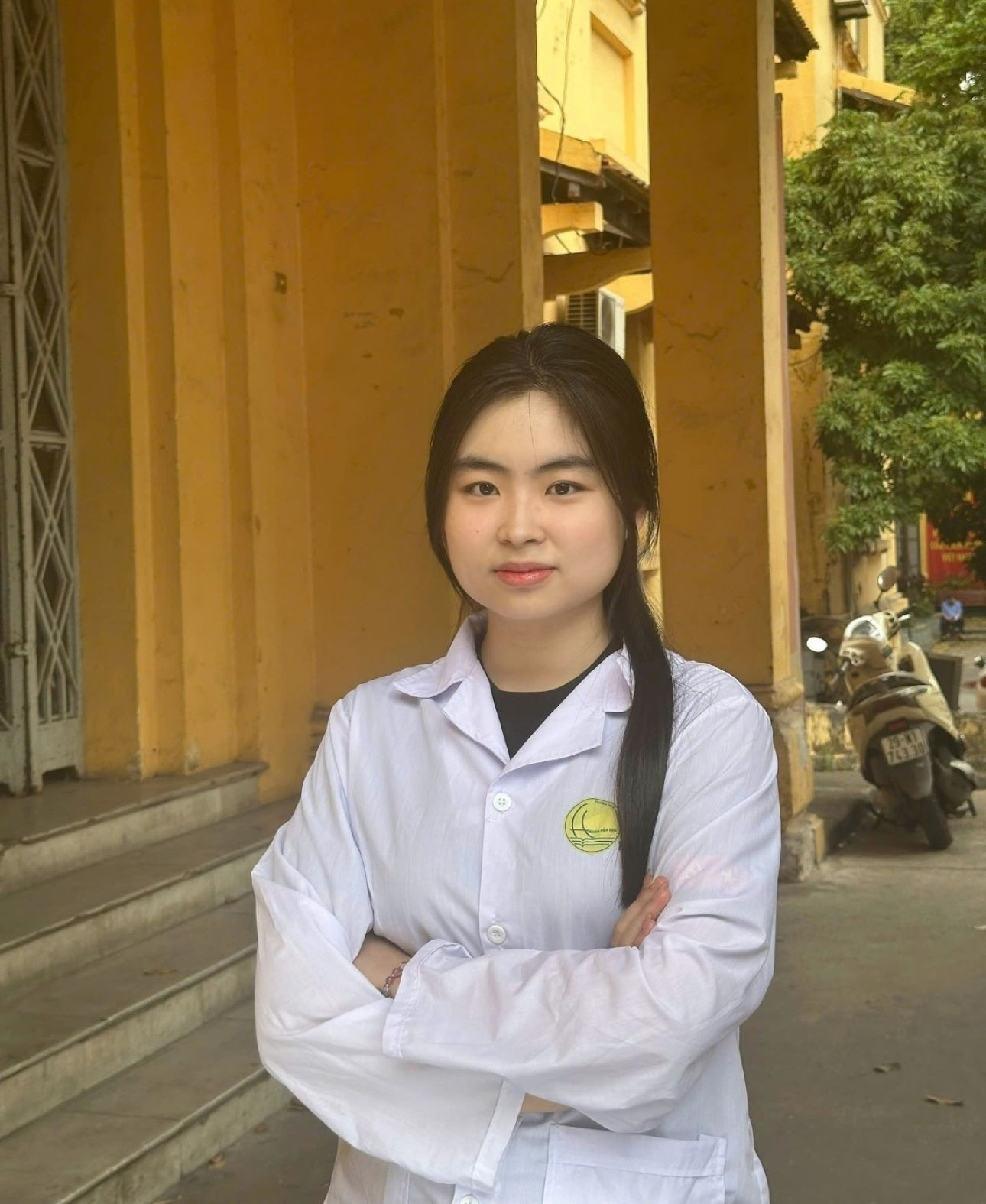
That persistent journey has led to her receiving a PhD scholarship to attend the National University of Singapore (NUS) – ranked among the world’s top 8 universities in 2026 according to the QS ranking by Quacquarelli Symonds.
Trang majored in Medicinal Chemistry (advanced training program) at the University of Natural Sciences, a member school of the Vietnam National University, Hanoi.
In high school, she said she had twice failed to qualify for the national excellent student team in chemistry. For many gifted high school students, that could be a major setback. But for Trang, it was not an ending, but a turning point.
Instead of placing all her goals on exams, she began thinking about a research career – a field that requires persistence and depth. This choice opened up a different path, less visible but more solid.
The turning point came when Trang became a student at the University of Natural Sciences. Rather than waiting for formal assignment, she applied to join a laboratory very early.
Associate Professor Mac Dinh Hung, Vice Dean of the Faculty of Chemistry and head of the laboratory who supervised Trang, said she joined the lab at the beginning of her second year.
"Initially, Trang was very enthusiastic and eager to learn, but her time management was not great while she served as the President of the Chemistry Club. However, from her third year, she matured significantly, identified her goals, and worked very hard on experiments," Hung said.
Under the guidance of her lecturer, Trang approached the field of synthesizing compounds with anti-cancer activity, a research direction linked to her interests since high school.
Having once wanted to enter the medical field but realizing it was not a fit, she chose a different path: contributing to the fight against cancer from a scientific research perspective.
After about a year of getting acquainted, from her third year, Trang began participating in research systematically. Her group had a scientific paper published and presented at an international conference in Singapore, winning an award for an outstanding presentation.
A memorable milestone was when Trang participated in the NUS Science Summer Institute 2026 (SSI) program. Recognizing this as an important opportunity, she prepared her report seriously and again won an award for an outstanding presentation.
According to Hung, this experience helped Trang mature in her academic thinking while creating an important foundation for applying to higher education programs.
Academic profiles are more than just grades
Trang said a PhD scholarship profile cannot rely solely on the Cumulative Grade Point Average (GPA), although it is an important factor. She maintained high academic results while participating in research and seeking scholarships and exchange programs. These experiences not only strengthened her CV but also clarified her long-term path.
According to her advisor, the most outstanding trait in Trang is persistence. "This is also a vital factor when pursuing research. Her starting point might not have been as high as some others, but identifying goals and persevering in their execution helped Trang achieve her desired results," Mac Dinh Hung said.
Trang began preparing her application in her third year, not too early, but enough to perfect the core elements. During the interview process, she emphasized her research orientation and future goals, factors highly appreciated by the admissions committee.
Hung said that participating in research early, having international publications, and accumulating experience helped Trang’s profile become persuasive enough for the National University of Singapore.
Trang noted that extracurricular activities are not the deciding factor in a research environment, but if chosen appropriately, they can still support the development of soft skills and creative thinking.
In addition to her studies, she served as the president of the Chemistry Club and vice president of the Guitar Club. For Trang, scientific research does not mean being isolated from life.
These activities helped her practice time management, teamwork, and presentation skills, essential skills for both study and research. In particular, music brought balance and contributed to nurturing her creativity.
After receiving the PhD scholarship at NUS, Trang is thinking about international study opportunities, but also plans to return to Vietnam.
Thuy Nga
.svg)
