 Vietnamnet.vn

 Podcast



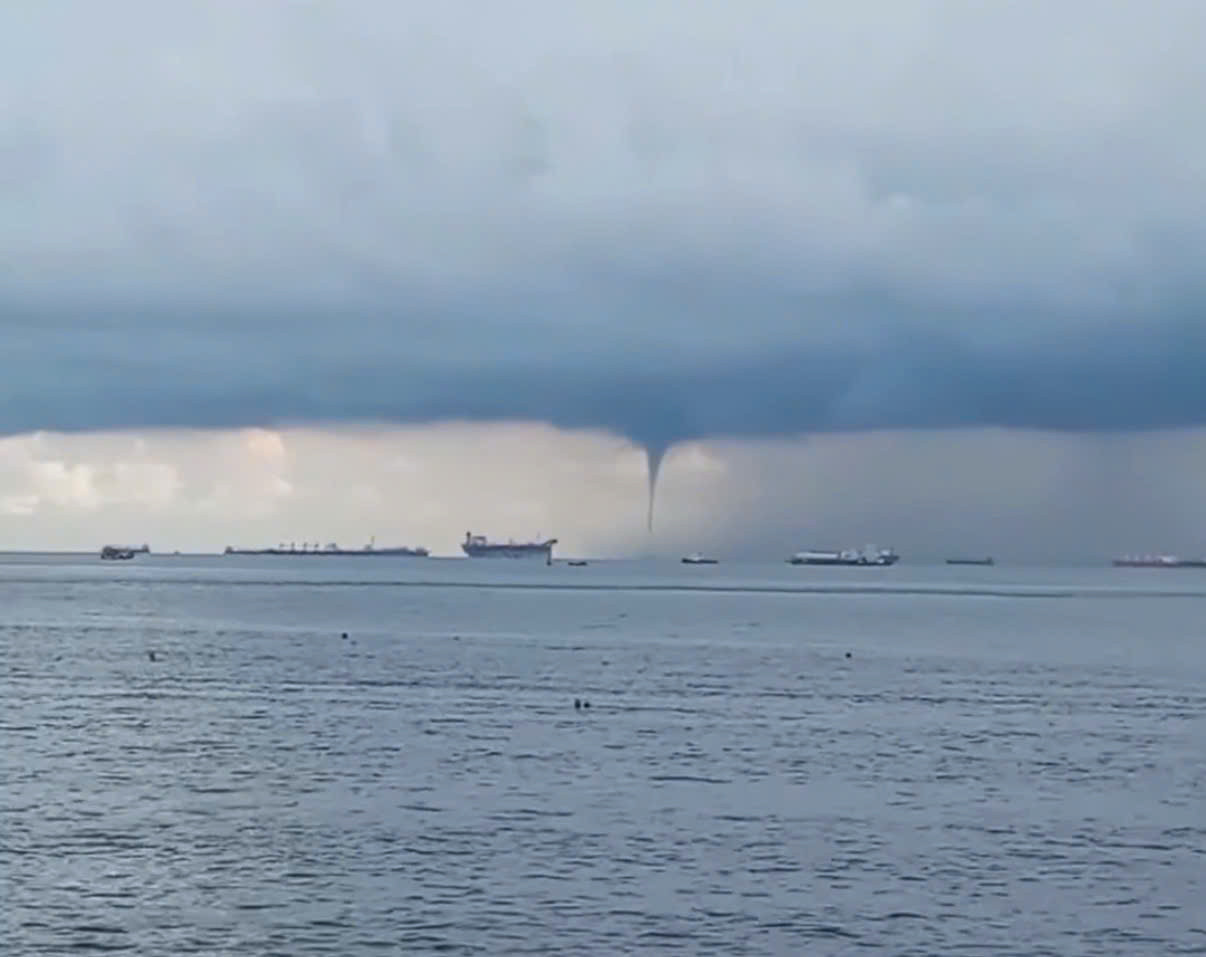
The waterspout suddenly developed offshore on the afternoon of Sept. 20 as thunderstorms affected Vung Tau, part of Ho Chi Minh City, while several cargo ships were operating nearby.
After moving for about 20 minutes toward an area of rain farther offshore, the rotating column began to weaken and gradually dissipated.
The unusual sight drew the attention of residents and tourists, many of whom stopped to watch and take photographs.
Tran Van Hung, deputy director of the Southern Regional Hydro-Meteorological Center, told VietNamNet that southern Vietnam and its surrounding waters were being affected by an intertropical convergence zone with its axis at around 10-13 degrees north latitude, connected to areas of low-pressure disturbance over the East Sea.
The weather pattern was concentrating large amounts of moisture, creating atmospheric instability and intensifying convection.
Powerful thunderstorm cells were consequently forming and developing across both inland areas and waters off southern Vietnam.
Hung said the convergence zone did not directly produce the waterspout. Instead, the highly convective environment it created provided favorable conditions for severe weather phenomena including lightning, strong wind gusts, whirlwinds and waterspouts.
According to the meteorologist, waterspouts typically form within powerful thunderstorms when rapidly rising warm, moist air encounters colder air above, combined with significant wind shear at different altitudes.
In Vietnam, waterspouts are more likely to occur during periods of intense thunderstorms around seasonal transitions or when convergence zones and low-pressure troughs combine with abundant atmospheric moisture.
Further risk of thunderstorms and waterspouts
One of the most dangerous characteristics of waterspouts is their small size, rapid development and short lifespan, Hung said.
These characteristics make it extremely difficult to predict precisely where and when a waterspout will form.
Although their paths may be only tens to hundreds of meters wide, winds associated with such phenomena can topple trees and utility poles, tear roofs from buildings and overturn boats at sea.
The intertropical convergence zone is forecast to remain active until around Sept. 25.
Southern Vietnam and its surrounding waters therefore continue to face a high risk of heavy rain accompanied by hazardous weather including thunderstorms, strong whirlwinds, lightning and localized waterspouts.
Hung advised people on land to seek shelter in sturdy buildings if they notice signs of rapidly developing thunderclouds or sudden changes or increases in wind speed.
People should stay away from windows, large trees, billboards and temporary structures during severe thunderstorms.
Vessels operating at sea should be particularly cautious when observing developing thunderstorm cells in the distance and take early action to avoid them.
Waterspouts and powerful wind gusts can develop suddenly, posing a direct threat to vessels and people at sea.
Tuan Kiet
.svg)
