 Vietnamnet.vn

 Podcast



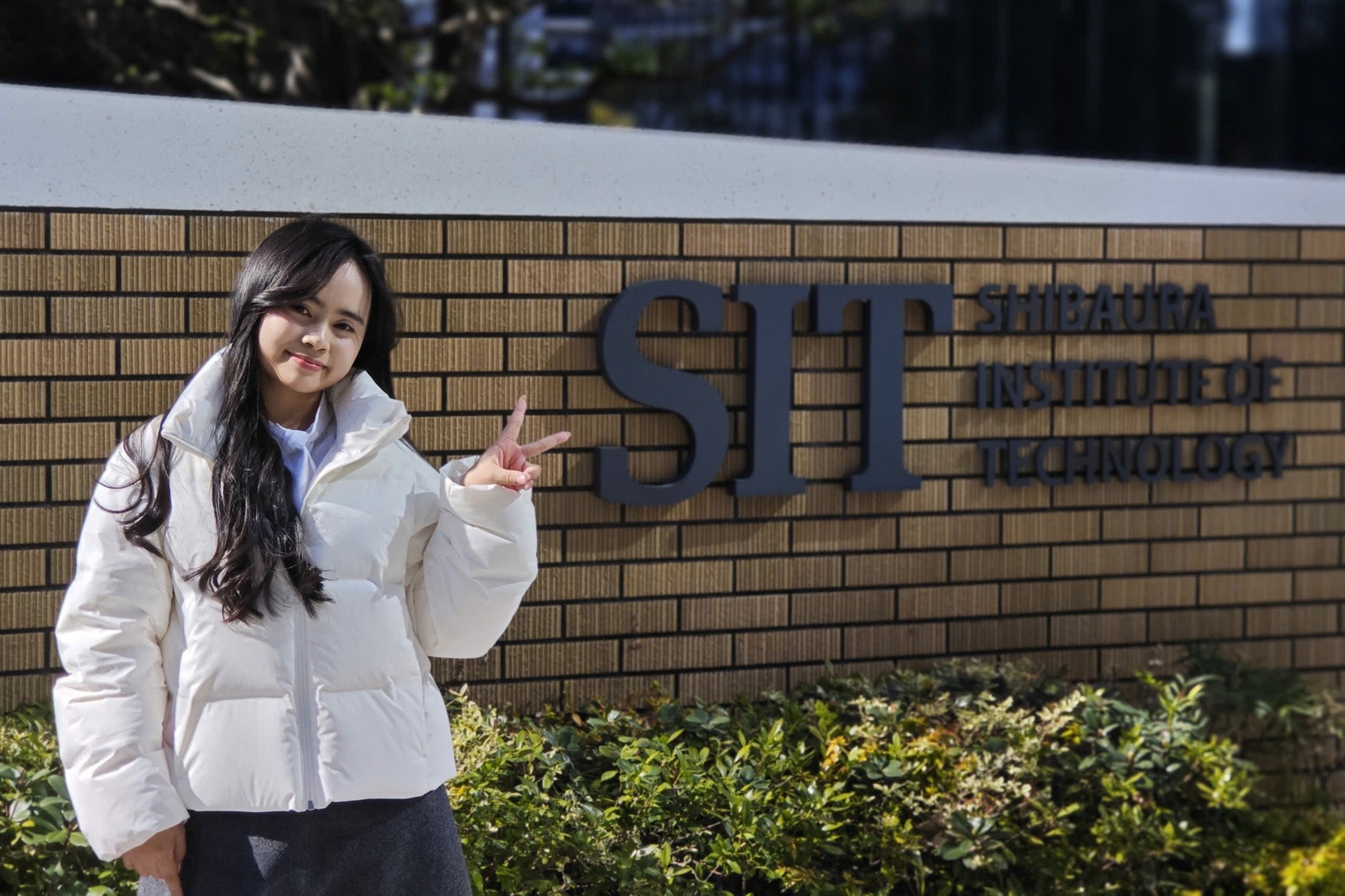
With a cumulative GPA of 3.54 and a perfect 10 for her graduation thesis, Anh has graduated top of the 2026 class in Materials Technology.
She was delighted that her hard work had paid off.
"Five years ago, when I chose this major, I was quite worried because it was not considered by many people as the safest choice for female students. Even my parents were concerned that their daughter might struggle to find a job after graduation. But their trust, encouragement and support became the motivation that pushed me to keep trying every day," Anh said.
At that moment, as she prepared to enter university, the student from Lam Son High School for the Gifted in Thanh Hoa faced several options. And she chose engineering.
Explaining her decision, Anh said that when she was in 12th grade, she happened to watch a YouTube video explaining how the chips used in smartphones work. She became curious about how such a tiny chip could drive major advances in technology and even contribute to changing the world. That curiosity motivated her to explore the field more deeply.
Her path became clearer after she attended a university admissions counseling session. At the time, Associate Professor Bui Van Hao, a lecturer at Phenikaa University, introduced her to Advanced Materials and Nanotechnology, a field that was still unfamiliar to many students. He also explained its research directions, applications and career prospects, including how materials at the nanoscale could bring major changes to technology and everyday life.
"I found the field interesting and exciting. After learning more about it, I thought it suited me and decided to pursue it," Lan Anh said.
As an engineering student, Anh said mathematics, physics and chemistry curriculums were demanding, requiring her to spend considerable time studying to fully understand the concepts.
She also gradually became accustomed to spending long hours in the laboratory and going through countless cycles of trial and error. "Some days, I didn't leave the lab until 10:30pm," Lan Anh said.
For Lan Anh, the biggest challenge in scientific research was not the sheer volume of knowledge but having to grapple with highly abstract concepts.
"In nanomaterials, there are things that cannot be seen with the naked eye or experienced directly. They can only be understood through models, data and experimental results. That requires learners to be patient, read more, try again and again, and learn to accept failure before finding an answer," Lan Anh said.
From a Q1 paper to a full scholarship at KAIST
According to Anh, her achievements today are the result not only of perseverance and a passion for science but also of the guidance and inspiration of dedicated teachers. While Hao was the person who sparked her confidence to take the first step, Dr. Nguyen Ngoc Linh was the mentor who continued to accompany and support her research journey throughout university.
Anh said from the teacher, she learned a serious and careful spirit in studying and scientific research. Strictness in research, according to her, is not to create pressure but to ensure each result has value and each argument is tight enough. That process helps her form clear scientific thinking, a careful working attitude and bravery to pursue long-term research.
Beyond classroom learning, Lan Anh believes self-study plays an important role in gaining a deeper understanding of and retaining knowledge. She regularly reads additional textbooks and online materials and asks her lecturers for help whenever she encounters concepts she does not understand.
Through her persistent efforts, Lan Anh won second prize in her university's student scientific research competition and received a scholarship to participate in a research exchange program at KAIST in South Korea in 2025. She was also the lead author of a paper published in a Q1 journal.
Lan Anh just received full scholarship for master's program at KAIST, one of leading technology universities in Asia. This is an opportunity for the student to continue pursuing deeper researches in advanced materials field.
Although already recruited by a semiconductor company to process engineer position, Lan Anh still decides to go to South Korea in August to study master's program, with research direction related to semiconductor materials.
Thanh Hung
.svg)
