 Vietnamnet.vn

 Podcast



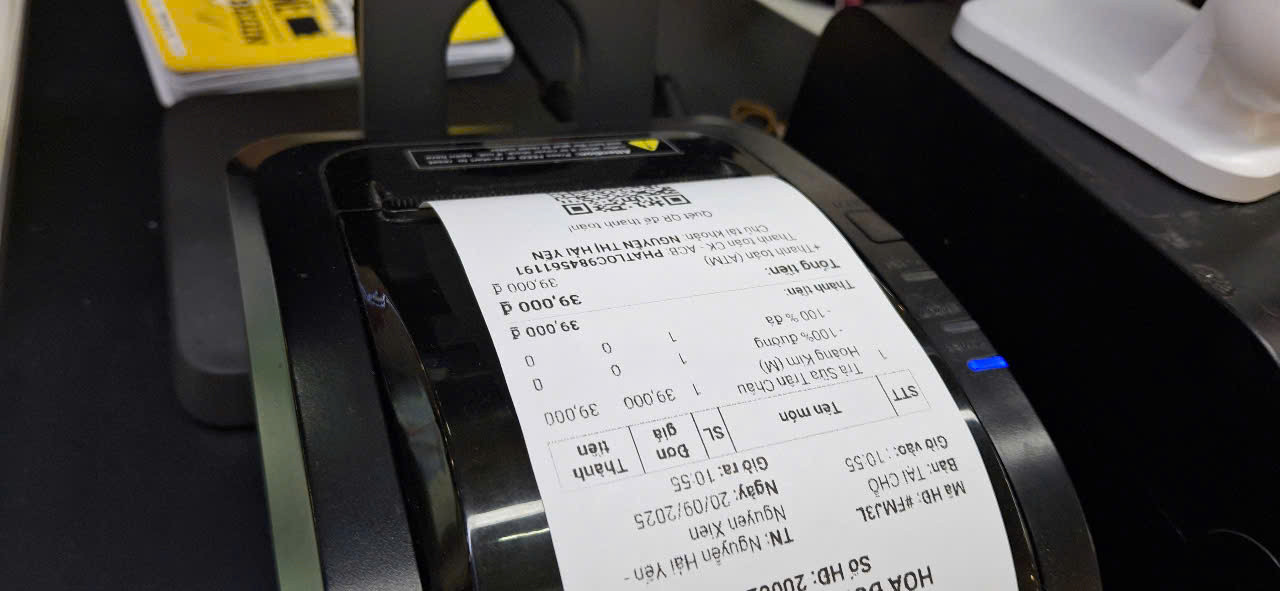
The Ministry of Finance has proposed allowing certain sectors with high transaction frequency to issue consolidated invoices at the end of the day or month to prevent overload of the national electronic invoicing system.
The proposal is part of a public consultation on a draft amendment to Article 9 of Decree No. 123 on invoices and documents, which was previously revised and supplemented by Decree No. 70/2025 issued by the Government.
According to the draft submission, the drafting agency said the amendment would add provisions allowing consolidated invoices for customers who are individuals not engaged in business, in line with the operational characteristics of sectors that handle large volumes of transactions.
In Official Dispatch No. 17436, the Ministry of Finance submitted to the Prime Minister and Deputy Prime Ministers a proposal seeking approval in principle for a government resolution with the following content.
For services including banking, securities, insurance, money transfer via e-wallets, services related to suspension and reconnection of electricity by power distribution units, and paid parking services in buildings with software systems capable of detailed transaction control and management, when the buyer is an individual not engaged in business, service providers would be allowed to issue a consolidated invoice at the end of the day or month based on detailed data stored in their management systems.
For public passenger transport by bus and taxi services using fare calculation software in accordance with the Road Traffic Law, where trip information includes the transport business name, vehicle license plate, itinerary from origin to destination, trip distance in kilometers, and total fare payable by the passenger, operators would issue a consolidated invoice at the end of the day based on detailed data from their management systems.
Service providers would be responsible for the accuracy of the data and must supply detailed summary tables when requested by state authorities.
In cases where customers request individual invoices, providers would be required to issue and supply invoices for each transaction.
According to the Ministry of Finance, Decree No. 123 previously allowed consolidated invoicing for certain services such as securities, banking, insurance, money transfer via e-wallets, and electricity suspension and reconnection services.
However, Decree No. 70/2025 removed the provision on consolidated invoices, leading to a number of practical difficulties.
First, the number of electronic invoices generated has increased sharply, far exceeding the original design capacity of the tax authority’s electronic invoicing system.
Actual data show that the volume of invoices generated by banks, point-of-sale systems and sectors with small, frequent transactions has multiplied compared with earlier periods, creating a risk of system overload that directly affects invoice issuance by businesses and the broader economy.
The tax authority’s electronic invoicing system was designed to receive, process and store approximately 6.4 billion invoices per year.
At present, the number of invoices received by the system is around 18 billion, roughly three times the original design capacity.
According to estimates by the tax authority, annual invoice volumes could reach about 60 billion, far exceeding system capacity in terms of reception, processing and storage, and potentially disrupting invoicing activities across the entire economy.
In reality, many banks and securities companies have yet to issue invoices for each transaction involving individual non-business customers due to limitations in their information technology infrastructure.
Second, businesses in banking, securities, insurance and electricity, as well as industry associations, have petitioned for the reinstatement of consolidated invoicing at the end of the day or month, as was previously allowed under Decree No. 123.
They argue that removing this provision under Decree No. 70 forces companies to issue individual invoices for millions of small transactions, significantly increasing costs, staffing requirements and data storage pressure, while being unnecessary when customers do not require invoices.
Several groups and associations have proposed allowing continued use of consolidated invoices for individual non-business customers to reduce compliance costs while maintaining full and transparent transaction data.
On December 31, 2025, the Prime Minister issued Decision No. 2835 promulgating a list and assigning agencies responsible for drafting detailed regulations to implement laws and resolutions passed by the 15th National Assembly at its 10th session.
Under the decision, the decree on invoices and documents is scheduled to be submitted to the Government in April 2026 and take effect from July 1, 2026.
However, due to the urgency surrounding the risk of overload in the electronic invoicing system, the Ministry of Finance has reported to the Prime Minister on the need to draft an amendment to Decree No. 70.
As the amendment is to be developed under shortened procedures, the Ministry has proposed that the Government approve provisions allowing consolidated invoices at the end of the day or month.
Regarding implementation, the Ministry proposed that organizations and enterprises that have not yet met the information technology requirements for invoicing under Decree No. 70 be allowed to continue issuing invoices and documents in accordance with the amended decree from the effective date of Decree No. 70.
According to the drafting agency, this approach does not introduce new legal liabilities or impose heavier penalties, while creating conditions for businesses to avoid increased compliance costs when they are not yet able to meet the invoicing requirements.
Nguyen Le
.svg)
