 Vietnamnet.vn

 Podcast



As 2025 draws to a close, one figure stands out: tax revenue managed by the General Department of Taxation surpassed 2.2 quadrillion VND (over 90 billion USD), exceeding the National Assembly’s forecast by more than 30% - an unprecedented surplus.
On the surface, this may reflect a robust economic recovery, improved corporate profits, increased consumer spending, and more effective tax administration.
But a deeper look into the structure and drivers of this revenue reveals a more complex story - one that includes foundational reforms, cyclical risks, and a heavy reliance on a few localities.
A leap in tax administration
A large portion of the revenue surplus in 2025 stems from improved tax management and a broader tax base. Compared to previous years, Vietnam’s tax system has reached a new level of modernization.
Digitalization has deepened. Risk-based management models are now widely adopted. Data integration between agencies has improved. E-invoicing is nearly universal. Tax revenue from e-commerce, the digital economy, and cross-border services is emerging from the shadows.
As tax authorities identify more previously unreported transactions, the increase in compliance and collections becomes more understandable.
This is the most positive aspect of the 2025 surplus - an outcome of better enforcement, reduced tax evasion, and more transparent declarations.
Domestic revenue accounted for about 98% of total collections, showing declining dependence on oil and trade. In this light, the 2025 surplus reflects years of steady fiscal reform rather than a one-off spike.
However, a larger question remains: Does this revenue surge truly reflect growth in productivity, labor efficiency, and competitiveness? To answer that, we must examine the quality of each revenue stream.
Real estate: The biggest, most volatile contributor
Among the drivers of the 2025 revenue boom, real estate stands out as both the biggest contributor and the most cyclical.
By November 2025, revenue from housing and land reached 505.6 trillion VND (about 20.8 billion USD), 172.6% above projections and more than double that of the same period in 2024, according to the General Statistics Office.
In Hanoi, land use fee revenue jumped by 167%. In Ho Chi Minh City, it soared 353% year-over-year, fueled by land use fees, lease payments, and legally cleared development projects that had long been delayed.
This reflects two parallel developments: a localized recovery in the real estate market - thanks to completed projects and revived transactions - and improved tax compliance due to tighter data control and the resolution of long-pending obligations.
This also drove up collections from personal income tax on property transfers, corporate income tax from real estate developers, and bulk payments for land use and leases. Many unresolved cases were processed within this year’s fiscal cycle.
While property-related revenue boosts the short-term budget, it poses medium- to long-term risks. A shift in the real estate cycle could cause this revenue stream to dry up quickly.
No sustainable fiscal system can rely primarily on asset markets. Long-term stability must come from sources tied to productivity, innovation, competitiveness, and added value in the production economy.
Twin economic engines, rising concentration risk
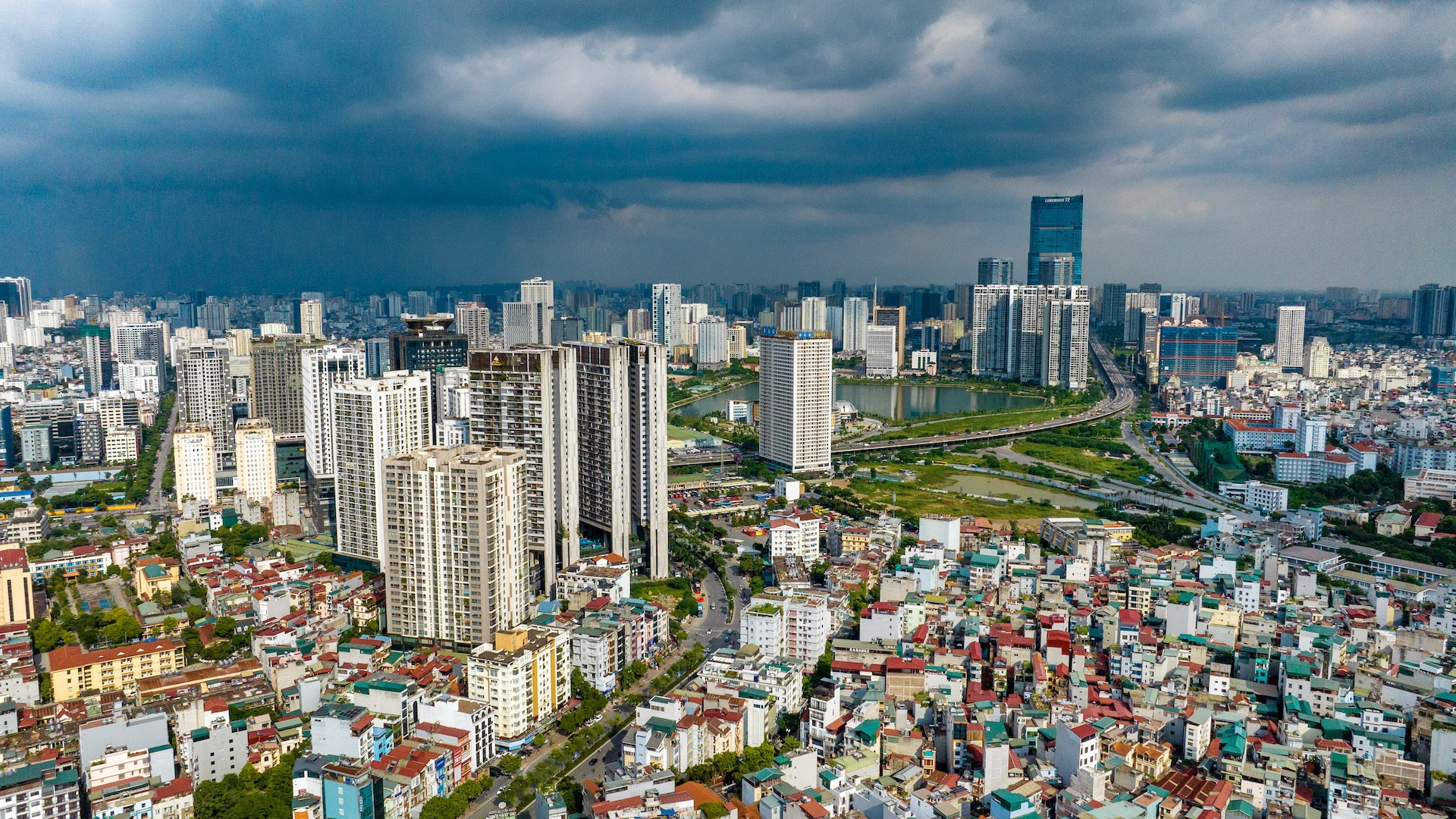
Another key takeaway from 2025 is the regional concentration of tax revenue. Hanoi collected around 631 trillion VND (about 25.9 billion USD), 32.1% above forecast. Ho Chi Minh City collected 606 trillion VND (24.9 billion USD), 20.8% above target.
Together, these two cities contributed around 1.23 quadrillion VND - over half of all domestic revenue.
Their role as economic and service hubs is indisputable. But with more than half the country’s revenue coming from just two cities, regional disparity has become a macro-level risk.
If real estate, services, or urban consumption in these areas falter, the entire national revenue picture could be impacted instantly.
The gap in revenue-generating capacity between provinces continues to grow. Many still rely heavily on central budget allocations due to weak internal growth drivers.
Of course, the bright spots of 2025 deserve recognition. Tax administration has improved. Data infrastructure is working. Compliance has risen. Domestic revenue is now the backbone. Real estate transactions are more transparent. Production and services have rebounded post-pandemic.
These factors strengthen fiscal independence and create room for public investment, social security, and infrastructure.
With continued institutional reform and a better business environment, Vietnam’s tax system could shift from simply “collecting more” to “collecting smarter.”
But a 30% surplus also invites scrutiny. The contribution from real estate remains too large and too cyclical. The structure still lacks strong ties to productivity and true value creation. Heavy reliance on two cities creates vulnerability. Small businesses and households may face growing compliance burdens.
A sustainable fiscal system isn’t judged solely by impressive year-end figures. It must be evaluated based on internal drivers, resilience across economic cycles, and contributions to real, inclusive growth.
In the medium term, the goal must be to reduce dependence on land and property, develop new growth poles outside the two mega-cities, expand the base of private-sector innovators and producers, and build a revenue structure where economic growth naturally translates into fiscal stability.
Lan Anh
.svg)
